
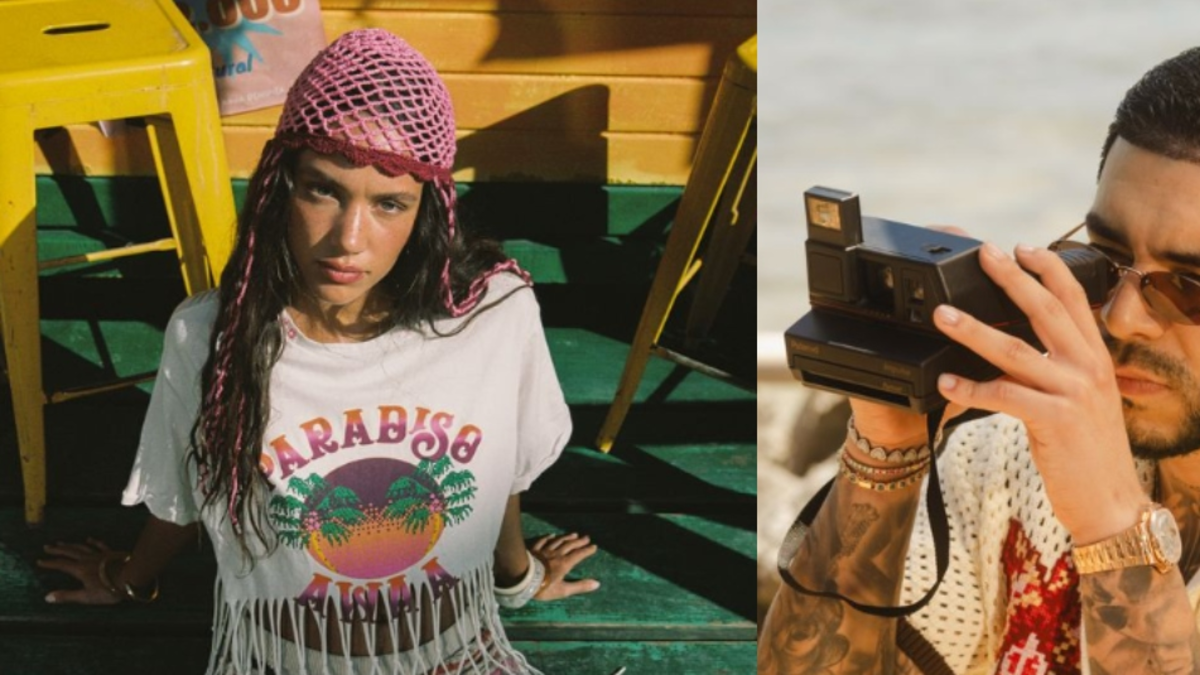
Agua Bendita and Ryan Castro Launch AWAA Capsule Collection
Colombian fashion house Agua Bendita and reggaeton star Ryan Castro launch AWAA, a 40-piece capsule collection merging artisanal craftsmanship with urban aesthetics. Available globally from March 26, 2026, the line integrates Castro’s creative direction with the brand’s heritage, timed to coincide with the finale of his Returning Home concert tour in Medellín.
The entertainment industry often treats fashion collaborations as mere merchandise extensions, a cash grab disguised as creativity. The AWAA collection between Agua Bendita and Ryan Castro defies this cynical baseline by positioning the artist not as a face on a billboard, but as the creative director. This distinction matters deeply in 2026’s saturated marketplace. Consumers are no longer buying logos; they are buying provenance. When a musician steps into the design room, the intellectual property stakes skyrocket. This isn’t just about selling swimwear; it is about securing a slice of brand equity that survives the fleeting lifecycle of a chart-topping single.
The Economics of Authenticity and IP Control
Castro’s involvement extends beyond endorsement. He shaped the visual identity, drawing from Caribbean sunsets and dancehall culture, whereas Agua Bendita provided the manufacturing infrastructure capable of handling labor-intensive techniques. Some pieces require over 16 hours of manual construction. This supply chain complexity introduces significant logistical friction. A standard merchandise drop relies on bulk printing; artisanal production relies on skilled labor scarcity. For brands attempting similar high-touch collaborations, the immediate challenge is securing specialized production partners who can scale without diluting quality. If the stitch count drops, the brand promise breaks.
From a legal standpoint, the structure of this deal is where the real story lies. Co-branding agreements often develop into battlegrounds over licensing rights and revenue splits once the initial hype fades. The naming convention itself—AWAA, blending Castro’s signature “AWOO” with the brand’s “AGUA”—suggests a joint venture rather than a simple licensing fee arrangement. This requires robust legal scaffolding to protect both parties if the collection outperforms or underperforms expectations. Entertainment attorneys specializing in intellectual property and trademark law are essential here to ensure that neither the artist’s likeness nor the brand’s design patents become entangled in future disputes.
“When an artist becomes a creative director, they assume liability for the product’s market reception. It shifts the risk profile from a marketing expense to a product development investment. You need counsel that understands both copyright law and retail liability.” — Senior Entertainment Attorney, Los Angeles
Industry benchmarks suggest that music-led fashion lines can generate significant secondary revenue streams, often outperforming traditional touring merchandise margins. According to analysis from Vogue Business, successful artist-brand partnerships observe a 30% higher retention rate in customer lifetime value compared to standard endorsements. However, failure rates are equally stark when the aesthetic alignment feels forced. Castro’s prior experience with his Ghetto Med streetwear line and his runway appearance for KidSuper during Paris Fashion Week Spring 2026 provides the necessary credibility to mitigate this risk. He is not a tourist in the fashion world; he is a resident.
Logistics Behind the Capsule and Tour Integration
The launch timing is strategic, syncing with the conclusion of the Sendé World Tour. The finale, scheduled for April 25, 2026, at the Atanasio Girardot Stadium in Medellín, transforms a concert into a retail activation point. This creates a massive surge in foot traffic and digital engagement simultaneously. Managing this spike requires precision. The production is likely coordinating with regional event security and A/V production vendors to handle the crowd dynamics of a stadium show that doubles as a product launch party. The logistical leviathan of moving inventory into a concert venue while maintaining security protocols is non-trivial.
the international availability of the collection demands a seamless digital infrastructure. With physical retail locations in Colombia and select international markets, the digital platform must handle cross-border transactions without friction. Any downtime during the tour finale could result in significant revenue loss. The integration of physical and digital retail channels here mirrors the strategies discussed in recent WWD reports regarding omnichannel resilience in luxury streetwear.
Risk Management in Brand Extensions
Every public-facing collaboration carries reputational risk. If the quality fails or the cultural messaging misfires, the backlash can be swift and damaging to both the artist’s music career and the fashion house’s legacy. In the current media landscape, where social sentiment can turn overnight, having a contingency plan is vital. Brands engaging in high-profile collaborations should retain crisis communication firms and reputation managers to monitor sentiment in real-time. The goal is to protect the long-term brand equity against short-term volatility.
Castro’s narrative focuses on Colombian roots and international projection, a story that resonates globally but requires careful handling to avoid cultural appropriation accusations or dilution of local heritage. The apply of Colombian orchids and Caribbean color palettes must be respectful and accurate. This is where cultural consultants often come into play, ensuring that the visual language honors the source material. The Billboard charts may measure success in streams, but in fashion, success is measured in longevity and respect.
The AWAA collection represents a maturing of the Latin music economy. It is no longer enough to sell out arenas; artists must build ecosystems. As Disney Entertainment reshuffles its leadership team in this same quarter, focusing on streaming and games, the broader industry signal is clear: diversification is survival. Whether it is a media conglomerate or an independent artist, the rule remains the same. Control the IP, manage the logistics and protect the reputation. For those looking to replicate this model, the path requires more than just capital; it requires a network of vetted professionals who understand the intersection of culture and commerce.
As the tour concludes in April, the real test begins. Can AWAA sustain momentum beyond the concert lights? The answer lies in the supply chain, the legal framework, and the crisis management protocols position in place today. For industry insiders watching the convergence of music and fashion, this collaboration is a case study in progress. It demonstrates that when tradition meets urban aesthetics, the business behind the art must be just as crafted as the garments themselves.
For further reading on the intersection of touring and retail economics, consult recent features in The Hollywood Reporter regarding artist-led ventures. The landscape is shifting, and the professionals who facilitate these deals are the new power brokers of the entertainment economy.