AFF U-17 Championship 2026 Matchday 1: Results and Standings
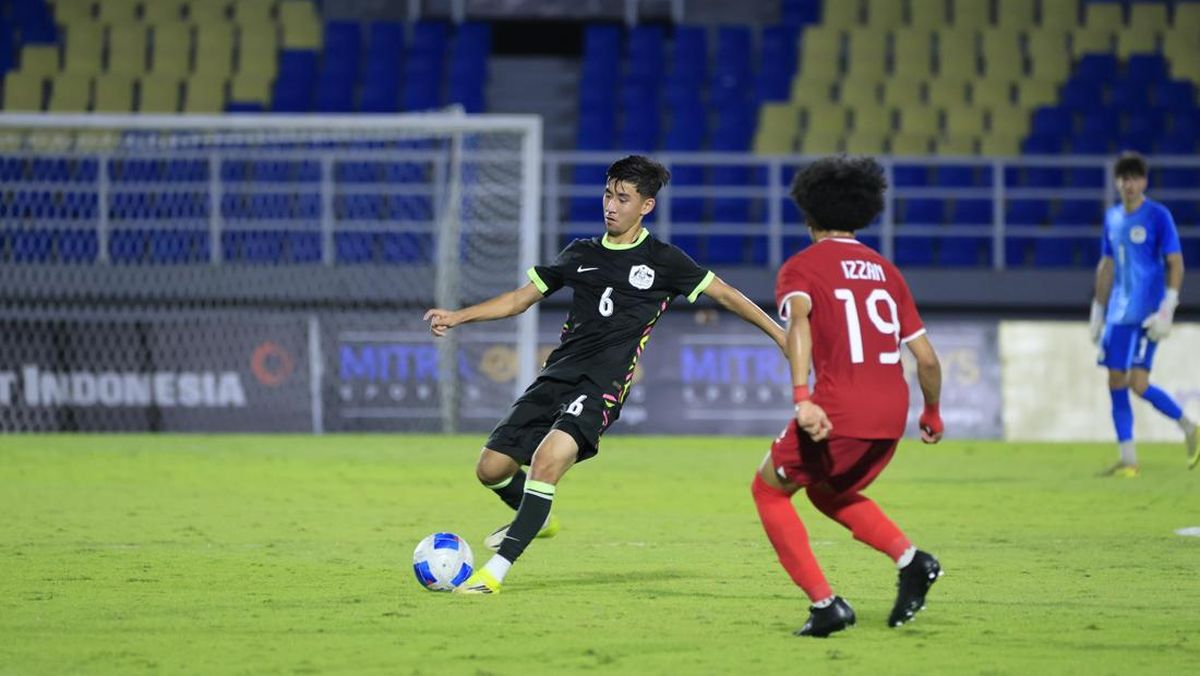
Australia U-17 secured their lead in Group C of the 2026 AFF U-17 Cup with a clinical 1-0 victory over Singapore on April 14 at Stadion Gelora Delta, Sidoarjo. A stoppage-time strike by Luke Becvinovski ensured “The Joeys” claimed six points, positioning them as favorites heading into the semi-final qualification round.
The match was a stark departure from Australia’s opening statement in the tournament. While the Joeys displayed an overwhelming offensive ceiling in their April 11 debut—a 12-0 demolition of Brunei Darussalam—the encounter with Singapore presented a tactical wall. Singapore entered the match having secured a 0-0 draw against Cambodia, proving they could maintain a disciplined low block against high-pressure opposition. For the majority of Tuesday night, Australia struggled to find the creative spark necessary to penetrate a compact defensive shell, resulting in a stalemate that lasted nearly the entire regulation period.
The Stoppage-Time Breakthrough
Tactical rigidity defined the first 90 minutes. Australia dominated possession and territorial control, yet Singapore’s defensive organization neutralized most threats, forcing the Joeys into hopeful crosses and long-range efforts. The deadlock only broke in the 95th minute when Luke Becvinovski found the back of the net. This goal was less about a breakdown in Singapore’s system and more about the physical attrition and late-game pressure inherent in tournament football. Scoring in the 90+5 minute mark reflects a level of fitness and psychological resilience that separates top-tier youth prospects from the rest of the field.

Tactical Note: Australia’s ability to secure a win despite a lack of fluidity in the final third highlights their depth and capacity for clinical execution under extreme time constraints.
For Singapore, the result is a bitter pill. Despite a performance that nearly earned them a historic point against the group favorites, they remain in third place with a single point. The inability to convert defensive stability into offensive output remains their primary hurdle. Their lack of transitional play meant that while they could stop Australia, they could not threaten them, leaving their fate entirely dependent on the final matchday.
Group C Mathematical Landscape
The current standings create a high-stakes environment for the final group fixtures. Australia sits comfortably at the summit with six points, followed by Cambodia with four points after their 1-0 win over Brunei—a match decided by a 26th-minute goal from Kryya Ly. Singapore trails in third with one point, while Brunei Darussalam remains at the bottom with zero.
The road to the semi-finals culminates on Friday, April 17, with two simultaneous fixtures kicking off at 15:30 WIB. Australia will face Cambodia in a clash that could determine the top seed, while Singapore must secure a victory against Brunei Darussalam to keep their hopes alive. Given the goal differential established by Australia’s 12-0 win, the Joeys have already built a significant cushion, but the clash with Cambodia will be a litmus test for their tactical adaptability against a side that has already proven it can grind out a result.
Sidoarjo’s Infrastructure and Economic Halo
Hosting a regional competition at the Stadion Gelora Delta brings more than just sporting prestige to Sidoarjo; it creates a temporary but intense economic surge. The influx of international delegations, coaching staffs, and traveling supporters places immediate pressure on local hospitality, and logistics. This surge often reveals gaps in regional infrastructure, creating a demand for regional event security and premium hospitality vendors capable of meeting international standards.
Beyond the hotels and stadiums, the tournament serves as a showcase for youth athletic development. Although, the intensity of matchdays in the Sidoarjo climate increases the risk of soft-tissue injuries and fatigue-related strains. While the national teams have dedicated medical staff, the broader ecosystem of youth sports in the region requires better access to local orthopedic specialists and rehab centers to ensure that emerging talents can recover from high-intensity tournaments without risking long-term career setbacks.
The Professional Pathway and Legal Framework
For the players in Group C, these matches are effectively prolonged auditions for professional scouts and academy directors. A late-game winner like Becvinovski’s or a defensive masterclass from the Singaporean backline can drastically alter a player’s market value. As these U-17 athletes transition from youth setups to professional contracts, the complexity of international transfers and FIFA regulations becomes a critical factor.
Navigating the legalities of youth recruitment requires precision to avoid sanctions and ensure fair compensation for training clubs. This is where the role of sports contract lawyers becomes indispensable, protecting the athletes’ interests and ensuring that the transition from the AFF U-17 stage to a professional league is handled with legal rigor.
Australia enters the final group stage as the dominant force, but the struggle against Singapore proves they are not invincible. Whether they can maintain this momentum into the knockout rounds depends on their ability to break down disciplined defenses without relying on stoppage-time miracles. For Singapore and Cambodia, Friday’s matches are not just about points; they are about survival in a tournament that rewards clinical efficiency over defensive effort.
To find vetted professionals in sports medicine, international contract law, or event management to support the growing athletic infrastructure in your region, explore the comprehensive listings at the World Today News Directory.
Disclaimer: The insights provided in this article are for informational and entertainment purposes only and do not constitute medical advice or sports betting recommendations.