AEW Collision Ratings Hold Steady Against WWE Backlash
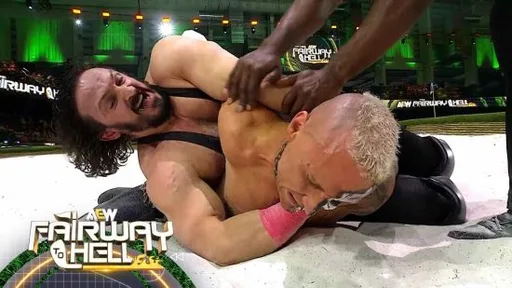
AEW Collision maintained its viewership base during the “Fairway to Hell” special, averaging 342,000 viewers on TBS. Despite competing directly against WWE Backlash, the broadcast saw only a marginal 1.4% decline from the previous week, signaling a resilient audience floor amidst high-stakes industry competition.
In the volatile landscape of linear television, the “appointment viewing” model is under constant siege from streaming fragmentation and audience churn. When a promotion decides to run a broadcast directly against a competitor’s major event, the primary risk is audience cannibalization—the phenomenon where a significant portion of the core demographic migrates to the larger spectacle. For AEW, the “Fairway to Hell” edition of Collision served as a stress test for brand loyalty and counter-programming efficacy. The data indicates that the promotion has successfully carved out a distinct market share that is relatively inelastic, even when faced with the gravitational pull of a WWE Premium Live Event.
This stability is not merely a win for the creative team but a critical data point for the front office. From a business perspective, a 1.4% variance is effectively a flat line. In the world of television rights fees and CPM (cost per mille) calculations, maintaining this level of consistency allows the promotion to argue for higher valuation during future contract renegotiations. The ability to hold a steady audience during a “clash” scenario proves that the product is not merely a secondary option for wrestling fans, but a primary destination.
The Economics of Counter-Programming and Market Penetration
The decision to air a themed special like “Fairway to Hell” during a competitor’s peak window is a calculated risk in market penetration. By offering a distinct aesthetic and narrative shift, AEW attempted to decouple its viewership from the general “wrestling” bucket and attach it to a specific “event” experience. This tactical pivot minimizes the likelihood of viewers flipping channels based on a perceived lack of stakes.
The financial implications extend beyond the screen. High-concept themed events drive a surge in ancillary revenue, particularly in merchandise and regional hospitality. When a promotion leans into a specific theme, it creates a localized economic halo effect in the host city. The logistical demands of such specials—ranging from unique set builds to specialized security—often exceed standard broadcast requirements. This creates a massive operational vacuum that the promotion must fill. To maintain the prestige of these high-concept shows, franchises are increasingly relying on regional event security and premium hospitality vendors to ensure that the fan experience matches the televised spectacle.
“The modern sports-entertainment consumer is no longer a monolith. they are ‘multi-platform aggregators.’ When you see a viewership drop of only 1.4% against a major competitor, you aren’t just seeing loyalty—you’re seeing the emergence of a permanent, non-overlapping audience segment that values the specific pacing and style of the alternative product.”
Looking at the raw viewership data, the stability of the TBS broadcast suggests a high level of “sticky” viewership. In sports analytics, this is akin to a high “floor” in a player’s performance metrics; regardless of the opponent, the baseline output remains constant. For the executive suite, this consistency is the bedrock upon which long-term advertising partnerships are built.
Ratings Stability Analysis: The “Fairway to Hell” Variance
To understand the magnitude of this hold, one must examine the delta between a standard broadcast and a competitive clash. Typically, a major event from a dominant market leader would trigger a double-digit percentage drop for a secondary broadcast. The following table breaks down the performance metrics for the period.

| Metric | Previous Week (Baseline) | “Fairway to Hell” (vs. Backlash) | Percentage Variance |
|---|---|---|---|
| Average Viewership | ~346,800 | 342,000 | -1.4% |
| Broadcast Network | TBS | TBS | 0% |
| Competition Level | Standard | High (WWE PLE) | N/A |
| Audience Retention | Baseline | Resilient | Stable |
This data suggests that the “Fairway to Hell” branding acted as a buffer. By framing the episode as a “special,” the promotion shifted the viewer’s mindset from “watching a weekly show” to “attending a unique event.” This psychological shift is a common tactic used in professional sports to maintain gate receipts during a losing streak or a period of low momentum.
The Physical Toll and the Business of Longevity
While the ratings tell a story of business resilience, the physical reality of maintaining such a schedule is grueling. The “Fairway to Hell” special, by its very nature, requires athletes to perform under unconventional conditions, increasing the risk of acute injury. In the high-stakes environment of professional wrestling, a single ligament tear or concussion can result in a massive “dead-cap” equivalent—where a company pays a high-salary athlete who is unable to perform, effectively wasting a portion of their payroll.
The business of athlete longevity has become a primary concern for front offices. To mitigate these risks, elite performers are moving away from generic gym routines and toward periodization and scientific load management. While the top-tier stars have access to private medical teams, the broader roster and the aspiring athletes in the independent circuit must be equally diligent. Those facing the physical toll of a demanding schedule must secure elite sports recovery clinics to avoid career-ending attrition.
the complexity of the contracts governing these athletes—especially when crossing international borders for events—requires a level of legal precision that goes beyond standard employment law. As the promotion grows and its TV deals become more lucrative, the intellectual property and likeness rights of the performers become central to the company’s valuation. This shift has led to an increased demand for specialized sports contract attorneys who can navigate the intersection of labor law and entertainment royalties.
Strategic Outlook and Market Trajectory
The resilience shown during the WWE Backlash window provides a blueprint for future scheduling. If a promotion can hold its audience during a competitor’s peak, it gains significant leverage in negotiating “time-slot” exclusivity and promotional windows with network partners. The goal is no longer to “beat” the competitor in a head-to-head war of attrition, but to establish a sustainable, independent ecosystem.

Moving forward, the focus will likely shift toward diversifying the “event” feel of weekly broadcasts. If themed specials like “Fairway to Hell” can neutralize the impact of opposing major events, we can expect a proliferation of “mini-PPV” style episodes integrated into the linear TV schedule. This strategy maximizes ad revenue while keeping the audience engaged in a cycle of constant novelty.
The trajectory for AEW is clear: the transition from a “disruptor” to an “established pillar” is nearly complete. The stability of the 342,000-viewer mark is a signal to the industry that the market is large enough to support multiple high-tier products without requiring the total collapse of one for the other to thrive. For the fans, the executives, and the athletes, this stability ensures a more sustainable professional environment where the focus can return to the tactical and athletic quality of the product.
As the industry continues to evolve, whether you are a professional athlete managing a career-threatening injury or a sports business owner navigating complex TV rights, the quality of your support system determines your ceiling. The World Today News Directory remains the premier resource for connecting the sports world with vetted medical, legal, and logistical professionals.
Disclaimer: The insights provided in this article are for informational and entertainment purposes only and do not constitute medical advice or sports betting recommendations.