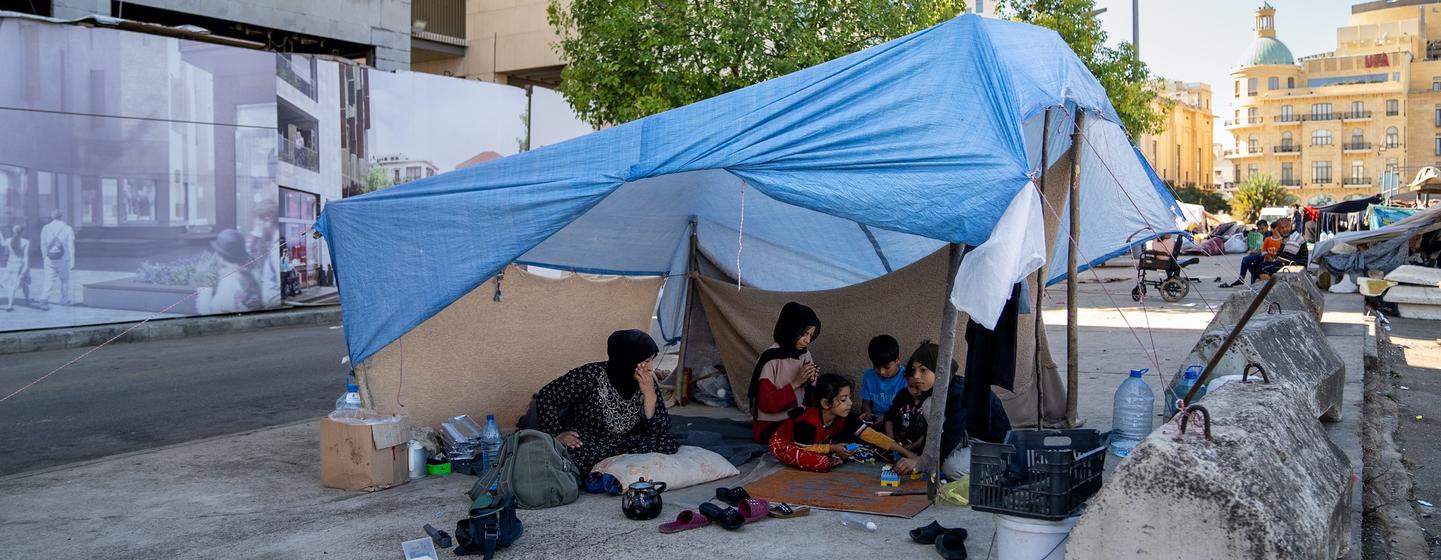
Addressing the Global Housing Crisis: International Summit in Baku
As the 13th UN World Urban Forum kicks off in Baku, Azerbaijan, on May 17, 2026, world leaders are confronting a crisis of staggering scale: nearly 2.8 billion people—one in three on Earth—lack adequate housing, while over 1.1 billion live in slums. The forum’s theme, “Housing the World: Safe and Resilient Cities and Communities,” marks a turning point. With urban populations projected to swell to 70% of the global total by 2050, the question isn’t just whether governments can build enough homes—it’s whether they can do so without repeating the mistakes of the past.
Why This Crisis Demands Urgent Action
The numbers alone are devastating. According to UN-Habitat, the UN agency leading the forum, 2.8 billion people worldwide live in inadequate housing, and 300 million are homeless. The problem isn’t isolated to the Global South—rising costs, climate disasters, and geopolitical instability are now forcing cities in Europe, North America, and beyond to confront housing emergencies they’ve long ignored.
Climate shocks exacerbate the crisis. Floods in Pakistan, wildfires in California, and rising sea levels threaten entire communities. In Baku itself, a city built on the Caspian Sea’s edge, officials are already grappling with coastal erosion that could displace tens of thousands by mid-century. Meanwhile, the war in the Middle East has disrupted global supply chains, driving up construction costs and delaying projects critical to housing the poor.
“This crisis has long been most severe and structural in the Global South, but now it is also being felt in the Global North as well.”
—Anacláudia Rossbach, Head of UN-Habitat
The Human Cost: More Than Just Roofs
The stakes extend far beyond bricks and mortar. Housing insecurity fuels poverty, weakens education systems, and erodes public health. In UN-Habitat’s latest global report, researchers found that slum dwellers face higher rates of respiratory diseases, malnutrition, and child labor—problems that ripple into national economies. The agency warns that without intervention, slum populations could triple by 2050, overwhelming cities already struggling with infrastructure.
Consider Dhaka, Bangladesh, where 40% of residents live in informal settlements. Or Nairobi, Kenya, where 60% of the population resides in slums lacking basic sanitation. These aren’t anomalies—they’re symptoms of a systemic failure. And the consequences aren’t just humanitarian. The World Bank estimates that urban poverty costs the global economy $3.2 trillion annually in lost productivity and healthcare expenses.
Baku’s Role: Can a Single Forum Change the Trajectory?
The World Urban Forum isn’t just another conference. With 40,000 participants from 182 countries, it’s the largest gathering of urban planners, policymakers, and activists in the world. But can it deliver real solutions?

Local officials in Baku are already testing innovative models. Eldar Azizov, the city’s mayor, has prioritized affordable housing projects using modular construction and public-private partnerships. “We can’t solve this crisis with old methods,” Azizov told reporters. “We need scalable, climate-resilient designs that don’t rely on decades-long approval processes.”
“Housing isn’t just about shelter—it’s about dignity, resilience, and economic opportunity. If we fail here, we fail on every other development goal.”
—Anna Soave, Head of UN-Habitat’s Country Office in Azerbaijan
Where the Money—and the Power—Lies
The problem isn’t a lack of funding. Global spending on housing and urban development reached $1.8 trillion in 2025, yet only 10% of that flows to informal settlements. The issue is misaligned priorities. Governments and investors still favor luxury developments over social housing, despite evidence that inclusive urban planning boosts GDP growth by 1.5% annually.
One barrier? Zoning laws. Many cities, including Baku, have outdated regulations that make it nearly impossible to build low-income housing in desirable areas. Legal experts warn that specialized urban law firms are now in high demand to rewrite these policies—without triggering backlash from property owners.
The Solutions Already Exist—But Are They Scalable?
From Habitat for Humanity’s community-led builds to Singapore’s public housing model, proven strategies abound. Yet scaling them requires:
- Policy reform: Fast-tracking permits for social housing and mandating climate-adaptive designs.
- Private-sector engagement: Incentivizing developers to invest in affordable units through tax breaks or profit-sharing.
- Community ownership: Empowering slum residents to upgrade their own homes, as seen in UN-Habitat’s “Slum Upgrading” programs.
- Data transparency: Cities like Barcelona use open-data platforms to track housing shortages and redirect funds efficiently.
Who’s Already Moving the Needle?
While global leaders debate, local actors are taking action:

| Organization/Initiative | Focus Area | Geographic Reach |
|---|---|---|
| Habitat for Humanity | Community-built affordable housing | 70+ countries |
| UN-Habitat’s Slum Upgrading Program | Infrastructure for informal settlements | Africa, Asia, Latin America |
| Urban Policy Law Firms (e.g., DLA Piper’s Urban Development Group) | Zoning law reform | Global (specializing in emerging markets) |
| Modular Housing Manufacturers (e.g., Blu Homes, Factory OS) | Rapid, low-cost construction | USA, Europe, Australia |
The Road Ahead: Can Dignity Be Quantified?
The World Urban Forum’s closing statement on May 22, 2026, will likely include bold commitments. But words without action are meaningless. The real test begins now:
- Will Baku’s mayor follow through on his pledge to allocate 20% of the city’s infrastructure budget to slum upgrades?
- Will private equity firms finally treat social housing as a viable investment—like BlackRock’s recent $100 million commitment to affordable housing funds?
- Will national governments repeal the regressive subsidies that distort housing markets, as recommended by the IMF’s latest World Economic Outlook?
The answer lies in the details. For every city grappling with this crisis, the path forward isn’t a single solution but a network of verified partners—from nonprofit builders to urban policy attorneys to modular construction firms. The World Today News Directory is where leaders find them.
Final Thought: Dignity isn’t measured in square footage. It’s measured in the absence of fear—fear of eviction, fear of disease, fear of being invisible. The housing crisis isn’t just about shelter. It’s about whether we choose to see the people living in slums as problems to manage or as partners in building the future. The clock is ticking. And in Baku, the world has a chance to get it right.