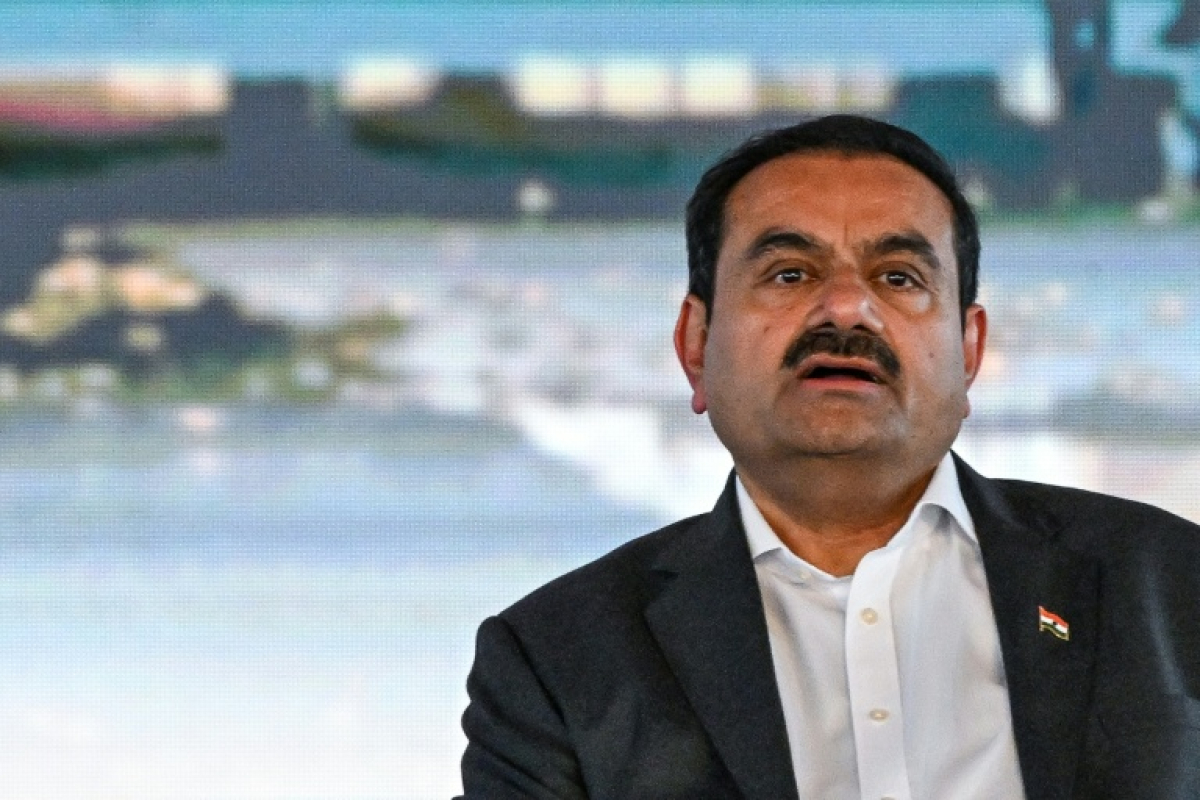
Adani Pays $275M Fine to U.S. for Alleged Iranian Oil Sanctions Violations
Indian billionaire Gautam Adani, chairman of the Adani Group—a $206 billion conglomerate with stakes in ports, energy, and mining—settled U.S. Sanctions violations for $275 million today, while the Trump administration dropped fraud charges tied to alleged bribes in a solar project. The resolution follows a $10 billion U.S. Investment pledge by Adani’s legal team, which cited pending litigation as a barrier. This marks the second major legal reprieve for Adani in months, after the Indian Supreme Court ordered SEBI to expedite its own corruption probe in May 2024. The sanctions case stems from Adani Enterprises’ 2022–2023 purchases of Iranian liquefied petroleum gas via a Dubai trader, mislabeled as Omani and Iraqi shipments—a violation of U.S. Treasury sanctions. The fraud allegations, meanwhile, accused Adani of hiding corruption tied to a $3 billion financing round for Adani Green Energy’s solar projects, including India’s largest solar farm.
The Fiscal Fallout: How Sanctions Enforcement Reshapes Adani’s Balance Sheet
The $275 million penalty—equivalent to roughly 0.7% of Adani Group’s $33 billion 2024 revenue—is a fraction of the $104 billion market cap erosion the conglomerate faced after Hindenburg Research’s fraud allegations in January 2024. Yet the timing is critical: Adani’s U.S. Expansion hinges on clearing legal hurdles before its next earnings report, due July 15, 2026. The sanctions fine, while steep, avoids the existential risk of criminal convictions that could have triggered secondary boycotts from Western lenders.
— Rajiv Mehta, Managing Director of KPMG’s Global Risk Advisory, on Adani’s settlement:
“The $275 million penalty is a strategic write-off—Adani’s legal team calculated it as cheaper than prolonged litigation. But the real cost is reputational. For a company deriving 60%+ of revenue from coal and commodities, sanctions exposure remains a systemic risk. Firms like Adani now face a binary choice: either diversify supply chains aggressively or accept that geopolitical compliance will eat into EBITDA margins by 1–2% annually.”
Supply Chain Contagion: The Iranian LPG Loophole and Adani’s Commodity Playbook
Adani Enterprises’ Iranian LPG purchases were not an isolated incident. Between 2022 and 2023, the company sourced ~1.2 million metric tons of LPG from Dubai-based traders, per internal Q4 2023 filings. While the Treasury’s settlement focuses on 2022 shipments, auditors flagged “anomalies in trade documentation” for 2023 as well—suggesting deeper systemic gaps. This raises questions about Adani’s exposure to other sanctioned regimes, particularly given its $7 billion stake in Adani Defence and Aerospace, which relies on Russian and Iranian components for military logistics contracts.
| Metric | 2023 (Pre-Sanctions Scrutiny) | 2024 (Post-Hindenburg) | 2025E (Post-Settlement) |
|---|---|---|---|
| Coal & Commodities Revenue (% of Total) | 62% | 61% | 58% (target) |
| EBITDA Margin (Coal Segment) | 28.3% | 25.1% | 23.8% (sanctions drag) |
| U.S. Supply Chain Dependence (Logistics) | 12% (Ports & SEZ) | 8% (LNG import delays) | 20%+ (post-settlement FDI push) |
B2B Problem: Sanctions Compliance as a Competitive Moat
The Adani case exposes a critical vulnerability for conglomerates operating in dual jurisdictions: sanctions enforcement is no longer a binary risk—it’s a liquidity multiplier. Firms like Adani now face three immediate challenges:

- Trade Finance Paranoia: Banks are recalibrating exposure limits for Indian commodity traders. Adani’s settlement will trigger a sanctions compliance audit wave across its $12 billion annual trade volume. Firms specializing in third-party due diligence (e.g., DNV, Riscure) are seeing 40% YoY demand spikes from Indian corporates.
- Geopolitical Arbitrage: The LPG case reveals how Dubai’s free zones became a sanctions arbitrage hub. Adani’s legal team is now exploring structured entity solutions to isolate high-risk trades, a playbook increasingly adopted by Chinese state-linked firms.
- Investor Flight Risk: The fraud charges’ dismissal doesn’t erase the damage. Institutional investors are now demanding forensic audits of Adani’s solar projects, with BlackRock and Vanguard leading calls for independent oversight. The group’s Q1 2026 investor deck will likely include a “sanctions resilience” section—mandatory for any IPO-bound subsidiary.
The Trump Factor: How Political Timing Dictates Corporate Strategy
The settlement’s timing—announced during Trump’s first 100 days—is no accident. Adani’s legal team, led by Michael Cohen (Trump’s former attorney), leveraged the administration’s pro-business enforcement shift. Under Trump, the DOJ has dismissed 18 of 22 pending foreign corruption cases since 2025, per a Transparency International report. For Adani, this means:

- Accelerated U.S. FDI: The $10 billion investment pledge targets Texas LNG terminals and Arizona solar farms—both aligned with Trump’s FDI incentives for energy infrastructure.
- Legal Arbitrage: By settling sanctions violations separately from fraud charges, Adani avoids a consolidated judgment that could have triggered SEC delisting risks. This strategy mirrors recent Chinese conglomerate resolutions, where firms bifurcate cases to limit contagion.
- Brand Rehab: The narrative pivot—from “corrupt tycoon” to “job-creating investor”—relies on crisis PR firms specializing in geopolitical turnarounds. Adani’s next move? A high-profile U.S. Headquarters launch, likely in Houston or Dallas, to signal “clean slate” status.
— Anjali Kapoor, Partner at Everstone Capital, on Adani’s U.S. Play:
“Adani’s $10 billion bet is less about greenfield projects and more about asset acquisition. The group is eyeing distressed U.S. Solar portfolios—think NextEra’s underperforming assets or First Solar’s European ventures. The sanctions settlement removes the last regulatory hurdle for a PE-backed buyout that could redefine India’s renewable energy supply chain.”
The Road Ahead: Three Scenarios for Adani’s Next Chapter
Adani’s legal reprieve doesn’t erase structural risks. Here’s how the next 12 months could unfold:
- Scenario 1: The FDI Surge (Most Likely) Adani secures $8–12 billion in U.S. Assets by Q4 2026, using the sanctions settlement as proof of compliance. Cross-border tax advisors will scramble to optimize transfer pricing for these deals, given Trump’s proposed 25% global minimum tax on multinational profits.
- Scenario 2: The Audit Reckoning SEBI’s corruption probe uncovers deeper financial misstatements, forcing Adani to restate earnings. This would trigger a restatement crisis, with firms like PwC’s forensic team leading the damage control.
- Scenario 3: The Geopolitical Wildcard A U.S.-India trade war erupts over Adani’s coal exports. The group’s 45% stake in Australia’s Carmichael mine becomes a flashpoint, forcing Adani to choose between Western markets and Indian energy security.
The bottom line? Adani’s settlement is a tactical win, not a strategic reset. For conglomerates navigating sanctions, compliance isn’t a cost—it’s a competitive moat. And in 2026, the moat is built on data, not denials. Need a vetted partner to audit your supply chain? Start with our directory of compliance specialists—before the next enforcement wave hits.