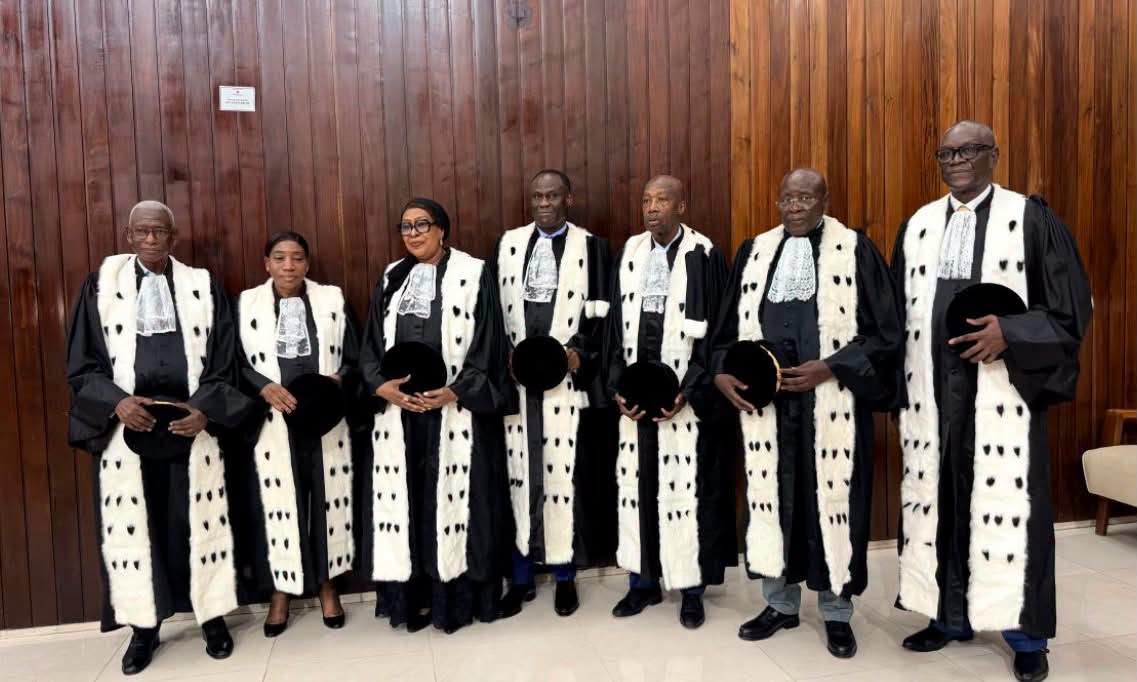
Adama Ndao Accuses Senegal Courts of Betraying Public Trust
“Obey me as long as I obey God and His Prophet; if I disobey them, you owe me no obedience,” Adama Ndao wrote, quoting the first caliph Abou Bakr as-Siddiq in an open letter addressed to Senegal’s judicial and academic elites published by Xalima.
Ndao, a jurist writing from Washington, argued that Senegal’s magistrates, Constitutional Council members, law professors and senior civil servants have betrayed the public trust that funded their education “from primary school to the doctorate.” He accused the country’s highest courts of weakening constitutional authority through a series of decisions favoring executive power or corporate privilege.
The Constitutional Council validated former President Abdoulaye Wade’s controversial third-term candidacy in 2012 by excluding his first seven-year term from the count, Ndao wrote. In 2022, the Council split the national list of the PASTEF coalition, rejecting titular candidates while keeping substitutes. In 2026, it blocked an anti-corruption parliamentary proposal compliant with international conventions, intervening in the National Assembly’s internal functioning.
The Supreme Court’s Administrative Chamber compounded the damage in summer 2026, Ndao wrote. In July, it annulled SOGEPA evictions at Cité Fayçal, allowing magistrates and former senior officials to remain in state housing after retirement in violation of Decree 91-490. In August, it gave the executive latitude to delay local elections until the end of 2027, contravening Article L.269 of the Electoral Code requiring elections in the fifth year of the mandate, before January 23, 2027.
“When the judge seems to serve executive calculations or protect his own corporation’s privileges instead of applying the law, the entire republican pact wavers,” Ndao wrote.
He contrasted the prosecution of opposition leader Ousmane Sonko between 2021 and 2023 — which fueled perceptions of politically motivated justice — with silence over the killing of 85 young citizens during 2021–2023 protests by security forces and civilians linked to the former regime. Ndao questioned President Bassirou Diomaye Faye’s call to “turn the page” for peace, writing that “no president can erase blood crimes nor indefinitely delay justice owed to victims and the nation,” citing the absence of trials, non-compliance with the UN Convention Against Torture, and the referral to the International Criminal Court in The Hague.
On financial accountability, Ndao wrote that audit bodies including OFNAC, the Court of Accounts, IGE and IGF documented mismanagement and embezzlement for years. Under former President Macky Sall, dossiers were blocked at the presidency.
Prime Minister Ousmane Sonko transmitted all audit reports in his charge to the justice system and the presidency, but “hesitations” by President Faye have suspended expected prosecutions, Ndao wrote. Alleged perpetrators remain free with vast fortunes, no asset seizures in Senegal or abroad, and no recovery of funds linked to a debt exceeding 13,000 billion CFA francs.
“Recovering stolen public money and punishing economic and financial crimes is a requirement of justice, provided fair trial rules, defense rights and legality are strictly respected,” Ndao wrote. “The Republic needs not technicians submissive to the power of the moment, but law professors faithful to their principles, independent magistrates, constitutional judges free in their conscience and great servants of the State subject only to the law.”