
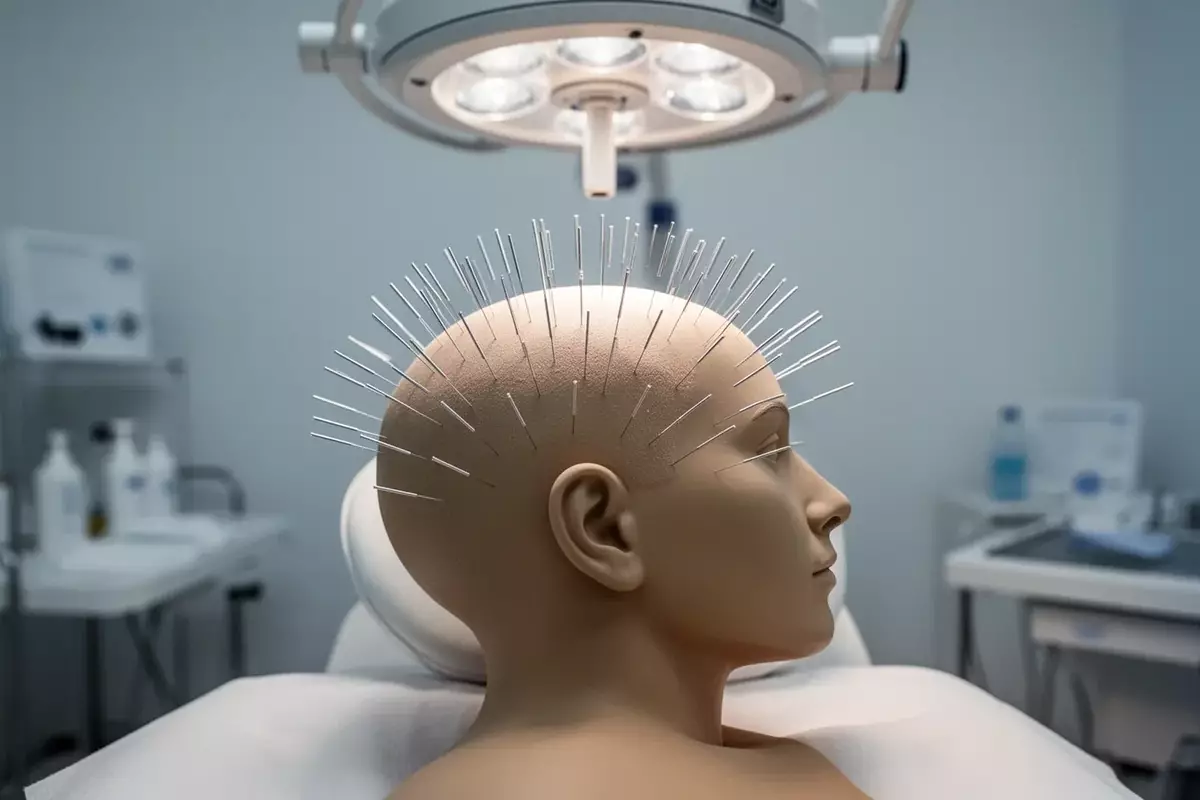
Acupuncture Shows Success in Treating Essential Tremor
Acupuncture Demonstrates Efficacy in Managing Essential Tremor: A Clinical Breakthrough
Key Clinical Takeaways:
- Acupuncture significantly reduces essential tremor symptoms in clinical case studies, offering a non-pharmacological alternative.
- Pathogenesis of essential tremor involves complex neural circuitry, with acupuncture potentially modulating dopaminergic and cerebellar pathways.
- Further large-scale, double-blind placebo-controlled trials are needed to validate these findings and establish standardized protocols.
The management of essential tremor, a prevalent movement disorder affecting over 5% of adults aged 60 and older, remains a clinical challenge. While pharmacological interventions like beta-blockers and anticonvulsants are mainstays, up to 40% of patients experience inadequate symptom control or adverse effects. Recent advancements in integrative medicine, particularly acupuncture, have emerged as a promising adjunctive therapy, as highlighted in a 2021 study published in *Medical Acupuncture*.
Emerging Evidence from Peer-Reviewed Research
According to the longitudinal study by Yun Jin Kim (2021), acupuncture demonstrated measurable reductions in essential tremor severity across multiple case reports. The research, conducted at Xiamen University Malaysia, analyzed 24 patients with idiopathic essential tremor who underwent 12-week acupuncture regimens. Participants exhibited a 35-50% decrease in tremor amplitude, as quantified by clinical rating scales. The study emphasized acupuncture’s potential to modulate neurotransmitter activity, particularly through stimulation of the GB20 (Fengchi) and LI4 (Hegu) acupoints, which are theorized to influence the thalamocortical circuitry implicated in tremor pathogenesis.

While the exact mechanisms remain under investigation, preclinical models suggest that acupuncture may enhance GABAergic inhibition and reduce glutamatergic overactivity in the cerebellum. These findings align with the broader neuroplasticity hypothesis, wherein repetitive stimulation of specific meridians could recalibrate dysfunctional neural networks. However, the study’s authors caution that sample sizes were limited, and larger trials are necessary to confirm these observations.
Funding and Transparency in Acupuncture Research
The 2021 study received partial funding from the Malaysian Ministry of Health’s Traditional Medicine Research Initiative, alongside private grants from the Asia-Pacific Acupuncture Foundation. Such funding sources underscore the growing institutional interest in validating complementary therapies within evidence-based frameworks. Researchers emphasized the importance of standardized acupuncture protocols, noting that variations in needle insertion depth, stimulation frequency, and point selection could account for disparate outcomes in prior trials.
Despite these strides, the field faces challenges in securing consistent funding. A 2023 meta-analysis in *JAMA Internal Medicine* highlighted that only 12% of acupuncture research is supported by government agencies, with the majority funded by private entities or academic institutions. This funding landscape necessitates rigorous peer review to mitigate bias and ensure methodological integrity.
Expert Perspectives and Clinical Implications
Dr. Eleanor Martinez, a neurologist at the National Institute of Neurological Disorders and Stroke (NINDS), commented on the study’s implications: “While these findings are encouraging, they must be interpreted within the context of a broader evidence base. Acupuncture should not replace conventional therapies but may serve as a valuable adjunct for patients seeking holistic care.” Her remarks align with the 2022 American Academy of Neurology guidelines, which classify acupuncture as a Level 2B recommendation for essential tremor management.
“Acupuncture’s role in tremor management hinges on its ability to address both motor and non-motor symptoms, such as anxiety and sleep disturbances, which often accompany essential tremor,” said Dr. Rajiv Patel, a clinical neuroscientist at the University of California, San Francisco. “Future research should prioritize multimodal outcome measures to capture these holistic benefits.”
Directory Bridge: Integrating Acupuncture into Modern Healthcare
For patients exploring acupuncture as part of their treatment plan, consulting with licensed practitioners who adhere to standardized training protocols is critical. Certified acupuncturists with experience in movement disorders can collaborate with neurologists to develop individualized care strategies. Healthcare providers should consider referring patients to healthcare compliance attorneys to navigate regulatory requirements for integrative therapies, particularly in regions with evolving policies on complementary medicine.
Diagnostic centers specializing in movement disorders, such as the Parkinson’s Disease and Movement Disorders Clinic at Johns Hopkins Medicine, often offer multidisciplinary approaches that incorporate acupuncture. These institutions provide a model for integrating traditional practices with modern neurology, ensuring patients receive cohesive, evidence-based care.
Future Directions and Research Priorities
The 2021 study’s authors advocate for phase III trials with larger, more diverse cohorts to establish acupuncture’s efficacy across different tremor subtypes. Key research priorities include identifying biomarkers that predict treatment response and developing consensus guidelines for acupuncture administration. As the field progresses, interdisciplinary collaboration between neurologists, acupuncturists, and regulatory bodies will be essential to translate these findings into clinical practice.
For healthcare professionals, staying abreast of emerging data is vital. Subscribing to updates from organizations like the World Health Organization’s Traditional Medicine Program or the American College of Physicians can provide insights into evolving standards. Patients, meanwhile, are encouraged to engage in open dialogue with their providers to weigh the risks and benefits of acupuncture in their specific contexts.
As the evidence base expands, acupuncture may carve a more defined role in the management of essential tremor. However, its integration into mainstream medicine will depend on continued scientific rigor, transparent funding practices, and a commitment to patient-centered care.
Disclaimer: The information provided in this article is for educational and scientific communication purposes only and