ACMI ‘Lifelike’ Exhibition Traces Puppetry From Pinocchio to Digital Age
ACMI is opening a new exhibition titled Lifelike: Puppets, Movies and Magic to celebrate the history and craft of onscreen puppetry.
The display features concept art, behind-the-scenes materials, and physical puppets from various cinematic eras. It tracks the evolution of the medium from ancient traditions to modern digital techniques.
Visitors can view iconic creations including Steven Spielberg’s E.T. (1982), Jim Henson’s Muppets (1955–), and creatures from The Dark Crystal (1982). The collection also includes animatronic work from New Zealand-based Wētā Workshop, such as a facehugger from Alien: Romulus (2024).
The exhibition explores how puppetry has transitioned from physical models to digital characters. This includes the use of motion capture to animate characters like Gollum from The Lord of the Rings (2001–03) and Caesar from the Planet of the Apes trilogy (2011–17), which were performed by Andy Serkis and animated by Wētā FX.
Evolution of puppet designs
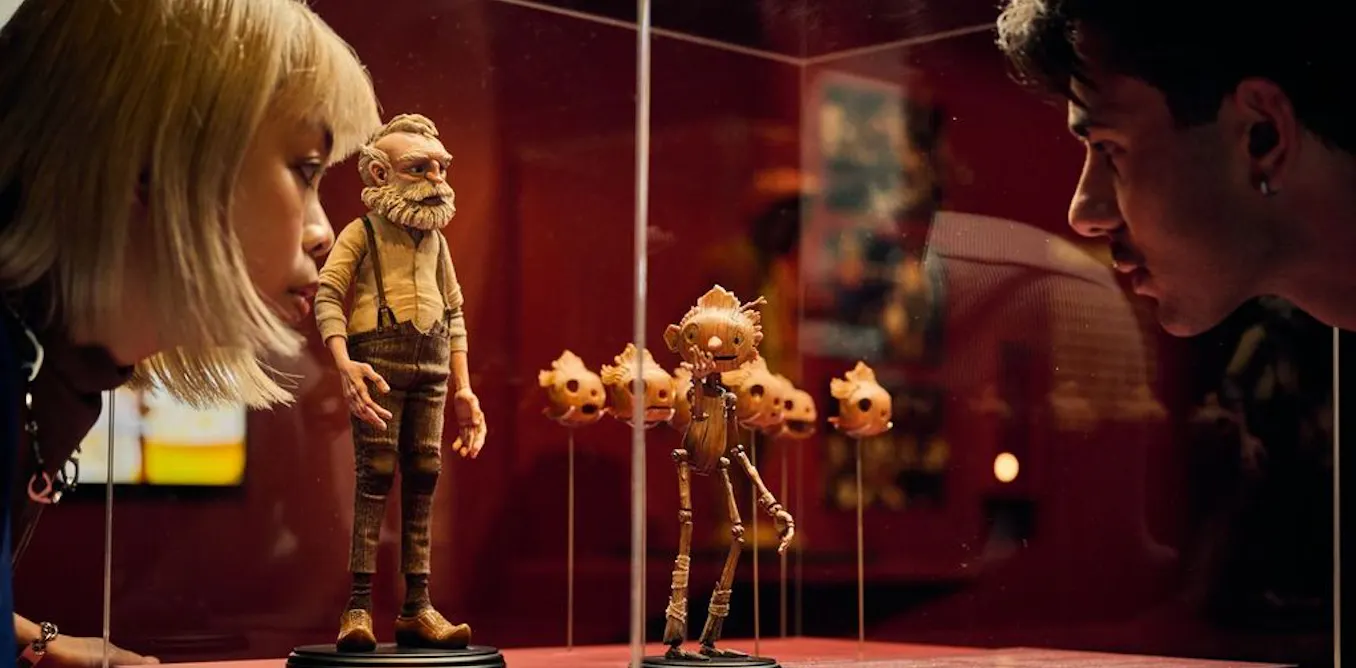
The exhibition uses Pinocchio to demonstrate how different eras approach character design. It displays Carlo Rambaldi’s puppet from The Adventures of Pinocchio (1972), which is described as taller and simpler than later versions.
Other versions include the 1996 puppet designed by Jim Henson’s creature shop, which features large, expressive eyes, and Guillermo del Toro’s Pinocchio (2022). Del Toro’s version, which won the 2023 Oscar for Best Animated Feature, has a rough-hewn appearance that looks almost “tree-like” to reflect the emotions of the character Gepetto.
The show also highlights the horror genre with characters such as Annabelle and an original Chucky doll. An interactive exhibit allows visitors to operate a Muppet-like character to experience the difficulty of controlling a puppet’s mouth and hands simultaneously.
Global and cultural influences
While the exhibition maintains a Hollywood focus, it acknowledges global traditions and diverse perspectives. One exhibit features shadow puppets modeled after Star Wars characters, created by the Malaysia-based team Fusion Wayang Kulit in the traditional Southeast Asian wayang kulit style.
The display includes a nod to the “suitmation” technique used in the original Japanese Godzilla (1954), where an actor in a full body suit is supplemented by hand puppetry for close-ups. Short films are also included to showcase puppetry from queer, Indigenous, and global perspectives.
Located at Federation Square in Melbourne, ACMI (Australian Centre for the Moving Image) is Australia’s national museum of screen culture, launched in 2002 with a mandate to promote, exhibit, create and collect the moving image. Since opening its purpose-built facilities in October 2002, it has operated world-class cinemas and presented a rotating program of major exhibitions spanning film, television, animation, videogames and digital art.
Lifelike: Puppets, Movies & Magic is showing at ACMI until April 18 2027.