
Rising Premiums Could Drive Millions to Drop or Downgrade ACA Coverage, New Poll Finds
A recent survey by the kaiser Family Foundation (KFF) reveals that significant premium increases could led a substantial number of Affordable Care Act (ACA) Marketplace enrollees to seek cheaper plans or forgo insurance altogether. The poll, conducted in early November during the initial weeks of open enrollment, examined how enrollees anticipate responding to potential cost hikes as enhanced ACA tax credits are set to expire.
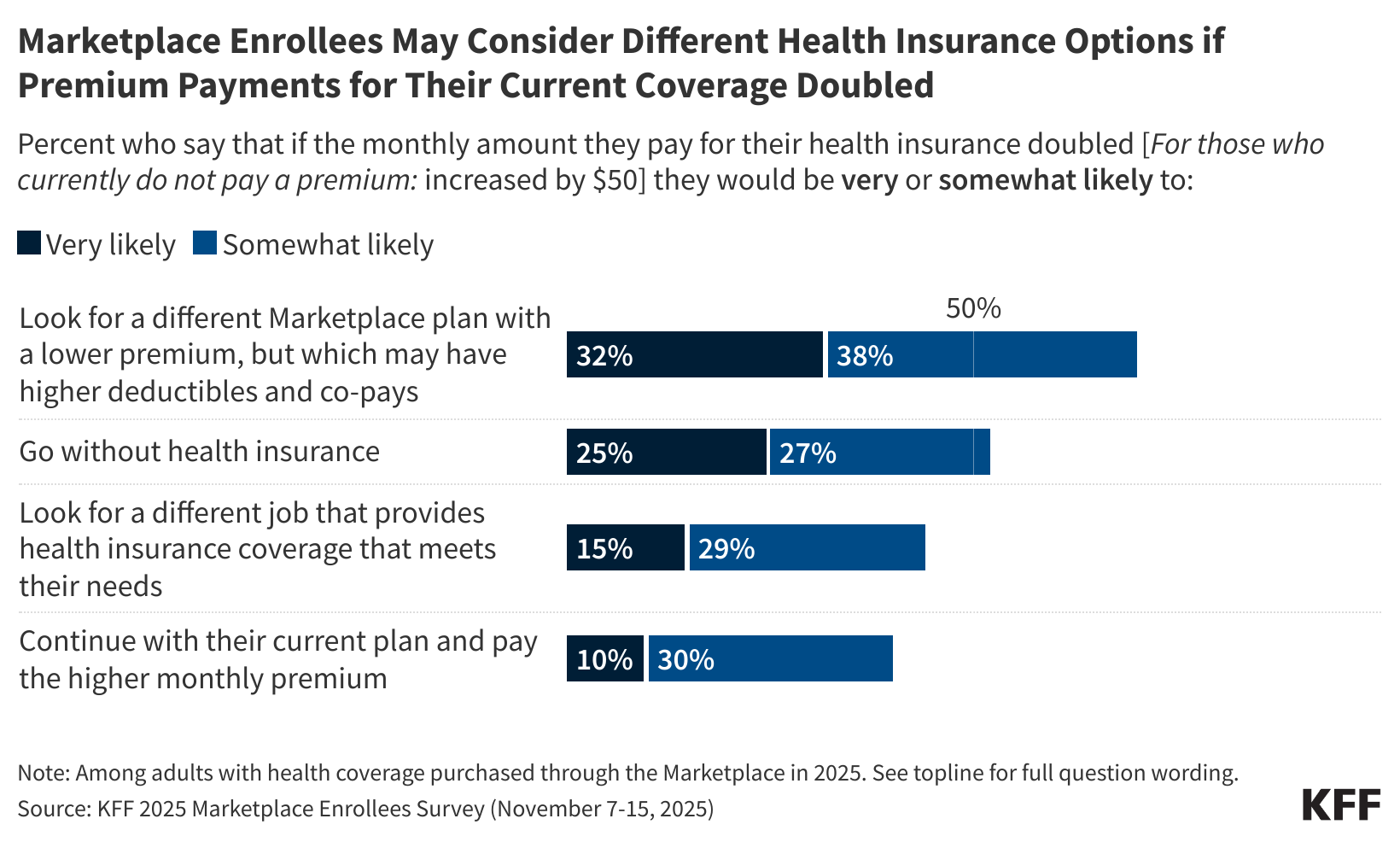
The survey found that if premiums doubled, approximately one-third (33%) of Marketplace enrollees stated they would “very likely” search for a lower-premium plan, even if it meant accepting higher deductibles and co-pays.Moreover, one in four (25%) indicated they would “very likely” go without health insurance next year.
These responses come as roughly 22 million of the 24 million Marketplace enrollees currently benefit from expiring tax credits. Without an extension of these credits, premiums are projected to rise by an average of 114%, increasing from $888 to $1,904 annually.
The financial strain of increased costs is a major concern for enrollees. Nearly six in ten (58%) reported they could not afford a $300 annual premium increase without substantially impacting their household finances, while an additional 20% would struggle with a $1,000 increase.
The KFF poll also explored how enrollees would cope with a $1,000 increase in total healthcare costs (including premiums, deductibles, and cost-sharing). The majority (67%) would likely cut back on daily household expenses, while over half (54%) would consider seeking additional employment or working extra hours. Forty-one percent would likely delay or skip paying other bills, and 34% would resort to taking out loans or increasing credit card debt.
“The poll shows the range of problems Marketplace enrollees will face if the enhanced tax credits are not extended in some form, and those problems will be the poster child of the struggles Americans are having with health care costs in the midterms if Republicans and Democrats cannot resolve their differences,” said Drew Altman, KFF President and CEO.
The survey asked enrollees to assess the likelihood of various responses to a doubling of their monthly premiums (or a $50 increase for those currently paying nothing).
Open enrollment for 2026 coverage began November 1st and continues through January 15th in most states. However, consumers wanting coverage effective January 1st must enroll by December 15th. The vast majority of enrollees (89%) anticipate making a decision by the end of the year, with many already having determined their coverage plans.
