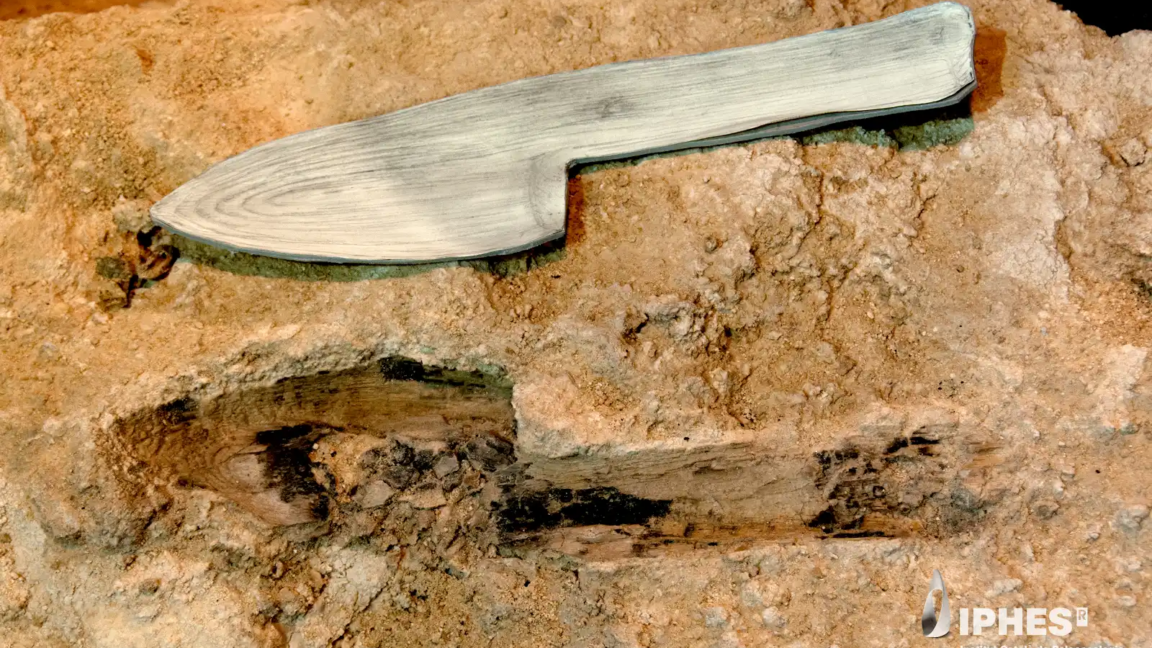
Abric Romaní limestone molds preserve Neanderthal wooden tools
Neanderthal Wooden Tools Preserved in Stone at Abric Romaní
Mineral-rich water coated 597 wooden artifacts in a limestone-like crust at the Abric Romaní rock shelter in Capellades, west of Barcelona, preserving hollow molds that reveal spears, digging sticks, bark trays, shelter parts, and a unique club from 62,000 to 40,000 years ago, according to a recent Science Advances study.
-
The Tech TL;DR:
- Limestone mineralization at the Spanish site preserved 597 Paleolithic wooden artifacts—including spears, digging sticks, and bark trays—dating from 62,000 to 40,000 years ago.
- The collection features a club unlike any previously discovered, suggesting Neanderthals were likely much more than just Homo sapiens’ dumber cousins.
- Because wood rots quickly, scientists previously relied on a handful of waterlogged European finds, making this large mold catalog a major expansion of early woodworking data.
Preservation of Paleolithic Woodwork in Spain
The Stone Age owes its name to tools that survived to our time, yet early humans relied heavily on wood due to its ease of processing. Paleolithic woodwork rarely survives because organic material rots quickly in standard sediment. At Abric Romaní, however, mineral-rich groundwater mineralized around the wood, creating durable crusts. When the organic matter decomposed entirely, it left behind precise hollow molds faithful to the original tools’ dimensions.
Spanish archaeologists cataloged 597 wooden remains from Neanderthal living zones across the site. The inventory documents specialized gear designed for daily survival. Among the recovered forms are digging sticks, structural elements for shelters, protective bark trays, and spears.
Comparison with Other European Wooden Artifact Discoveries
Prior to the findings at Abric Romaní, the sparse record of Paleolithic wooden artifacts relied almost exclusively on anaerobic, waterlogged sediments where oxygen deprivation slowed decay. Notable comparative finds include older weapons from other European excavations.
| Artifact Name | Location | Material Context |
|---|---|---|
| Spears | Schöningen, Germany | Waterlogged sediment |
| Spear Tip | Clacton-on-Sea, England | Waterlogged sediment |
| Spear | Lehringen, Germany | Waterlogged sediment |
| Spears, Digging Sticks, and Unique Club | Abric Romaní, Spain | Limestone-crusted molds |
While the German and English discoveries offered critical proof of early hunting implements, the Spanish collection provides a substantially larger dataset. The presence of a club unlike anything seen before in the archaeological record adds specific weight to the range of wooden implements crafted by Neanderthal communities.