
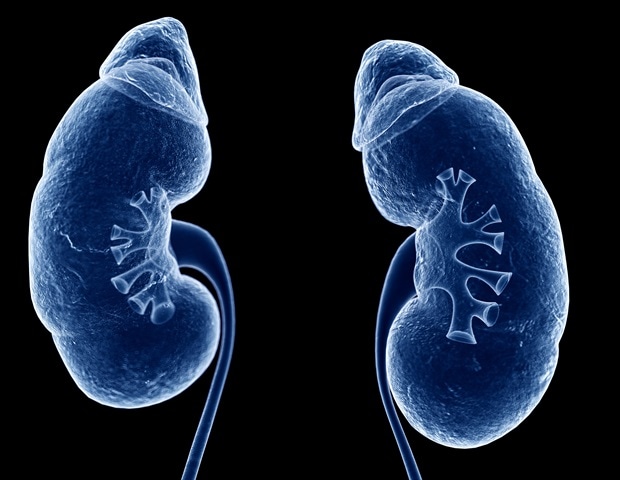
A minimally invasive procedure, known as ablation, is as effective as traditional surgery in treating compact kidney cancers, according to a large-scale study conducted in Denmark and published today in Radiology, a journal of the Radiological Society of North America (RSNA).
The study, which followed nearly 1,900 patients over almost a decade, focused on those diagnosed with stage T1a renal cell carcinoma – a cancer often discovered incidentally during imaging scans performed for unrelated conditions, such as prostate or ovarian examinations. Researchers found that ablation, which uses extreme heat or cold to destroy tumors, offered comparable outcomes to surgical removal, with the benefit of faster recovery times and fewer complications.
“These incidental cancers are putting increasing pressure on health care systems,” said Iben Lyskjær, Ph.D., M.Sc., lead author of the study and an associate professor at Aarhus University and Aarhus Hospital in Denmark. “While early detection improves outcomes, it also raises the need for better risk stratification and treatment options.”
Currently, surgical tumor resection remains the standard of care for stage T1a renal cell carcinoma. However, ablation has gained traction as a less invasive alternative. The Danish study, a nationwide registry-based cohort study encompassing data from January 2013 to December 2021, aimed to rigorously compare the two approaches in a real-world clinical setting. The research team analyzed data from 1,862 patients with a median age of 64, including 1,305 men.
Patients were divided into three groups: 540 who underwent ablation (42 with radiofrequency ablation and the remainder with cryoablation), 1,002 who had surgical resection, and 320 who underwent nephrectomy – the complete or partial removal of the kidney. The primary outcome measured was cancer progression, defined as distant metastasis or local recurrence.
The study revealed no significant difference in the risk of cancer progression between the ablation and resection groups. However, local recurrence of the disease was observed more frequently after ablation compared to resection and nephrectomy (2.41%, 1.20%, and 0%, respectively). Dr. Lyskjær emphasized that these recurrences can be effectively treated with further ablation or surgery, and did not correlate with poorer overall survival rates.
Distant metastasis occurred more often in patients who underwent nephrectomy (4.38%) than in those treated with resection (1.90%) or ablation (1.67%). Ablation patients experienced significantly shorter hospital stays, with most returning home on the same day, and fewer hospital contacts within 30 days of treatment, indicating a reduced incidence of post-treatment complications.
“Our study demonstrated that the overall progression rates were low across all treatment modalities, supporting the effectiveness of both ablation and resection for T1a renal cell carcinoma,” Dr. Lyskjær stated. She also noted the uncertainty surrounding the potential for incidentally discovered tumors to become aggressive, suggesting a rationale for considering minimally invasive approaches more broadly.
“The best choice depends not only on the patient’s characteristics, but also on the patient’s preferences,” Dr. Lyskjær added. “We should be showing patients data and asking the patients what kind of treatment they want.”
The research was conducted in collaboration with Johanne Ahrenfeldt, Ph.D., M.Sc.Eng., Jesper Jespersen, M.Sc., Pernille Tonnesen, B.Sc., Tommy Kjærgaard Nielsen, M.D., Ph.D., Anna Krarup Keller, M.D., Ph.D., and Laura Iisager, M.Sc.
