
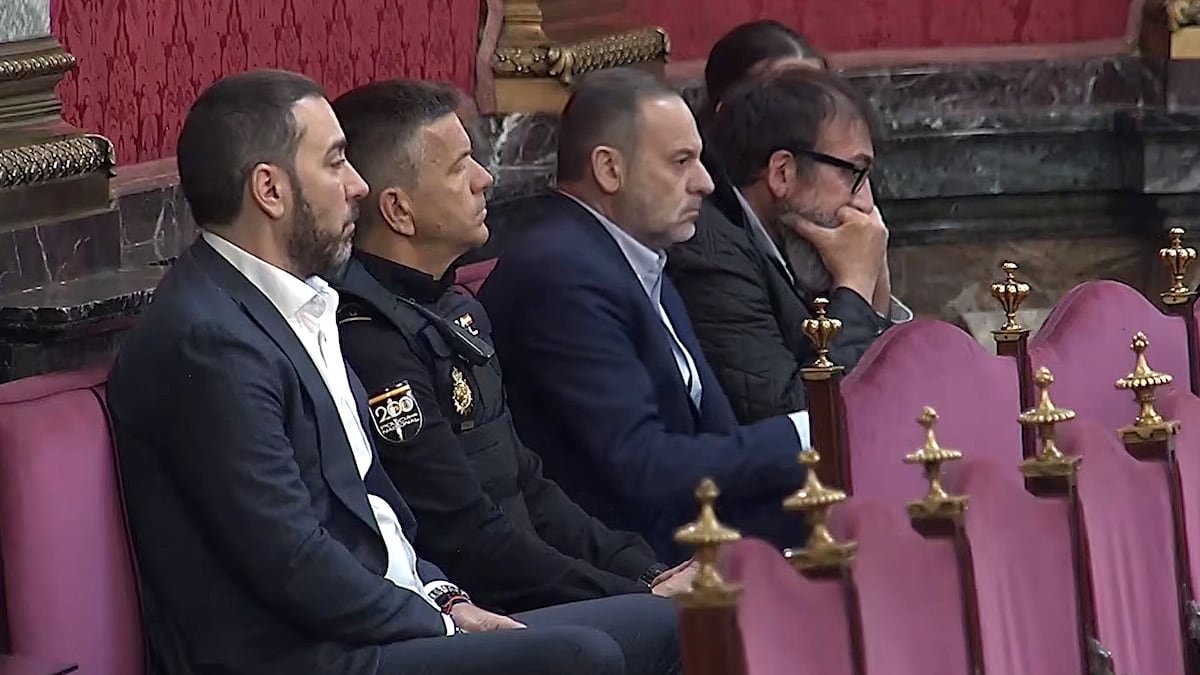
Ábalos and Koldo Trial: Brother Admits Collecting Cash Envelopes from PSOE
The Spanish Supreme Court is currently presiding over a high-stakes corruption trial involving former Minister José Luis Ábalos, business associate Koldo García and businessman Luis Roldán Aldama. Central to the proceedings is testimony from Koldo’s brother, who admitted to collecting envelopes of cash from PSOE party headquarters to fund the former advisor’s lifestyle.
This isn’t just a story about “dirty envelopes.” It is a systemic failure of procurement oversight during a global health crisis. When the urgency of a pandemic meets the opacity of political patronage, the result is usually a massive drain on public coffers and a collapse of institutional trust.
The core problem here is the erosion of the “arm’s length” principle in government contracting. By bypassing standard tender processes, the defendants allegedly created a pipeline where public funds were diverted into private pockets through inflated mask contracts. For the average citizen, this means less efficient healthcare delivery. for the business community, it creates an uneven playing field where political connections outweigh competitive pricing.
The Paper Trail at Ferraz
The testimony provided by Joseba García Izaguirre has sent shockwaves through the Spanish political establishment. By admitting that he personally visited the PSOE headquarters—specifically the Ferraz street offices in Madrid—to collect cash, he has provided a physical link between the alleged corruption and the heart of the governing party’s administration.

García Izaguirre claimed these funds were described as “party expenses” for Ábalos and his team. However, the prosecution views this as a sophisticated laundering mechanism designed to mask the true origin of the money: commissions from the procurement of surgical masks during the COVID-19 emergency.
This level of institutional penetration suggests that the corruption wasn’t a rogue operation by a few aides, but a structured system of kickbacks. As the trial progresses, the focus shifts from who took the money to how the internal controls of the Spanish government failed so spectacularly.
“The admission of cash transfers within a political headquarters transforms a case of procurement fraud into a broader crisis of institutional integrity. We are no longer looking at a simple contract dispute, but at a potential criminal enterprise operating under the veil of state urgency.”
For businesses operating in Spain, this volatility underscores the necessity of rigorous compliance. Many firms are now seeking specialized corporate compliance attorneys to ensure their government contracts are bulletproof and devoid of any perceived political bias.
Navigating the Supreme Court’s Scrutiny
Because José Luis Ábalos held a ministerial position, the case falls under the jurisdiction of the Spanish Supreme Court (Tribunal Supremo), the only body capable of trying high-ranking officials. The defense strategy has been one of denial and distance. Ministers Armengol and Torres have already testified, insisting they never issued direct orders to contract the specific companies involved in the “Koldo plot.”
However, the “Information Gap” in these testimonies is the lack of digital transparency. In 2026, the debate has shifted toward why Spain’s digital procurement systems didn’t flag these anomalies in real-time. While the Official State Gazette (BOE) records the contracts, the actual decision-making process remains a “black box.”
The economic ripple effect is significant. When public trust in procurement vanishes, foreign direct investment often dips. International firms are hesitant to bid on infrastructure projects if they believe the “winner” is decided in an envelope at a party headquarters rather than through a transparent bid.
Analysis of the Procurement Breach
| Failure Point | Immediate Impact | Long-term Systemic Risk |
|---|---|---|
| Emergency Procurement | Overpayment for PPE/Masks | Normalization of “Direct Awards” without audit |
| Political Oversight | Cash flows to party insiders | Erosion of the separation between State and Party |
| Audit Trails | Missing documentation on commissions | Legal vulnerability for all current state contracts |
The fallout extends beyond Madrid. Regional governments across Spain are now reviewing their own emergency spending from the 2020-2022 period. There is a growing demand for independent forensic auditors to scrub the books of municipal health departments to ensure no similar “envelopes” were exchanged at the local level.
Precedent and Punishment
The court is not only weighing charges of bribery and influence peddling but also the potential for “malversación” (misuse of public funds). The legal definition of this crime has been a point of intense political contention in Spain, often tied to the broader narratives surrounding Catalan independence movements, but here it applies to the raw theft of taxpayer money.
Legal experts suggest that the testimony of the brother is a turning point. In Spanish law, the testimony of a relative can be scrutinized, but when corroborated by bank movements or digital evidence, it becomes devastating.
“The challenge for the prosecution is to prove that the money in those envelopes was directly linked to the mask contracts and not merely ‘political funds.’ Once that link is established, the criminal liability for the ministers becomes almost unavoidable.”
This trial serves as a warning to any entity engaging with the state. The risk of “guilt by association” is high. Companies are increasingly turning to risk management consultants to vet their political connections before pursuing public tenders.
The Institutional Aftermath
As we move deeper into 2026, the “Koldo Case” will likely be remembered as the catalyst for a total overhaul of Spanish procurement law. The transition from “emergency decrees” to “digital transparency” is no longer a suggestion—it is a survival mechanism for the Spanish state.
The real tragedy is the opportunity cost. The millions of euros allegedly diverted into envelopes could have funded permanent healthcare infrastructure or advanced medical research. Instead, they funded a lifestyle of luxury for a compact circle of advisors and middlemen.
The legal battle is far from over, and the potential for further “whistleblowers” from within the party remains high. As the Supreme Court continues to peel back the layers of this conspiracy, the only certainty is that the era of the “untouchable” political advisor is ending.
Whether you are a business owner navigating the complexities of European public law or a citizen demanding transparency, the lesson is clear: trust is a luxury, but verification is a necessity. For those caught in the crossfire of these legal upheavals, finding verified, objective legal counsel and financial investigators through the World Today News Directory is the only way to ensure your own interests are protected from the fallout of state corruption.