A Hidden super-Earth May Orbit the Sun Far Beyond Neptune
A hidden super-Earth may orbit the Sun far beyond Neptune, according to solar system simulations published in a study.
Scientists have sought to explain the architecture of our solar system by running N-body simulations tracking its evolution over 4.5 billion years, as detailed in the study titled “Signatures of an Earth-class planet in the distant Solar System” published this November 23.
- Researchers simulated 4.5 billion years of solar system evolution to explain distant orbital anomalies.
- The hypothetical Planet X2 has an estimated mass between 1.5 and 2 times that of Earth.
- The object orbits between 350 and 500 astronomical units from the Sun, according to Monthly Notices of the Royal Astronomical Society.
Simulating Planet X2 Beyond the Kuiper Belt
Astronomers have long puzzled over the elongated and heavily tilted orbits of distant trans-Neptunian objects like Sedna and 2012 VP113, which are difficult to explain using the gravitational pull of the eight known planets. To test whether an undiscovered world shapes these paths, researchers ran thousands of computer simulations mapping the solar system over its 4.5-billion-year history, Meteored France reported.
These simulations suggest the possible existence of a hidden object, one to two times the mass of Earth, located between 350 and 500 astronomical units from the Sun. Beyond Neptune lies the Kuiper belt, extending between 38 and 50 astronomical units, where one astronomical unit corresponds to the average distance between the Earth and the Sun.

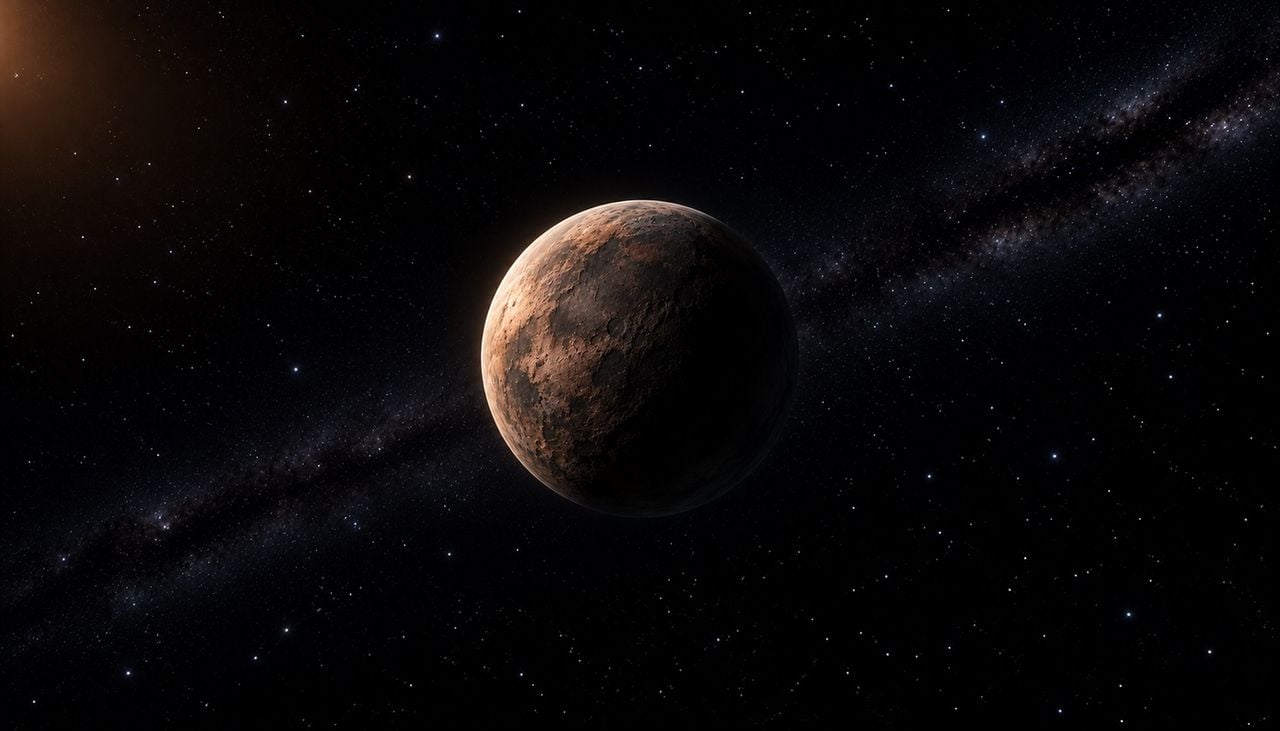
The resulting model points to a rocky or icy world christened Planet X2, possessing a mass roughly 1.5 to 2 times that of Earth. Unlike the gas giants closer in, this distant body would maintain an elliptical orbit averaging between 350 and 500 astronomical units from the Sun, keeping a perihelion of at least 200 astronomical units so it does not disrupt stable resonances near Neptune.
The simulations showed these orbits became highly inclined and detached, matching the unexplained paths observed by astronomers. “If this planet exists, it could change the way we understand the history of our Solar System and the way its objects the most distant en,” Patryk Sofia Lykawka said.
Comparing Planetary Models in the Outer Solar System
Planet X2 differs significantly from the famous Planet Nine hypothesis first proposed in January 2016 by Mike Brown and Konstantin Batygin of the California Institute of Technology, according to Meteored France. Planet Nine was theorized to be five to ten times the mass of Earth, but Planet X2 is lighter and shares the distant domain without destabilizing the Kuiper belt.
Unlike the famous Planet Nine, this celestial body would form a distinct entity, shaping the distant architecture of our stellar neighborhood. As reported in Monthly Notices of the Royal Astronomical Society and noted by ScienceAlert, these observations suggest the existence of a hidden second Earth, in addition to the hypothetical Planet Nine already discussed for several years.
Planetary scientists note that both worlds could theoretically co-exist, each governing distinct populations of detached ice bodies at the solar system’s edge.
“The question is therefore the following: if we cannot reproduce them with the planets as we know them, what would happen if we add something more, something far enough away that we haven’t discovered yet, and we see what happens?”, Jonti Horner of the University of Southern Queensland told Slate.fr.
Historical Context and Future Searches
At the beginning of the 20th century, the astronomer Percival Lowell had already envisioned the existence of an additional planet. Another possibility is that one of these celestial bodies is still there but on an orbit very far from the Sun, making it so faint and slow that it has escaped astronomers until now.

Directly imaging Planet X2 remains exceptionally challenging due to its extreme distance and faint reflected sunlight, GEO reported.