
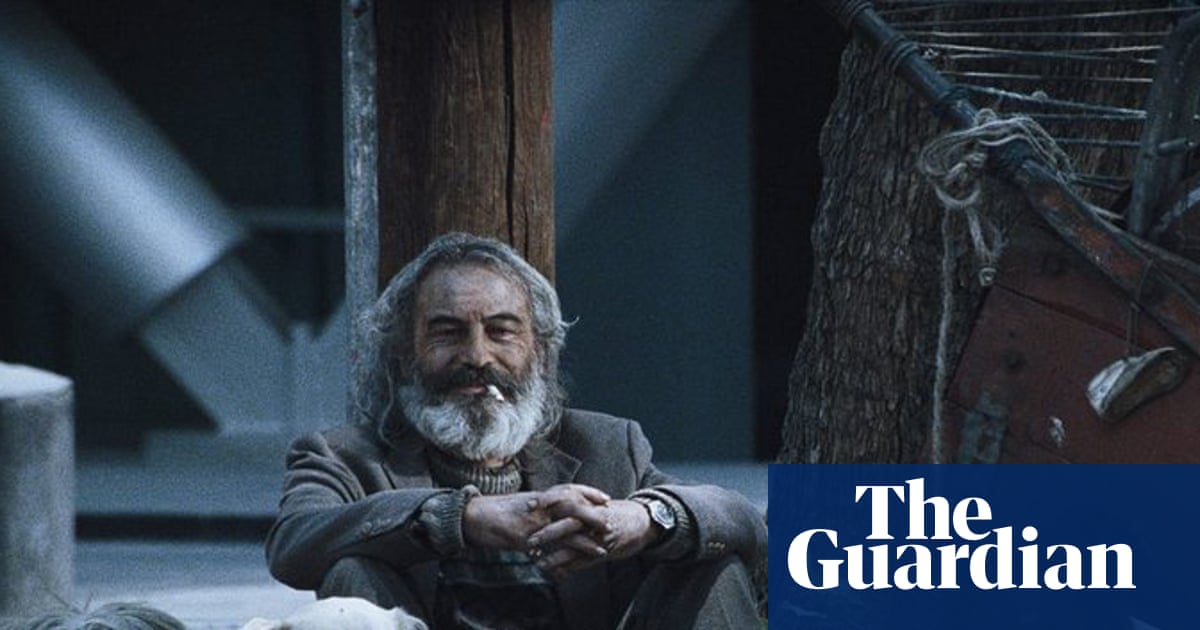
Los Angeles, CA – Alejandro González Iñárritu’s immersive film installation, Sueño Perro, opened at the Los Angeles County Museum of Art (LACMA) this week, marking the 25th anniversary of his breakthrough film, Amores Perros. The installation, comprised of excavated footage from the 2000 film’s editing process, presents a non-narrative exploration of cinema as a tactile and temporal medium.
Sueño Perro utilizes over a million feet of film—fragments discarded during the editing of Amores Perros—illuminated by an assemblage of 35mm projectors. The resulting “mosaic of celluloid and sound bites of Mexico City,” as described by LACMA, strips away traditional storytelling in favor of a purely sensorial experience. Iñárritu described the installation as a “resurrection” of lost material, offering audiences a glimpse into what “never was.”
The project, seven years in the making, began after Iñárritu revisited a remastered version of Amores Perros following its 20th-anniversary Criterion release. He was struck by the film’s enduring power. “The bite of these dogs was still really, really terrible,” he told The Guardian. “It was fascinating to see that the film was still holding up so well.” This prompted him to investigate the fate of the unused footage, which he discovered had been archived at the National Autonomous University of Mexico (UNAM).
Iñárritu’s approach to filmmaking, characterized by its fragmented and non-linear structures, was influenced by his father, a natural storyteller who would often begin narratives in medias res. “He always started with what was almost the end of the story, so he threw you a hook, but then he went back to the middle,” Iñárritu explained. This technique, evident in Amores Perros’s interwoven storylines stemming from a central car crash, is further deconstructed in Sueño Perro.
The installation diverges significantly from conventional cinematic narrative. Iñárritu intentionally removed the need for a compelling story, allowing the images and sounds to exist independently. “It’s when you are liberated from the narratives that we are so addicted to—plot twists and all that—when you liberate the images from that, the images have to say something,” he said. He likened the experience to how memories function, as “flickers, images, moments…not related, but in a way they imply something, they hopefully produce you feel something.”
Iñárritu too drew inspiration from Latin American literary giants like Carlos Fuentes and Gabriel García Márquez, as well as Akira Kurosawa’s Rashômon, which explores the subjectivity of truth through multiple perspectives. He noted a growing disconnect between “truth” and “reality,” arguing that “reality does not give a damn about our truth or about our beliefs.” He sees his work, and films like Rashômon, as attempts to capture a single event from multiple viewpoints, acknowledging the inherent limitations of any singular narrative.
The installation’s physicality—the presence of actual film projectors and the tangible experience of light and sound—is a deliberate statement against the increasing dominance of artificial intelligence in filmmaking. Iñárritu described the projectors as “dinosaurs, that are the magic lanterns,” and believes the sensorial experience they provide is crucial. “The installation is remarkably sensorial, and that’s what I was interested in, that young guys will understand how that flicker and that flame and that sound is super sensorial and sensual – that is part of cinema,” he said. He characterized the experience as “anti-AI,” suggesting it’s a necessary counterpoint to the potentially isolating and disembodying effects of digital media.
Iñárritu is currently working on a modern film, Digger, starring Tom Cruise, but found the process of revisiting Amores Perros through Sueño Perro to be a welcome respite. “There’s so much pressure to finding the story, and that’s what I think was liberating about doing the installations, it was almost like a game,” he said. The installation remains on display at LACMA, with no confirmed closing date.
