
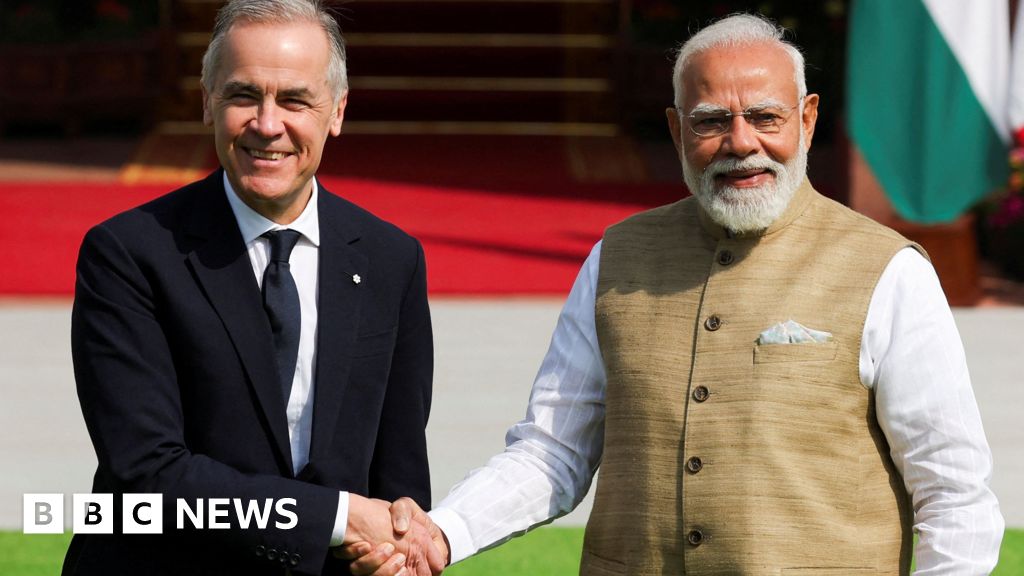
New Delhi – Canadian Prime Minister Mark Carney and Indian Prime Minister Narendra Modi announced a series of agreements Monday, signaling a significant thaw in relations and a renewed focus on bilateral trade and cooperation. The centerpiece of the agreements is a commitment to collaborate on nuclear energy, with Canada assisting India in the development of advanced reactor technology.
The announcement follows a one-on-one meeting between the two leaders at Hyderabad House in New Delhi, the first bilateral visit to India by a Canadian Prime Minister since 2018. Carney stated Canada is “going all-in on diversifying trade,” as the two nations aim to more than double two-way trade to $70 billion annually by 2030, according to a statement released by the Prime Minister’s Office.
Beyond nuclear energy, the partnership encompasses critical minerals, technology and artificial intelligence, talent and culture, and defense. Five Memorandums of Understanding (MOUs) were welcomed by both leaders, outlining specific areas of collaboration. Canada and India similarly agreed to finalize a comprehensive free trade agreement by the end of 2026.
The renewed focus on economic ties comes after a period of strained relations stemming from allegations of Indian foreign interference in Canadian affairs. Carney raised the issue of transnational repression with Modi during their meeting, according to the Prime Minister’s Office. Despite this, both leaders emphasized a desire to move forward and build a stronger, more productive relationship.
Total direct and indirect Canadian investment in India surpassed $110 billion in 2024, providing a substantial foundation for further economic integration. The Prime Minister’s Office highlighted that this year has seen more engagement between the Canadian and Indian governments than in any year over the past two decades, culminating in Carney’s visit.
In addition to government-to-government agreements, 13 university pacts were signed to strengthen academic ties, including a commitment from McGill University to launch an Artificial Intelligence (AI) centre in India. This initiative underscores the growing importance of technological collaboration between the two countries.
The visit included stops in both Mumbai and New Delhi, with Carney emphasizing the opportunities presented by India’s rapidly growing economy and increasing energy demands. Canada, as a major energy and agricultural producer and a leader in critical minerals and AI, is positioned to play a key role in supporting India’s economic development.
While the agreements represent a significant step forward, details regarding the specific terms of the nuclear energy collaboration and the free trade agreement remain to be finalized. Negotiations are expected to continue in the coming months, with a target date of year-end for the completion of the free trade deal.
