
Ground turkey frequently tests positive for Salmonella, but the presence of nanoplastics – microscopic particles shed from plastic packaging – may be increasing the pathogen’s virulence, according to new research from the University of Illinois Urbana-Champaign.
The study, led by Pratik Banerjee, associate professor in the Department of Food Science and Human Nutrition, examined the interaction between polystyrene nanoplastics and Salmonella enterica, a common cause of foodborne illness found in meat, poultry, and ready-to-eat foods. Researchers initiated the investigation after routine testing of ground turkey purchased from local grocery stores consistently revealed Salmonella contamination.
While proper cooking eliminates the risk of infection, the team sought to understand how the pathogen responds when in contact with plastic polymers commonly used in food packaging. Their findings, published this week, indicate that nanoplastics can alter Salmonella’s behavior, potentially increasing its ability to cause disease.
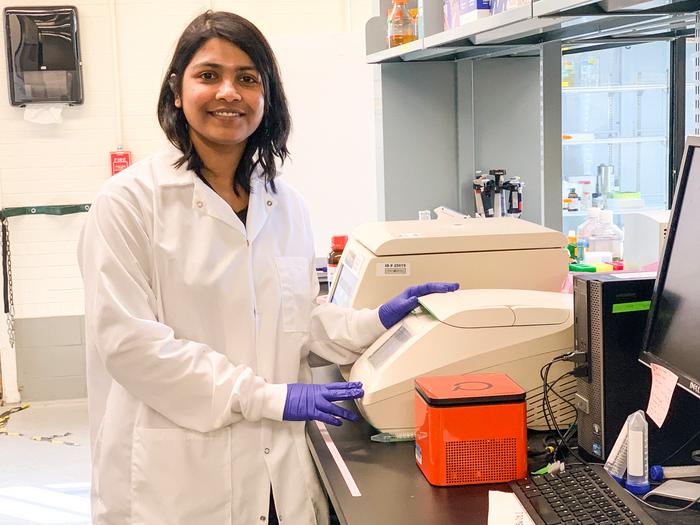
“We examined the physiology of Salmonella in response to nanoplastics, and we found an increased expression of virulence-related genes,” said Jayita De, a graduate student in Banerjee’s lab and lead author of the study. “The bacteria also formed thicker biofilms, which further indicates they are becoming more virulent.”
Biofilms are protective layers formed by clusters of microorganisms. These layers enhance bacterial survival, particularly in food processing environments where they can resist cleaning and sanitation efforts, according to the research.
The study also revealed a dynamic shift in Salmonella’s strategy when exposed to nanoplastics. Initially, the bacteria enter an “offensive mode,” increasing their virulence. Although, as resources become depleted, they switch to a “defensive mode,” prioritizing survival, and persistence. This cycle can repeat if nanoplastic concentrations increase.
“When the bacteria first encounter nanoplastic particles, they travel into offensive mode and become more virulent. But after a while, they start losing their resources and energy, so they switch to defensive mode, which allows them to persist in the environment for a longer time. If the concentration of nanoplastics rises, they can again switch to an offensive mode. It’s a trade-off between offense and defense,” De explained.
Beyond increased virulence, Banerjee’s team is also investigating whether nanoplastics contribute to antimicrobial resistance in Salmonella. Preliminary findings suggest that exposure to polystyrene nanoplastics may increase the expression of genes associated with antimicrobial resistance, though the precise mechanisms are still under investigation. Researchers hypothesize that the stress induced by nanoplastics could trigger bacteria to activate resistance mechanisms, even in the absence of direct exposure to antibiotics.
Despite these findings, researchers caution against drawing definitive conclusions about the implications for food safety. “However, we don’t aim for to sound the alarm and advocate that people stop using plastics. Plastic packaging provides a lot of benefits, such as reducing food spoilage and waste while keeping expenses low. We don’t know yet whether this is something we should be worried about,” Banerjee stated.
The University of Illinois team acknowledges their work represents an early step in understanding the complex interactions between nanoplastics and foodborne pathogens. Further research is needed to assess the potential risks and inform future food safety policies.
