
Singapore has expanded its Cognitive Intervention Programme (CIP) to seven centres across the island, aiming to provide support to over 1,200 individuals living with mild to moderate dementia by 2028. The initiative, spearheaded by the Agency for Integrated Care (AIC), builds on a successful two-year pilot program launched in October 2022.
The pilot, conducted across two centres, demonstrated significant positive outcomes. According to AIC, more than 85 percent of participants who completed the two-month, weekly intervention maintained or improved their cognitive scores. Over 90 percent reported an improvement in their overall mood. Since mid-2025, the CIP has been available at facilities operated by Dementia Singapore, Yong-en Care Centre, and NTUC Health, with Dementia Singapore also playing a key role in the initial pilot phase.
The CIP offers a structured, multimodal approach to dementia care, focusing on maintaining and enhancing participants’ cognitive, physical, and social well-being. Activities are individually tailored, encompassing memory games, dance, baking, and arts and crafts. Each session is facilitated by a trained staff member who guides up to four participants, fostering mental stimulation, social connection, and physical activity.
The program begins with a seven-week core component, consisting of three-hour sessions held twice weekly. Participants can then opt for a maintenance phase of up to 26 weeks to sustain the gains achieved during the initial stage. Following completion, participants are assessed and connected with appropriate resources, continuing to receive support from their healthcare providers.
AIC’s primary and community care development division chief, Winifred Lau, emphasized the distinct focus of CIP compared to traditional dementia day care centres. While day care centres often prioritize custodial care – assistance with daily living activities like feeding and walking – CIP is specifically designed for individuals with mild to moderate dementia who require cognitive stimulation. Prospective participants undergo assessment to ensure suitability for group-based and physical activities.
Support extends to caregivers as well, with regular check-ins, resources, and guidance provided. Feedback from the pilot program indicated that caregivers experienced reduced stress and caregiving burden after their loved ones participated in CIP. The majority of caregivers also reported observing improvements in their loved ones’ cognitive and functional status, according to AIC.
The cost of each session starts at $80, with subsidies of up to 80 percent available for eligible Singaporean citizens and permanent residents, based on their financial circumstances. The expansion of CIP comes amid a growing concern over rising dementia cases in Singapore’s rapidly ageing population. A 2023 study by the Institute of Mental Health estimated that approximately 74,000 people aged 60 and above were living with dementia, a figure projected to reach 152,000 by 2030, according to the Ministry of Health.
AIC chief executive Tan Chee Wee highlighted the broader societal impact of dementia, stating, “As Singapore becomes a super-aged society this year, more people will be touched by dementia – whether it is a family member, a friend or a neighbour.” He cited a 2023 Singapore Management University study revealing that 60 percent of individuals living with dementia experience they are perceived as less competent, and more than half report feeling excluded from the community.
To promote public understanding and awareness of dementia, AIC is hosting the “Life Unstoppable! Living Beyond Dementia” exhibition from February 28 to March 6 at Century Square, open from 10:30am to 8:30pm.
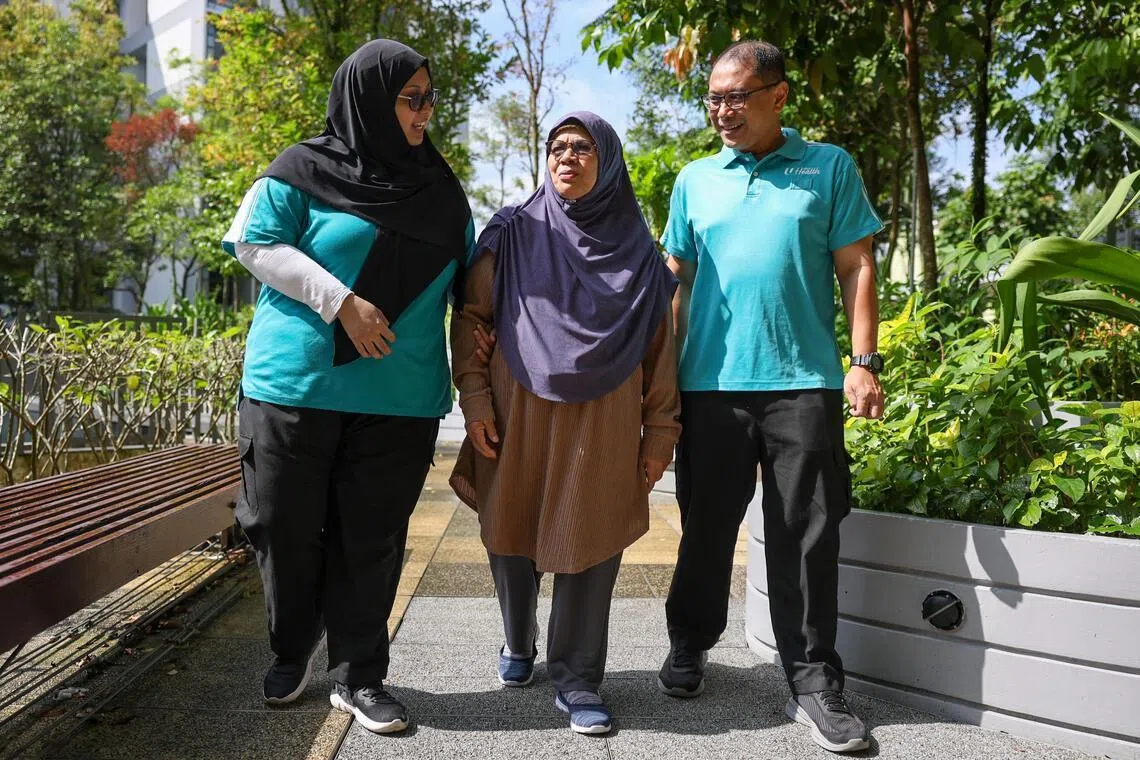
Maria Hadi, 72, diagnosed with dementia in 2025, participates in the CIP program at NTUC Health’s Day Centre for Seniors in Kampung Admiralty. Her grandson and caregiver, Yas Yani, 25, noted improvements in her grandmother’s mood and memory since starting the program. “She is now excited and always looks forward to the activities and meeting her friends,” he said. “The cooking classes are her favourite, and she even learnt how to make Korean pancakes.”
