
Bitcoin’s price briefly dipped to $63,000 on Saturday, following reports of U.S. And Israeli military strikes in Iran, before attempting a recovery toward $64,000. The volatility coincided with a significant drop in perpetual futures funding rates, signaling a shift in market sentiment.
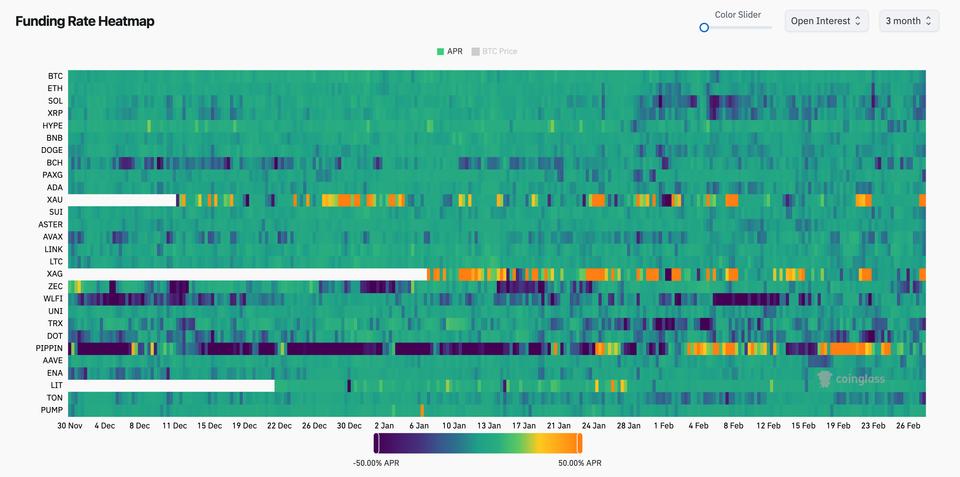
According to data from CoinGlass, perpetual futures funding rates fell to -6%, the second-lowest level in three months. The last time rates were this negative was February 6, coinciding with a price bottom near $60,000. These rates represent periodic payments exchanged between traders in perpetual futures markets; negative rates indicate that short positions are being paid by those holding long positions, suggesting a bearish outlook.
Despite the initial price decline, open interest in Bitcoin has increased. CoinGlass data shows coin-margined open interest rose from 668,000 BTC to 687,000 BTC over the past 24 hours. Measuring open interest in Bitcoin terms mitigates distortions caused by price fluctuations. The combination of rising open interest and negative funding suggests growing market participation, with a greater number of traders betting on further price declines.
The strikes on Iran triggered a wave of liquidations across the crypto market, totaling over $500 million in the past 24 hours, according to Bitget. The majority of these liquidations, exceeding $420 million, were long positions, indicating substantial forced selling as prices fell. MSN reported that Bitcoin tumbled following the strikes, contributing to the broader market downturn.
As of Saturday, Bitcoin was attempting to reclaim the $64,000 level, potentially fueled by a short squeeze, according to CoinDesk. A short squeeze occurs when a large number of short sellers are forced to cover their positions, driving the price upward. The current funding rate suggests conditions may be ripe for such a scenario.
