
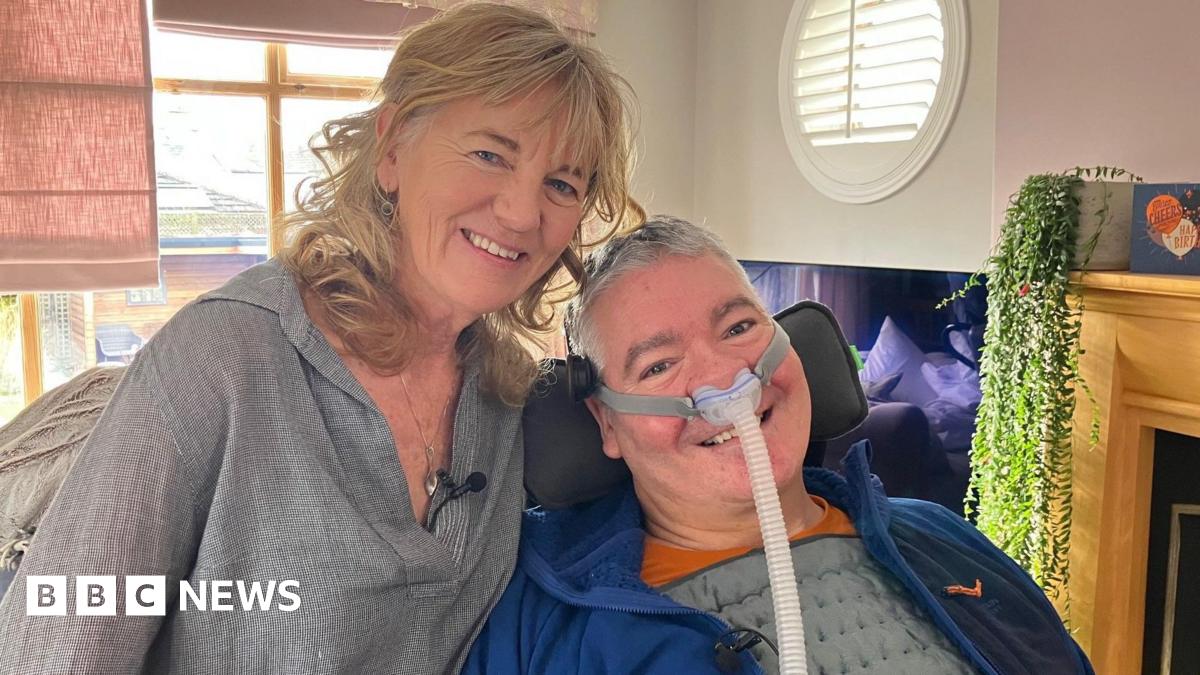
A technology expert in Skipton, North Yorkshire, is using his skills to build a suite of assistive devices after being diagnosed with Motor Neurone Disease (MND). Andrew Herbert, 55, a chief technology officer at a Leeds-based finance firm, has created over 100 sensors and gadgets to maintain his independence, including a motorized system to manage his bed covers.
Herbert received his diagnosis four years ago, a period he described as “quite a shock” given his previously active lifestyle as a cyclist and runner. He acknowledged the profound impact the news had on his family, recognizing the potential challenges and the known prognosis of the disease. MND, a condition affecting the nerves in the brain and spinal cord, leads to progressive weakening and stiffness, impacting fundamental functions like walking, speaking, eating, and breathing. More than half of those diagnosed with MND die within two years of diagnosis, according to the BBC.
The devices Herbert has developed are designed to address the increasing physical limitations imposed by MND. He now has “over 100 sensors in the house” that allow him to control domestic appliances, streamlining daily tasks and reducing reliance on assistance. His wife, Nicola Herbert, highlighted his resilience and purposeful approach to living with the condition, describing his inventiveness and positive attitude as “inspirational.”
Elsewhere, advancements are being made in restoring communication for those with paralysis caused by conditions like MND. Pat Bennett, 68, who also has MND, is participating in research at Stanford University where brain implants are being used to decode intended speech. After four months of training, the system translated her brain activity into words on a screen at a rate of 62 words per minute – three times faster than previous technologies. The system works by interpreting brain signals when she attempts to form words, and uses algorithms to predict likely phrasing and correct errors.
Similarly, Sarah Ezekiel, diagnosed with MND 25 years ago, has regained her voice through artificial intelligence. Smartbox, an assistive technology company, recreated her voice using an eight-second clip from an aged VHS tape, filling in the gaps with AI technology. Ezekiel, who lost her ability to speak shortly after becoming a mother, described the experience as a “miracle,” and expressed emotional relief at hearing her voice again.
Approximately 5,000 adults in the UK currently live with MND, with around 1,000 new cases diagnosed each year. The condition most commonly affects people over 50, though it can occur at any age.
