
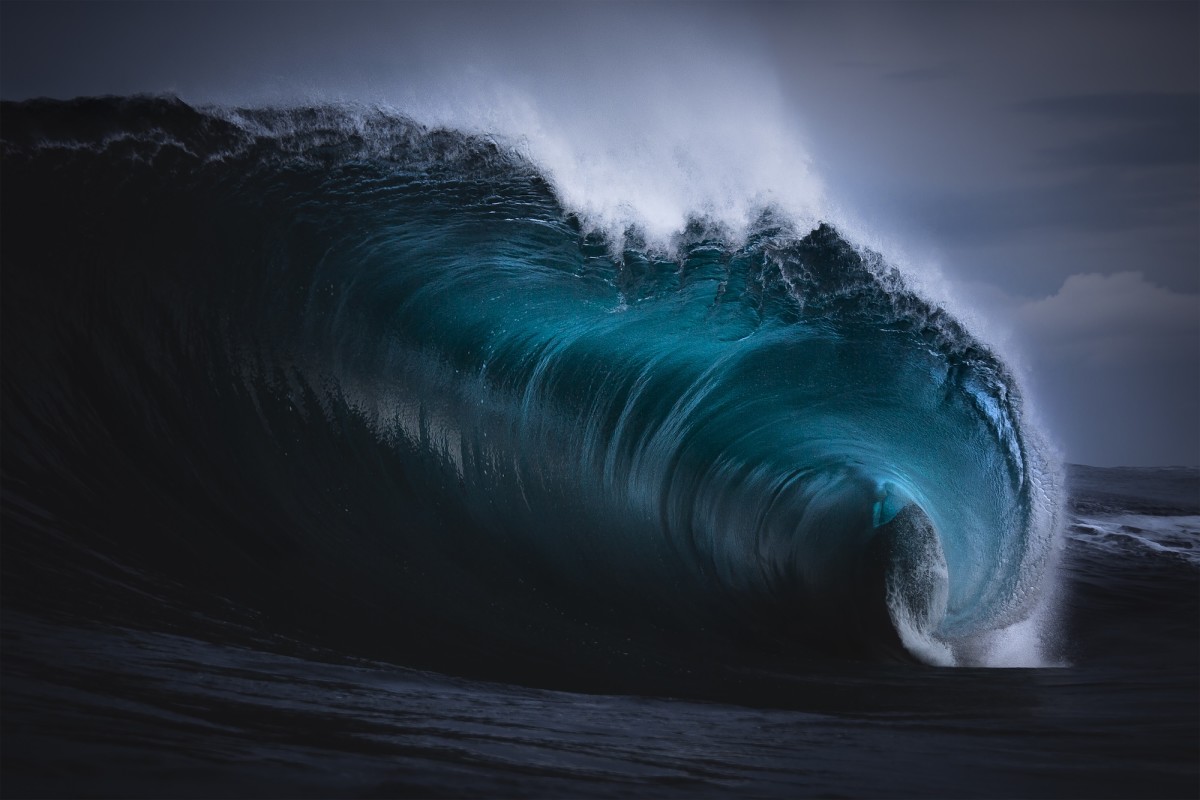
Satellites have detected rogue waves exceeding 35 meters (115 feet) in height in the Pacific Ocean, confirming the existence of these previously mythical ocean phenomena. The findings, reported by EcoNews and validated by the European Space Agency (ESA), reveal that extreme waves are appearing more frequently, even without the presence of major storms.
The data, collected during recent storms, shows average wave heights nearing 20 meters (66 feet) – the largest measurement obtained by satellite altimetry since 1991. ESA’s Climate Change Initiative’s Sea State dataset corroborated the findings. These waves, defined as more than twice the height of surrounding waves, pose a significant, and increasingly documented, threat to maritime shipping and coastal regions.
A particularly notable swell, detected on December 21, 2024, generated waves that impacted both the Waimea Bay surf competition in Hawaii and the California coastline shortly thereafter. The swell powered the Eddie Aikau Big Wave Invitational on December 22, 2024, which Landon McNamara won. The following day, Alo Slebir rode a massive wave off the coast of California that, while not officially a record, was considered by many to be among the largest ever surfed.
For decades, reports of rogue waves were dismissed as sailor’s tales. It wasn’t until 1995 that the existence of such waves was scientifically confirmed with the detection of the Draupner wave off the coast of Norway, which measured 25.6 meters (85 feet) in height while neighboring waves were only 12 meters (39 feet) tall. Since then, dozens of rogue waves have been recorded, including one near Ucluelet, Vancouver Island, in November 2020. That wave, reaching 17.6 meters (58 feet), was confirmed in 2025 as the most extreme rogue wave ever recorded, occurring approximately once every 1,300 years.
Scientists define a rogue wave as any wave more than twice the height of the waves surrounding it. The Ucluelet wave was nearly three times the size of its peers, making it proportionally the most extreme recorded to date, according to physicist Johannes Gemmrich of the University of Victoria.
The ESA press release highlighted that ocean swells can carry destructive energy to distant coastlines even when the originating storm does not produce landfall. This finding underscores the need for improved monitoring and forecasting capabilities to mitigate the risks associated with these extreme events. The agency continues to monitor wave activity globally, utilizing data from climate and ocean missions.
