
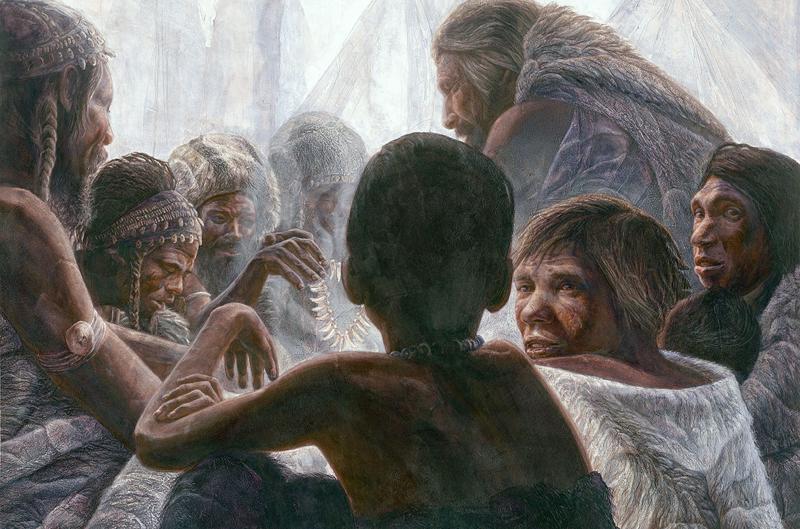
Recent genetic analysis confirms that when Neanderthals and early modern humans interbred, a disproportionate number of offspring resulted from pairings between Neanderthal males and modern human females. The finding, published this week, builds on decades of research establishing that such interbreeding occurred, and begins to illuminate patterns within those encounters.
Scientists have long known that modern humans carry Neanderthal DNA, a legacy of encounters that took place primarily between 40,000 and 80,000 years ago. The initial discovery of this genetic mixing, confirmed in 2010, prompted investigation into the nature of those interactions. While the presence of Neanderthal DNA in modern genomes is well-established, the specifics of how those genes were transmitted have remained largely unclear.
The new research focuses on the distribution of Neanderthal DNA across the human genome, specifically noting an excess of Neanderthal genetic material along the X chromosome. Because males possess only one X chromosome, inherited from their mothers, this pattern suggests a bias towards Neanderthal males contributing to the gene pool through their offspring with modern human females. Researchers note this “sex bias” is a recurring pattern throughout human history.
The reasons behind this pattern remain speculative. Some researchers suggest that biological factors, such as fertility differences between male Neanderthal-modern human pairings and female Neanderthal-modern human pairings, may have played a role. Others propose that social dynamics, including potential power imbalances or differing mating strategies, could have influenced the frequency of these pairings. However, the question of whether these encounters were consensual remains unanswered.
Evidence of interbreeding was first unearthed in 2002, with the discovery of cave systems in the Carpathian Mountains of Romania. While the archaeological record cannot definitively reveal the nature of these interactions, the genetic evidence continues to mount. A 2021 analysis of potential encounters described a Neanderthal male adorned with eagle-talon bracelets and a modern human female clad in animal skins, but acknowledged the impossibility of knowing the circumstances of their meeting.
The implications of this genetic legacy are still being explored. Researchers are investigating whether specific Neanderthal genes inherited by modern humans confer any advantages or disadvantages, potentially influencing traits related to immunity, disease susceptibility, or even cognitive function. Further research is planned to analyze ancient DNA from a wider range of individuals and geographic locations, aiming to refine our understanding of the complex history of human-Neanderthal interactions.
