
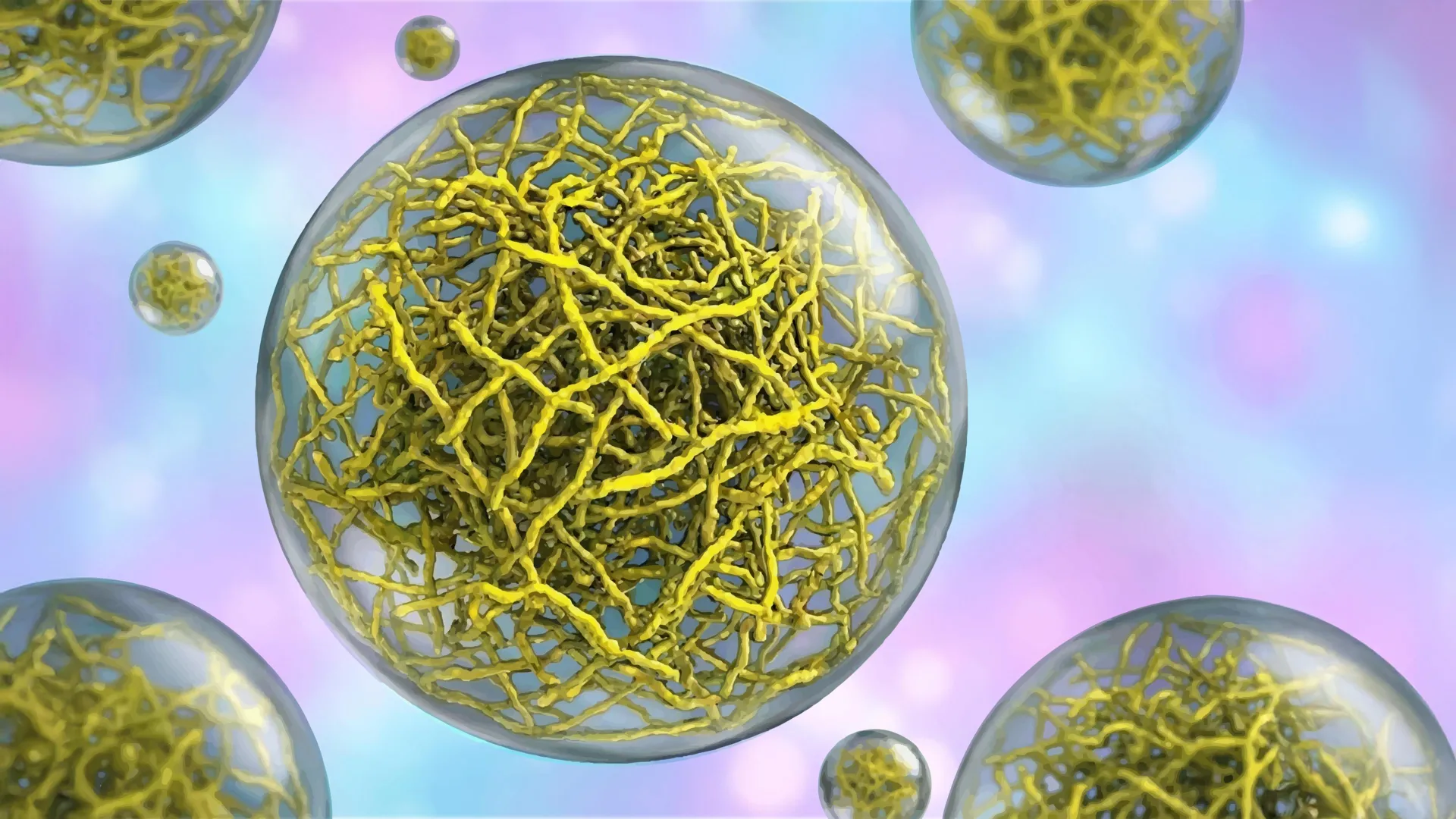
Scientists have discovered that biomolecular condensates, essential cellular structures responsible for organizing vital processes, possess a hidden internal architecture, challenging the long-held belief that they are simple, unstructured droplets. The findings, published February 2, 2026, in Nature Structural & Molecular Biology, reveal that these condensates are built from networks of protein filaments, a discovery with significant implications for understanding and treating diseases ranging from cancer to neurodegenerative disorders.
Biomolecular condensates are droplet-like clusters within cells that orchestrate functions like DNA transcription, waste removal, and tumor suppression, all without being enclosed by membranes. Disruptions in their formation have been linked to a variety of illnesses, but their seemingly amorphous nature has hindered therapeutic development.
“Ever since we realized that disruptions in condensate formation are at the heart of many diseases, it has been challenging to target them therapeutically because they appeared to lack structure — there were no specific features for a drug to latch onto,” said Keren Lasker, associate professor at Scripps Research and senior author of the study. “This operate changes that. We can now see that some condensates have an internal architecture, and that, importantly, this structure is required for function, opening the door to targeting these membrane-less assemblies much like we target individual proteins.”
The research team, led by Lasker, Ashok Deniz, and Raphael Park of Scripps Research, focused on the bacterial protein PopZ, which forms condensates at the poles of rod-shaped bacteria, organizing proteins necessary for cell division. Utilizing cryo-electron tomography (cryo-ET), a high-resolution imaging technique akin to a CT scan at the molecular level, they observed PopZ proteins assembling into filaments through a precise, sequential process. These filaments then serve as a scaffold defining the condensate’s physical characteristics.
Further investigation using single-molecule Förster resonance energy transfer (FRET) revealed that PopZ undergoes a conformational change depending on its location – adopting one shape outside the condensate and a different one within it. “Realizing that protein conformation depends on location gives us multiple ways to engineer cellular function,” explained Daniel Scholl, first author and former postdoctoral researcher in the Lasker and Deniz labs.
To determine if the filaments were merely structural components or essential for function, the researchers engineered a mutant version of PopZ unable to form filaments. The resulting condensates exhibited increased fluidity and reduced surface tension. When introduced into living bacteria, these altered condensates led to growth arrest and impaired DNA separation, demonstrating that the condensate’s physical properties, not just its composition, are critical for cellular function.
While the study centered on bacterial condensates, the findings have broad relevance to human cells, where similar filament-based condensates are involved in clearing damaged proteins and regulating cell growth. Dysfunction in these processes is implicated in neurodegenerative diseases like ALS, where the breakdown of cleanup condensates leads to toxic protein accumulation, and in cancers such as prostate, breast, and endometrial cancers, where failures in growth-regulating condensates can contribute to uncontrolled cell proliferation.
“By demonstrating that condensate architecture is both definable and functionally critical, the work raises the possibility of designing therapies that act directly on condensate structure and correct the underlying disorganization that allows disease to take hold,” Lasker stated.
The research was supported by grants from the National Institutes of Health (NINDS DP2 NS142714, NIGMS F32 GM150243, NIGMS R01 GM083960, NINDS R01 NS095892, NIGMS RO1 GM14305, NIGMS R35 GM130375, and ORIPS10 OD032467), the National Science Foundation (2235200 and DBI 2213983), the Water and Life Interface Institute, the Gordon and Betty Moore Foundation (Moore Inventor Fellowship 579361), and the Cancer Prevention and Research Institute of Texas (RR220094).
