
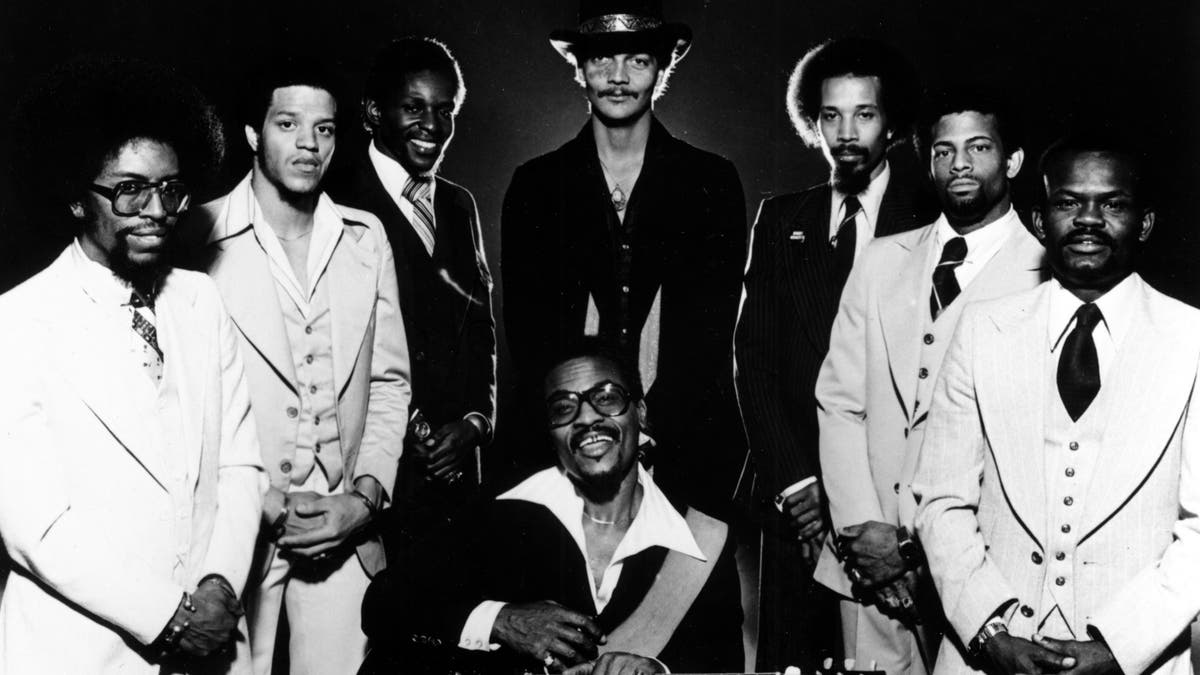
In May 2020, the District of Columbia officially designated go-go music as its official music, a move lauded by artists and advocates after years of grassroots campaigning. The legislation, though, highlighted a continuing struggle for the genre: recognition, not just in the streets of Washington D.C., but in the increasingly dominant spaces where music is discovered and consumed.
Go-go emerged in the mid-1970s from the live band scene of Washington, D.C., built around extended instrumental grooves and a dynamic call-and-response between performers and audiences. Even as guitarist and singer Chuck Brown is widely known as the “Godfather of go-go,” the genre’s development was a community effort, sustained by local bandstands, school bands, and dedicated fans. As Wiley Brown, Chuck Brown’s son and current frontman of his father’s band, stated in a News4 segment filmed at Chuck Brown Park, “All the work that my father and the many pioneers of go-go have set in over all of these years, over 50 plus years, I feel like they deserve their just due.”
The mid-1970s mark a key period in the solidification of go-go’s modern form. In 1976, Rare Essence formed in Southeast D.C., beginning to rehearse what their website describes as the “then-new, as yet unnamed, music.” Three years later, Chuck Brown’s “Bustin’ Loose” achieved national success, reaching No. 1 on Billboard’s R&B chart and crossing over to the Hot 100, giving the sound its first major national exposure.
Central to go-go’s identity is its live performance aesthetic. Bands prioritize continuous percussion and extended song arrangements, creating a non-stop flow designed to retain audiences dancing. This emphasis on live performance has resulted in a rich tradition of live recordings and albums. The scene fostered a wide range of talent, including bands like Trouble Funk, E.U. (Experience Unlimited), Redds and the Boys, and the Junkyard Band, each contributing to the genre’s evolution. By the mid-to-late 1980s, the live circuit had grown enough to produce compilations like Go Go Live at the Capital Centre, documenting the genre’s expanding audience.
Go-go’s influence extended beyond the D.C. Area, though often without explicit credit. Spike Lee featured the music in his 1992 film School Daze, and E.U.’s “Da Butt” became a national hit, reaching No. 1 on Billboard’s Hot Black Singles chart. The music as well became a source for sampling in hip-hop; Trouble Funk’s “Pump Me Up” was sampled by Public Enemy in “Fight the Power.” The Neptunes drew from Chuck Brown’s “Bustin’ Loose” for Nelly’s “Hot in Herre,” and Rich Harrison incorporated go-go rhythms into Amerie’s “1 Thing.”
The 2020 designation as the city’s official music followed the #DontMuteDC protests of 2019, sparked by a complaint that led to go-go music being turned down at a Shaw storefront. The protests underscored the music’s integral role in the neighborhood’s cultural fabric. A year later, the Recording Academy recognized go-go within the Best Regional Roots Album category. The go-go Museum & Café subsequently opened in Anacostia, providing a physical space to preserve and celebrate the music’s history.
Despite this official recognition, challenges remain. James Funk, a go-go pioneer, expressed concern in a News4 segment about the lack of genre categorization on streaming services, stating, “To go on there and to observe that we don’t have our genres not listed in the categories, that’s kind of disturbing.” Wiley Brown echoed this sentiment, emphasizing the financial implications of limited visibility. “It disrupts the potential earnings of all the go-go bands and different go-go artists since if you can’t get eyes on your music, then now it’s trickling down to the money that you could potentially be earning,” he said.
As go-go approaches its 50th anniversary in 2026, the focus remains on securing appropriate recognition and compensation for the artists who created and sustained the genre. The question of how streaming platforms will categorize and promote go-go music remains unresolved, leaving the future of the genre’s digital visibility uncertain.
