
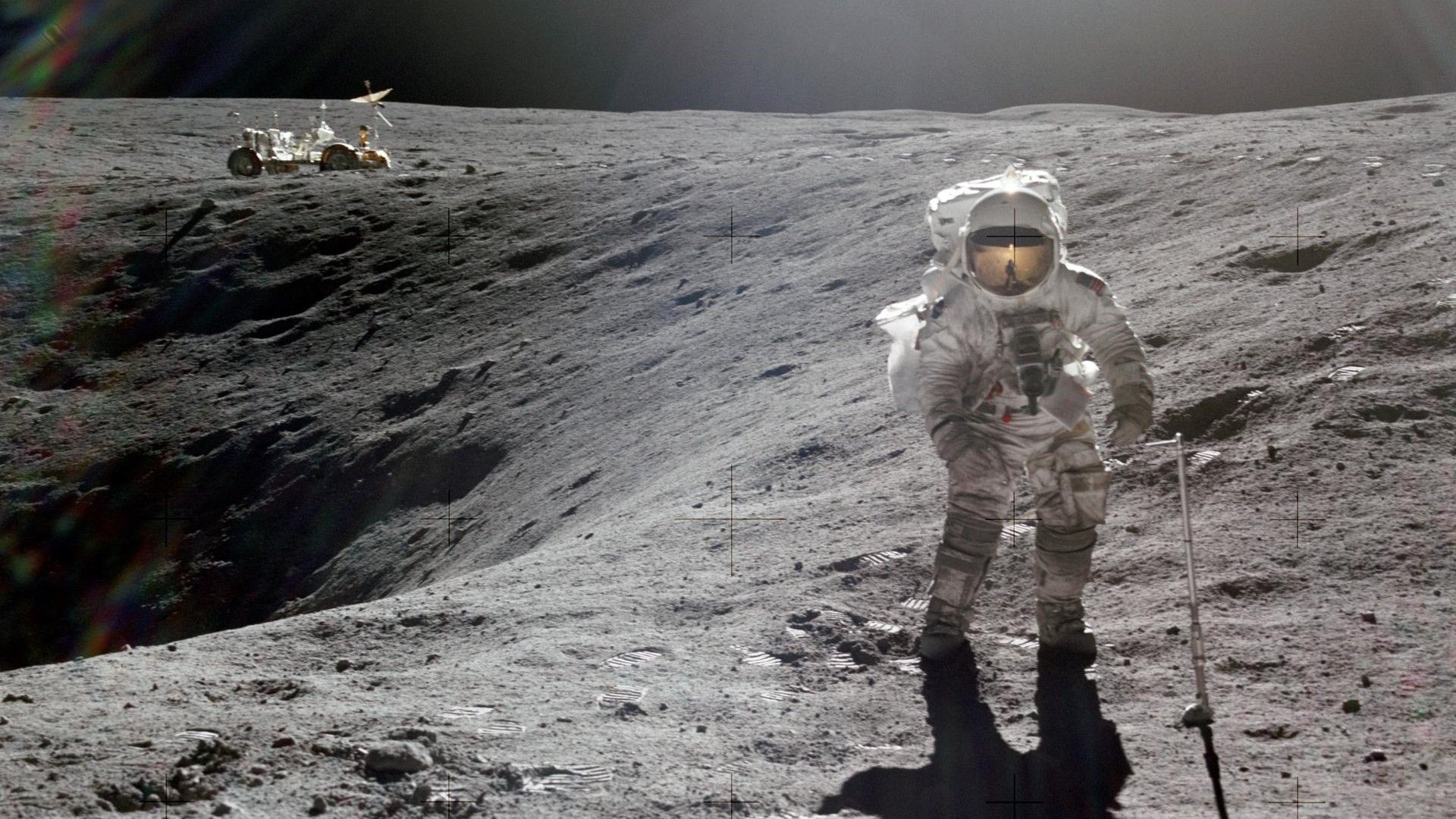
A decades-long scientific debate over the Moon’s magnetic history may be nearing resolution, with new analysis of Apollo-era moon rocks suggesting the lunar magnetic field was largely weak, punctuated by brief periods of intense activity. The research, published Thursday in the journal Nature Geoscience, centers on the composition of rocks brought back to Earth by the Apollo missions.
For years, scientists have debated whether the Moon possessed a sustained, strong magnetic field in its early history, or if it was consistently weak. The new study proposes a middle ground: the Moon experienced short-lived surges in magnetism, lasting no more than 5,000 years – and potentially as little as a few decades – roughly 3.5 to 4 billion years ago. These bursts of strong magnetism were triggered by the melting of titanium-rich rocks at the boundary between the Moon’s core and mantle, according to Claire Nichols, an associate professor of the geology of planetary processes at the University of Oxford and lead author of the study.
“For very short periods of time… melting of titanium-rich rocks at the moon’s core-mantle boundary resulted in the generation of a very strong field,” Nichols said in a statement.
The controversy stems from the limited and geographically concentrated nature of the Apollo samples. All six Apollo missions, conducted between 1969 and 1972, landed in the lunar maria – large, dark basaltic plains formed by ancient volcanic eruptions. These maria are notably rich in titanium, creating a sampling bias. Astronauts favored these relatively flat areas for landing their spacecraft, according to the research.
The study revealed a strong correlation between titanium content and magnetic field strength in the lunar samples. Rocks containing less than 6% titanium consistently exhibited weak magnetism, while those with higher titanium concentrations displayed stronger magnetic signatures. This suggests a direct link between the formation of titanium-rich rocks and the generation of a strong lunar magnetic field.
Researchers found that the Apollo samples, while valuable, may have created a misleading impression of a long-lasting strong magnetic field. The abundance of titanium-rich rocks in the Apollo landing sites led scientists to overestimate the prevalence of strong magnetism throughout the Moon’s history. The Moon’s relatively slight core – about one-seventh of its radius – has long been considered insufficient to sustain a powerful magnetic dynamo for extended periods.
The research team validated the sampling bias through modeling, demonstrating that a random selection of lunar samples would likely yield only a small number of strongly magnetized rocks. This finding underscores the importance of obtaining samples from a wider range of lunar locations.
Jon Wade, an associate professor of planetary materials at Oxford and co-author of the study, drew a parallel to hypothetical extraterrestrial exploration. “If we were aliens exploring the Earth, and had landed here just six times, we would probably have a similar sampling bias — especially if we were selecting a flat surface to land on,” Wade said in a statement. “It was only by chance that the Apollo missions focussed so much on the mare region of the moon — if they landed somewhere else, we would likely have concluded that the Moon only ever had a weak magnetic field and missed this important part of early lunar history entirely.”
NASA’s upcoming Artemis missions, which aim to return astronauts to the Moon, are planned to land in more diverse locations, potentially providing a more representative sample of the lunar surface and further refining our understanding of its magnetic history. As of February 26, 2026, NASA has not announced specific landing sites for future Artemis missions beyond the initial Artemis III landing near the lunar south pole.
