
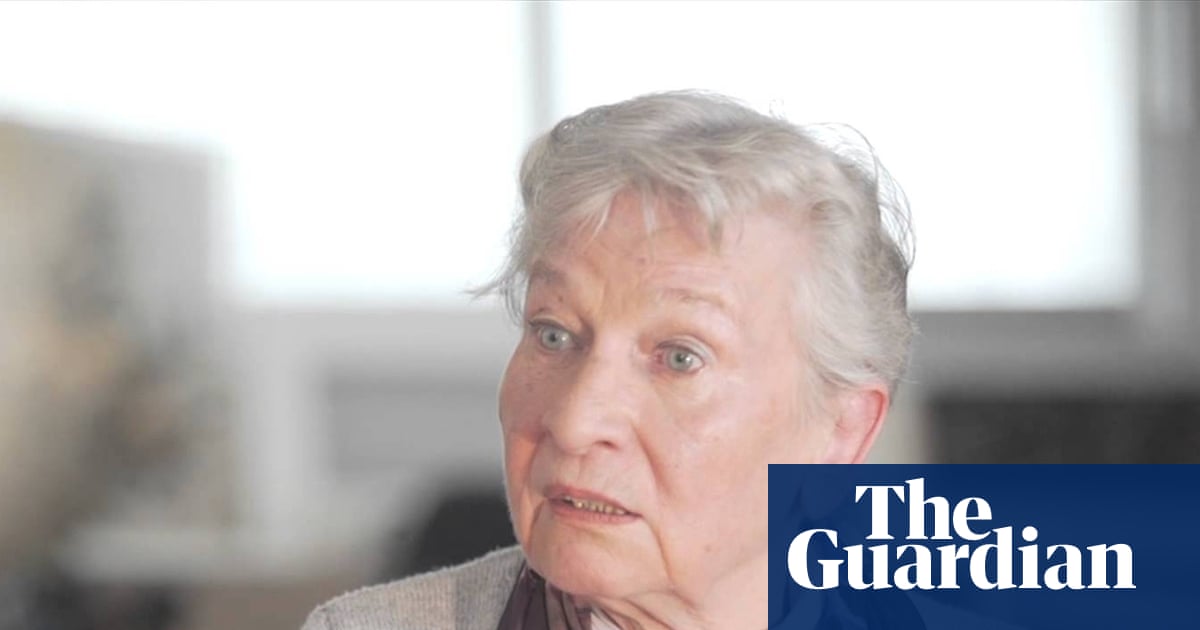
Éliane Radigue, a pioneering French composer renowned for her immersive and meditative drone music, has died at the age of 94. The Paris-based experimental music center INA GRM announced her death on Instagram, stating that “a major figure in musical creation has left us.”
Born in Paris in 1932, Radigue initially pursued piano studies before a formative encounter with the work of Pierre Schaeffer, a central figure in the development of musique concrète, shifted her artistic trajectory. Hearing Schaeffer’s compositions on the radio in the early 1950s sparked a fascination with manipulating sound itself. She subsequently worked as an assistant to Schaeffer, gaining practical experience in the nascent field of electroacoustic music.
“I was just cutting, splicing and editing tape,” Radigue recalled in a 2011 interview with The Guardian. “Of course, at that time the universe of electronic music was totally male, but I was pleased to do anything they asked of me. I was there to learn, and I was learning by doing, like an apprentice.” She clarified that the studio’s focus was on “concrete” music – manipulating real-world sounds – rather than purely electronic synthesis.
Radigue’s artistic breakthrough came in the early 1970s with her adoption of the synthesizer, specifically the ARP 2500. Over the subsequent three decades, she harnessed the instrument’s capabilities to create deeply resonant and evolving soundscapes characterized by feedback and tape hiss. Her innovative approach attracted the attention of American composers including Philip Glass and Steve Reich.
Steve Reich described Radigue’s work as a “restoration of harmony and rhythm in a whole novel way,” adding, “It did bring back those essentials that people wanted, that people craved, but in a way they hadn’t heard.”
Radigue’s later work, exemplified by the Occam Ocean series, involved collaborations with solo musicians and ensembles. These pieces were designed to evoke the vastness of the ocean and offer a contemplative counterpoint to the frenetic pace of contemporary life. According to INA GRM, “She carved out her own path with unparalleled freedom and vision.”
The experimental music center concluded their statement by extending their thoughts to Radigue’s family, friends, and collaborators.
