
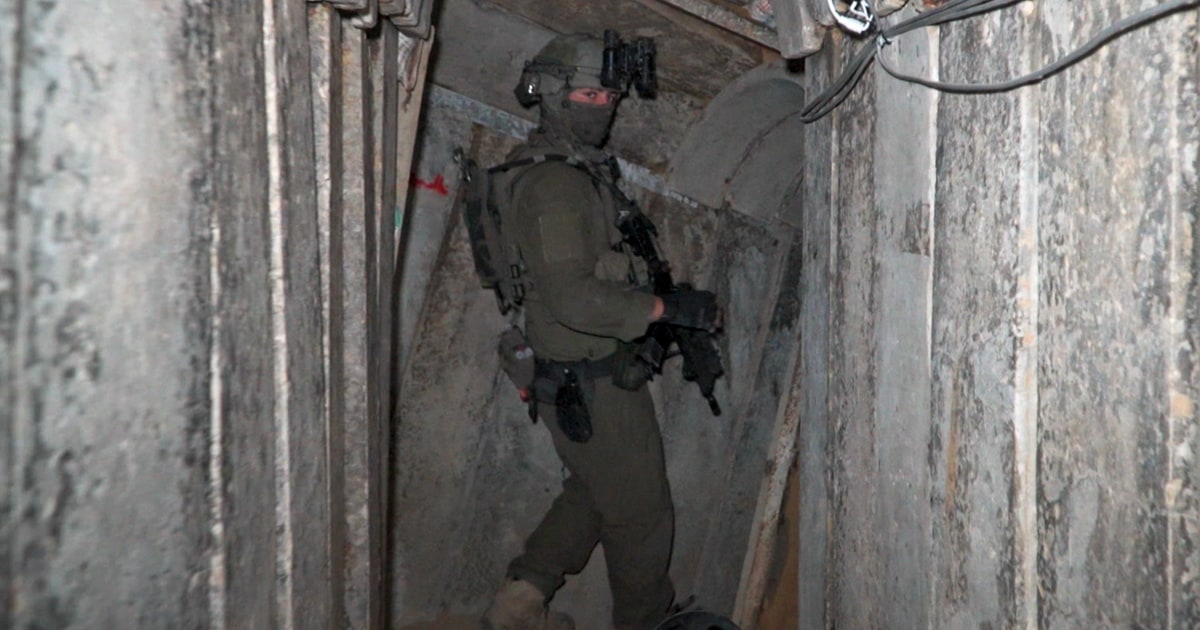
GAZA CITY — Israeli forces discovered a tunnel network in the Shujaiya neighborhood of northern Gaza, revealing a subterranean infrastructure that included living quarters, raising questions about the allocation of resources during the ongoing conflict. The discovery comes as Hamas is reportedly reasserting control over Gaza, extending its influence over security, taxation, and government services, according to recent reports from Gazans.
Lieutenant Colonel Nadav Shoshani, an Israel Defense Forces (IDF) spokesperson, stated that the tunnel appeared to have been used by Hamas fighters and their families, a privilege not extended to the broader Gazan population. NBC News was unable to independently verify this claim.
Shoshani estimated the total length of tunnels beneath Gaza could range from 300 to 600 miles, acknowledging the figure is an estimate due to the ongoing process of discovery. “The more you search, the more you find things you didn’t know about,” he said, adding that Israeli forces are focused on dismantling the tunnels as part of President Donald Trump’s peace plan for Gaza, a prerequisite for reconstruction.
The tunnel included amenities such as a bathroom with a toilet and sink. No Palestinians were observed in the area during a two-hour visit, as it lies east of the “yellow line” – a demarcation established by the IDF to separate areas under Palestinian and Israeli control. Currently, just over half of the Gaza Strip remains under IDF control.
The remaining portion of the Gaza Strip is home to approximately 2.3 million Palestinians, a figure reflecting the population before the Hamas-led attack on Israel on October 7, 2023. That attack resulted in the deaths of 1,200 Israelis and the abduction of over 240 hostages. Health officials in Gaza report more than 72,000 Palestinians have been killed in the subsequent Israeli military campaign.
The “yellow line,” initially intended as a temporary boundary, has turn into a point of contention. Palestinians who have approached the line have reportedly been shot by Israeli forces, and accusations have surfaced alleging that Israeli forces have repeatedly crossed and moved the concrete blocks that mark the boundary inward, causing confusion among Palestinians. The IDF has denied these accusations.
On the Palestinian side of the “yellow line,” Iman Khzeiq, 70, expressed hope of returning to her home in Shujaiya with her six grandchildren, whose father was killed in the conflict. Khzeiq, who suffers from diabetes and high blood pressure, described the children spending their days searching for water and food instead of attending school. Despite the hardships, she remains determined to stay near their home, “even if we live on the rubble.”
The reopening of the Gaza-Egypt border crossing on February 2, 2026, after nearly two years of closure, offers a potential avenue for aid and movement, though the situation remains precarious. The IDF maintains that it will continue to defend its citizens and will not cease operations until Hamas disarms, a key requirement of the Trump administration’s peace plan.
