
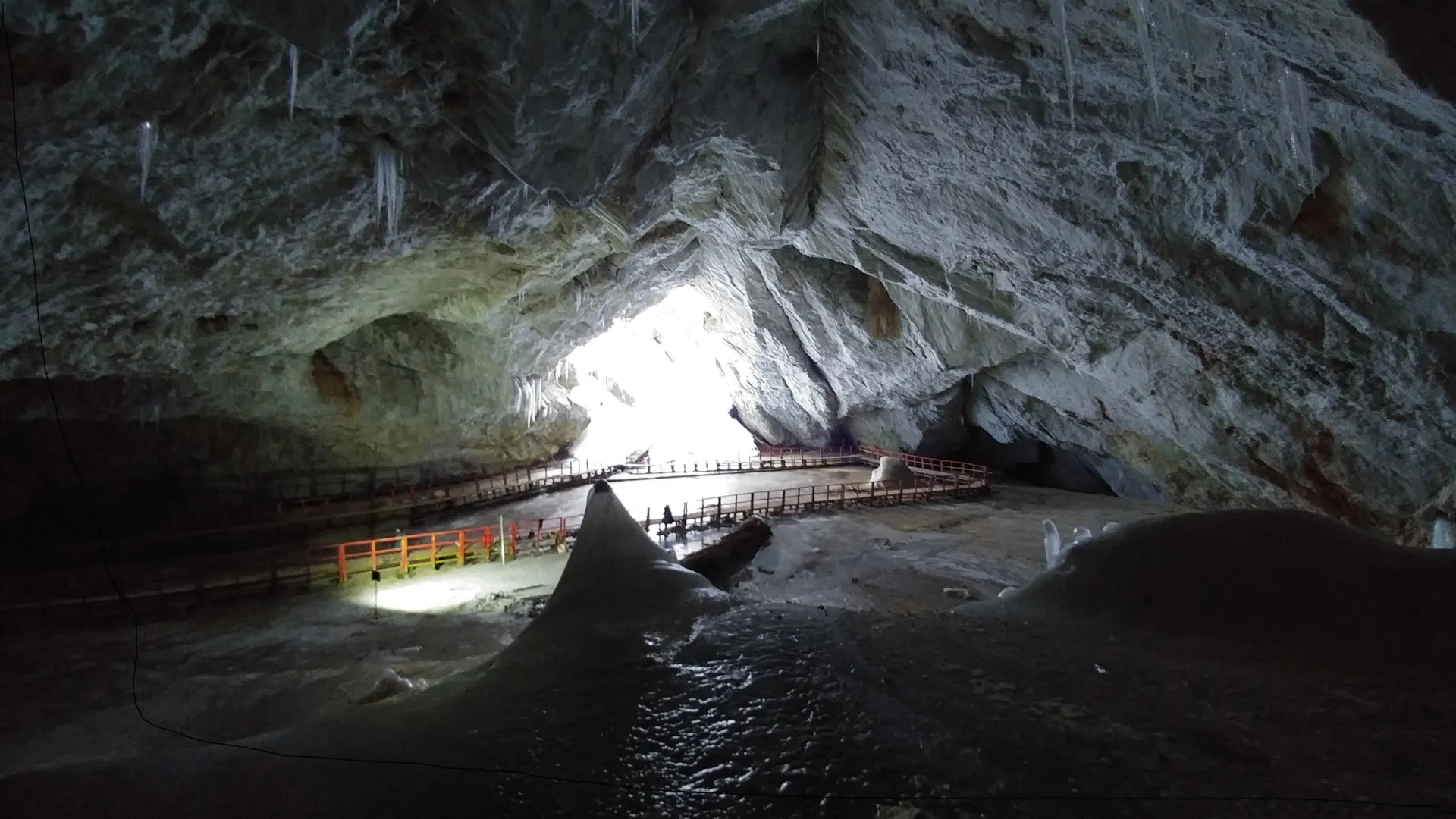
A bacterial strain, entombed in a 5,000-year-old layer of ice within Romania’s Scarisoara cave, exhibits resistance to 10 modern antibiotics, according to research published this week in the journal Frontiers in Microbiology. The discovery, made by a team of Romanian scientists, highlights the ancient origins of antibiotic resistance and raises questions about the potential release of such resilient microbes as global temperatures rise.
The bacterium, identified as Psychrobacter SC65A.3, was isolated from an ice core drilled from the Great Hall of the Scarisoara cave, a subterranean glacier formed approximately 13,000 years ago. Researchers meticulously sealed ice samples in sterile bags and transported them frozen to the laboratory to prevent contamination, according to the study.
“The Psychrobacter SC65A.3 bacterial strain isolated from Scarisoara Ice Cave, despite its ancient origin, shows resistance to multiple modern antibiotics and carries over 100 resistance-related genes,” said Dr. Cristina Purcarea, a senior scientist at the Institute of Biology Bucharest of the Romanian Academy, and a lead author of the study. “But it can likewise inhibit the growth of several major antibiotic-resistant ‘superbugs’ and showed important enzymatic activities with important biotechnological potential.”
Testing revealed the strain’s resistance to commonly prescribed antibiotics including rifampicin, vancomycin, and ciprofloxacin – drugs used to treat conditions ranging from tuberculosis to urinary tract infections. Notably, SC65A.3 is the first Psychrobacter strain documented to resist trimethoprim, clindamycin, and metronidazole, antibiotics frequently used for UTIs and infections of the lungs, skin, bloodstream, and reproductive system.
The findings suggest that antibiotic resistance isn’t solely a product of modern medicine, but rather an ancient evolutionary characteristic shaped by competition between microbes over millions of years. Bacteria can share genetic material, even across species, in an ongoing “evolutionary arms race,” according to Purcarea. The ice cave environment, she explained, provides a unique window into this process, preserving bacterial DNA over millennia.
Researchers identified nearly 600 genes within the Psychrobacter SC65A.3 genome with currently unknown functions, suggesting a vast, untapped reservoir of biological information. The team also pinpointed 11 genes that may possess the ability to kill or inhibit bacteria, fungi, and even viruses, potentially offering avenues for novel biotechnological applications.
The discovery also carries potential risks. “If melting ice releases these microbes, these genes could spread to modern bacteria, adding to the global challenge of antibiotic resistance,” Purcarea warned. The World Health Organization estimates that antibiotic resistance was responsible for 1.27 million deaths worldwide in 2019.
The research team is continuing to analyze the Psychrobacter SC65A.3 genome, seeking to understand the mechanisms behind its antibiotic resistance and explore its potential for developing new therapies. Purcarea emphasized the importance of careful handling and safety measures in the laboratory to prevent the uncontrolled spread of ancient microbes.
