
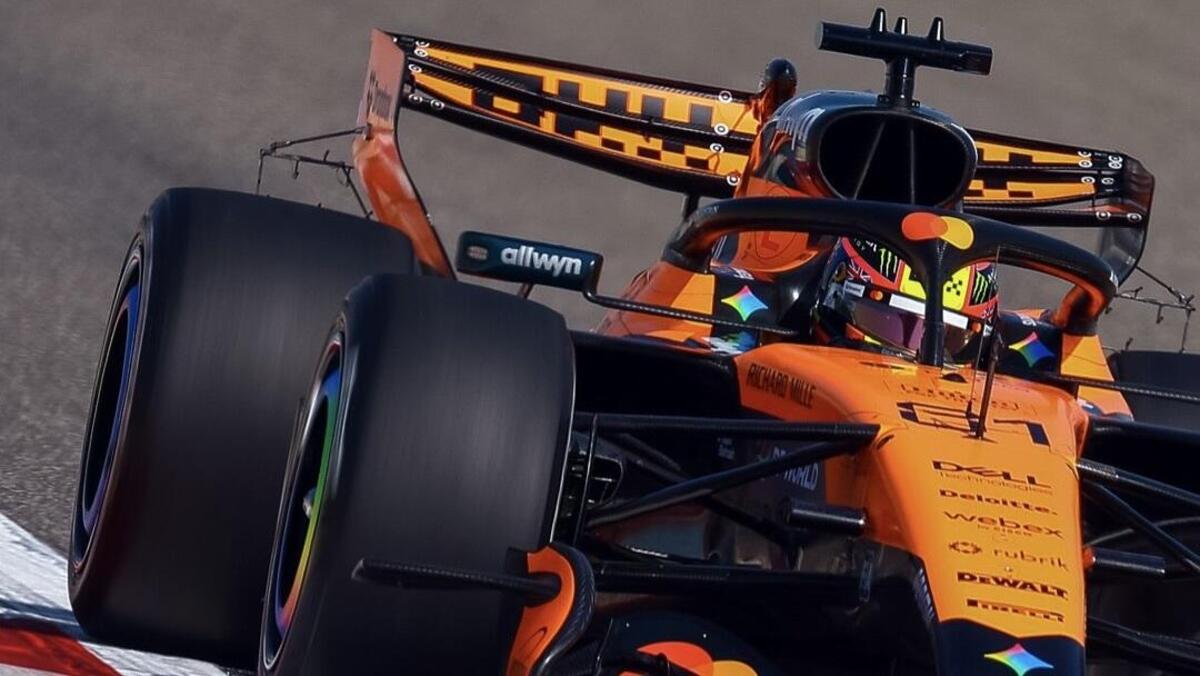
Bahrain – McLaren team principal Andrea Stella has assessed the early competitive landscape of the 2026 Formula 1 season, identifying Ferrari and Mercedes as the frontrunners following extensive pre-season testing. The assessment comes after a productive testing program for the Woking-based team at both the Barcelona shakedown and the recent Bahrain test, where the MCL40 completed a substantial amount of running.
“it was a positive test session,” Stella stated. “Especially here in Bahrain, the car behaved reliably. We practically completed all the planned points in terms of functionality, reliability, and raceability.”
McLaren’s testing program focused on optimizing the modern power unit, which Stella described as a “big ticket item.” The team worked through various setups, aerodynamic configurations, and tire strategies to maximize performance. “Every day we added a little bit of performance, experimenting with setups, aerodynamics, tires and, above all, trying to optimize the use of the power unit. We’ve reached a point where You can say we understand and have exploited the potential of the car quite fully,” Stella explained.
While acknowledging McLaren’s progress, Stella conceded that Ferrari and Mercedes currently hold a performance advantage. “In terms of competitive order, Ferrari and Mercedes seem to be the teams to beat. I believe we are part of the group of the first four, but these two teams have shown something more,” he said.
Regarding Red Bull Racing, Stella noted the difficulty in definitively assessing their performance. “It’s hard to say for sure. The race simulations of Oscar Piastri and Max Verstappen showed a similar pace. Lando was competitive, but you have to consider the track conditions at the end of the day,” he added.
The 2026 season introduces significant changes to Formula 1, including a 50% sustainable fuel mandate and active aerodynamics. Energy management will be a critical factor, particularly at circuits like Bahrain, which offer ample opportunities for energy recovery through braking. Stella anticipates greater challenges at tracks like the upcoming Australian Grand Prix. “In Bahrain, being a harvest-rich circuit, it was relatively easy – you recover energy in braking without particular maneuvers,” Stella explained. “In Australia it will be a little more difficult. The drivers will be more engaged in driving style to ensure efficient energy use, both in terms of performance and duration. And when you have to race, defend or attack, management becomes an art.”
Stella praised the collaboration with Mercedes High Performance Powertrains (HPP), highlighting their contribution to McLaren’s power unit development. “We are very grateful for the commitment of HPP. They made it possible to make progress every day. There is still a lot to learn in the control and exploitation of the power unit, but today the driver plays a central role in this management.”
Looking ahead to the season-opening Australian Grand Prix, Stella indicated that the car seen in testing will be largely unchanged. “The car we saw in the tests will be substantially the one that will race in Australia. There will be some new components and we will continue to operate on the weight, because even being slightly below the regulatory limit allows you to play with the ballast and improve the balance.”
Discussions surrounding new regulations for race starts, lift and coast, the use of straight mode from the grid to the first corner, and overtaking were similarly a key focus during the Bahrain test. Stella expressed satisfaction with the progress made, particularly regarding race starts, while acknowledging that some performance disparities remain. He also noted a test of increasing energy recovery to 350 kilowatts, which could reduce the need for specific energy-saving maneuvers. “It was a positive test, now it is up to the FIA to decide,” he said.
Stella emphasized the increased demands placed on drivers in the new era of Formula 1. “What we have seen here confirms that Formula 1 remains the ultimate challenge for a driver. The new cars slide more and require greater sensitivity. The human contribution in extracting performance is amplified. There will be circuits where it will be necessary to drive in unconventional ways to optimize energy, but the limit always remains there, within reach of those who know how to approach it.”
McLaren is now preparing for the first race of the season, with Stella stating, “We are ready to face the first races, and every simulation will give way to the truth of the track.”
