
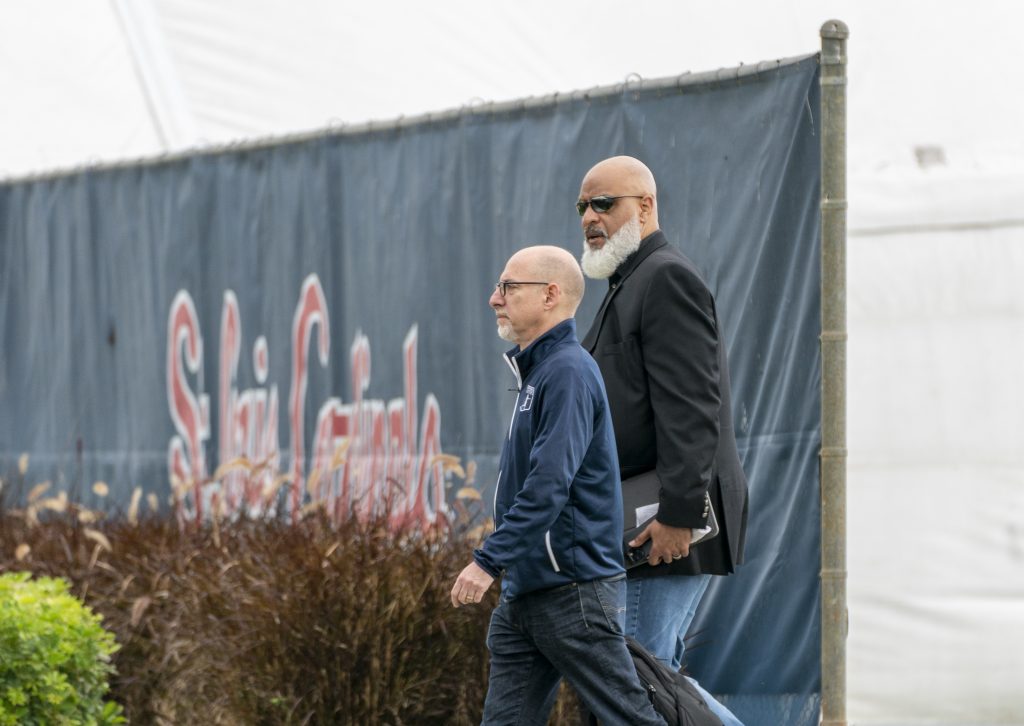
Bruce Meyer was unanimously elected interim executive director of the Major League Baseball Players Association on Wednesday, following the abrupt resignation of Tony Clark amid an internal investigation into an inappropriate relationship with a coworker. Matt Nussbaum was named interim deputy director, the union confirmed.
Meyer, who has served as the MLBPA’s lead negotiator since 2018, will continue in that role as the union prepares for collective bargaining negotiations with Major League Baseball. The current collective bargaining agreement is set to expire on December 1st, raising the specter of another work stoppage. A lockout is widely anticipated, with the league signaling a desire for significant changes to the sport’s economic system.
The move to install Meyer as interim director was widely expected following Clark’s resignation. Left-hander Brent Suter, a member of the union’s eight-player executive subcommittee, stated on Tuesday that the goal was to maintain stability during a critical period. “We’re going to have an interim [director] and keep everything as stable as we can this year,” Suter said, according to reports.
Clark’s departure marks a significant shift for the MLBPA. He had led the union since December 2013, becoming the first former player to hold the position. Prior to Clark, the MLBPA’s executive directors had backgrounds as career union officials or attorneys.
The 2017-2021 CBA, negotiated under Clark’s leadership, was largely seen as unfavorable to players. The competitive balance tax threshold saw only modest increases, and the addition of fresh tax tiers increased financial pressure on high-spending teams. Minimum salaries also experienced limited growth during that period.
Meyer’s arrival as lead negotiator in 2018 coincided with a more confrontational approach to CBA talks. The 2021-2022 lockout, the first work stoppage in MLB since 1994-95, lasted 99 days before a new agreement was reached. That agreement included increases to the competitive balance tax threshold and minimum salaries, as well as the creation of a $50 million bonus pool for pre-arbitration players.
Despite the gains made in the 2022 CBA, Meyer faced internal challenges. In March 2024, a group of players attempted to replace him with Harry Marino, the former head of Advocates For Minor Leaguers, who had successfully negotiated a collective bargaining agreement for minor league players. The effort, described as an attempted “coup,” ultimately failed, and the players reportedly connected to the effort were removed from the executive subcommittee in December 2024.
Prior to Clark’s resignation, he had been the subject of federal investigations related to allegations that he had given himself equity in organizations funded by MLBPA licensing money. An internal investigation, prompted by those allegations, reportedly uncovered messages between Clark and his sister-in-law, leading to his resignation.
Meyer now faces the challenge of uniting the players as they navigate contentious negotiations with MLB, particularly regarding the owners’ push for a salary cap – a measure the union has historically opposed. MLB Commissioner Rob Manfred recently expressed a positive view of the impact of lockouts, signaling a potentially hardline stance from the league.
The MLBPA has not indicated a timeline for selecting a permanent executive director. Meyer’s future with the union will likely depend on the outcome of the upcoming CBA negotiations and the players’ assessment of his leadership.
Nussbaum, who has worked for the MLBPA since 2011, was promoted to general counsel in 2023 after serving as deputy general counsel since 2017. He previously worked for the NHLPA.
