
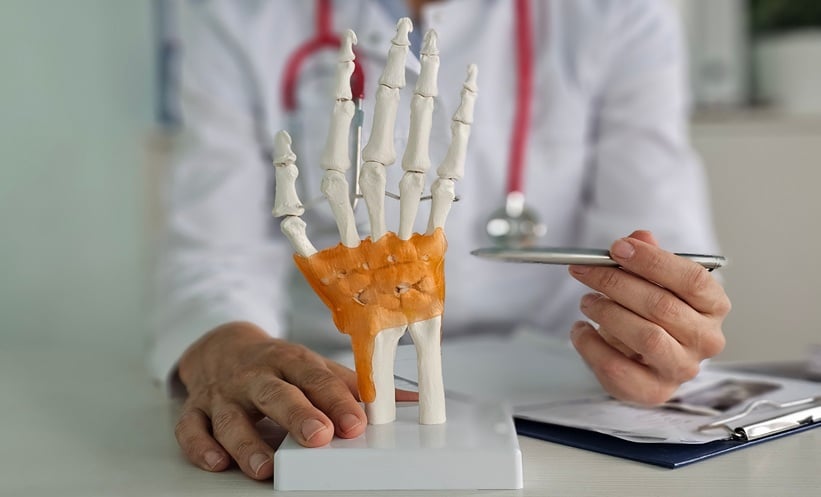
A novel surgical technique using a hamate autograft has successfully reconstructed a non-union proximal scaphoid fracture in a 26-year-old Air Force service member, restoring near-full wrist function within ten weeks, according to a case report published in the Journal of Orthopaedic Case Reports.
Proximal pole scaphoid fractures, common injuries often resulting from falls onto an outstretched hand, present significant challenges to orthopedic surgeons. These fractures are prone to non-union – a failure to heal – due to a limited blood supply, increasing the risk of avascular necrosis, or bone death, and subsequent wrist degeneration. Traditional treatments for non-union include vascularized or non-vascularized bone grafting, often sourced from the iliac crest or distal radius.
The procedure detailed in the case report offers an alternative approach. Surgeons utilized a proximal hamate autograft – a bone taken from the patient’s own hamate bone – to replace the damaged proximal scaphoid pole. This technique, described as an osteochondral replacement arthroplasty, aims to address bone loss and suspected osteonecrosis where standard methods may be less effective. A key benefit highlighted by the surgical team is the potential to preserve the attached volar capitohamate ligament, which could aid in maintaining stability of the wrist, particularly in cases of scapholunate instability. The use of an autograft also minimizes the need for donor sites, reducing potential complications associated with harvesting bone from other areas of the body.
The service member initially underwent fixation with a Herbert screw, which failed to achieve union. A subsequent revision surgery involving iliac crest bone grafting and Kirschner wire fixation also proved unsuccessful. It was following these failed attempts that the surgical team opted for the proximal hamate autograft technique. According to the report, the patient achieved radiographic union within ten weeks of the autograft procedure and experienced a significant reduction in pain, regaining a near-full range of motion in the wrist.
Researchers have been investigating the use of hamate autografts for scaphoid fractures, with a systematic review published in 2025 indicating satisfactory early-to-medium-term outcomes in a majority of patients. The review, assessing data from studies between 2000 and 2024, found radiographic union was achieved in 93.3% of patients, with an average follow-up of 15.7 months. Postoperative grip strength averaged 79.8% of the unaffected hand, and patients reported low pain levels and functional limitations.
While the case report and existing research suggest the hamate autograft technique holds promise for select patients with complex proximal pole scaphoid non-unions, further research is needed to fully establish its long-term efficacy and identify the ideal candidates for this procedure. The systematic review noted a need for more research to confirm the utility of this treatment modality.
