
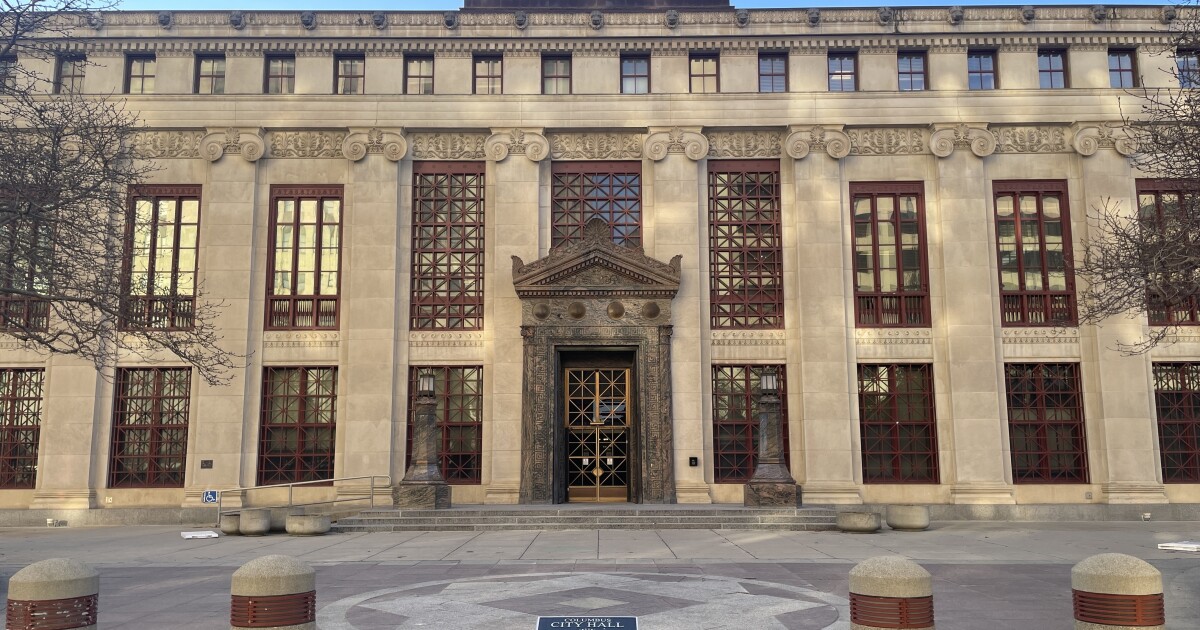
A coalition of community leaders plans to submit a charter amendment proposal to the Columbus city clerk’s office on Wednesday, seeking to reshape the city’s council election process and redraw district lines. The group aims to establish a system where only voters within each of nine newly defined districts can elect their council member, a departure from the current citywide voting system implemented in 2018.
Currently, despite the existence of nine districts, all Columbus voters participate in electing representatives for each district. This system led to the recent election of Tiara Ross to the District 7 seat, which encompasses Downtown Columbus and surrounding areas, despite a majority of voters within District 7 casting ballots for her opponent, Jesse Vogel. This outcome has fueled concerns about equitable representation and the effectiveness of the current district system.
The proposed amendment is spearheaded by leaders within the Black community who advocate for revised district boundaries. Their plan includes the creation of two majority-Black council districts, one majority-minority district, and another district comprised of 47% minority residents. Jonathan Beard, a leading figure in the effort, stated that the existing district lines were “drawn for citywide elections” and “are all majority white and likely would not comply with Voting Rights Act of 1965 requirements for district elections that support the voting power of residents in geographically concentrated minority communities.” Beard further emphasized the need for a “people’s map,” suggesting a community-driven approach to district design.
Kate Curry-Da-Souza, a candidate in the 2023 District 7 primary, likewise voiced her support for the proposed changes. “Tomorrow our community will discover its voice has not been dormant,” Curry-Da-Souza said in a statement. “This voice amplifies a movement and need for true representation…Community requires accountability for all and transparent movement away from the inequitable ‘Columbus Way.’” In a Tuesday interview, Curry-Da-Souza explained that the fresh districts would better represent neighborhoods with shared interests.
The Columbus City Council and city attorney will review the petition after it is filed. Approval from both entities is required before the group can start collecting the approximately 13,000 signatures from registered Columbus voters needed to place the issue on the November ballot. Organizers intend to gather signatures throughout the summer, aiming for a public vote in the fall.
Currently, four of the nine members of the Columbus City Council are Black, including Council President Shannon Hardin and newly elected Tiara Ross. The outcome of this petition and subsequent signature drive will determine whether Columbus voters will have the opportunity to fundamentally alter the structure of their local government.
