
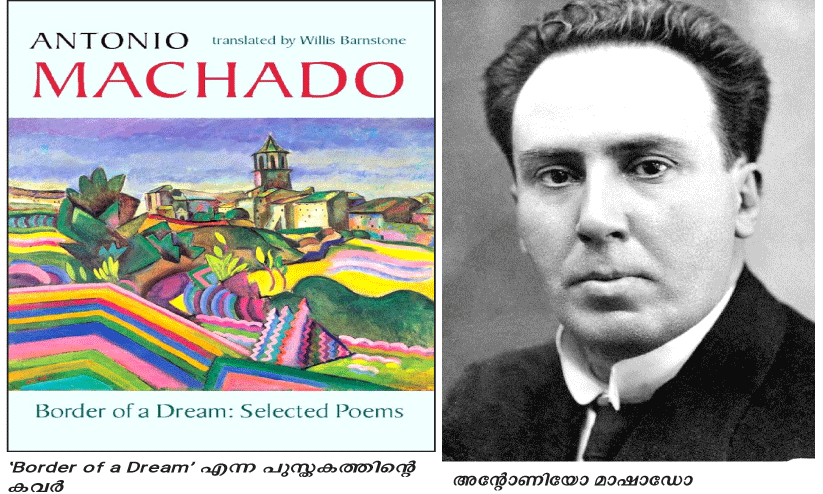
A collection of selected poems by the Spanish poet Antonio Machado has been published in Malayalam translation, appearing in the weekly magazine Madhyamam on February 16, 2026. The publication, titled “Border of a Dream,” features translations by Vaikom Murali.
Machado, born in Seville, Spain in 1875 and dying in France in 1939, was a central figure in the Generation of ’98, a group of Spanish writers responding to a period of political instability and decline in Spain. His perform evolved from early modernist influences toward a more intimate and symbolic style, often exploring themes of humanity and existence, according to biographical information from Wikipedia.
The translated poems offer a glimpse into Machado’s introspective style. An excerpt published in Madhyamam reads, “No, my heart was not asleep, it is awake, it is conscious. It was not sleeping or dreaming, it is seeing everything with open, bright eyes. It observes the signs in the distance and gets closer to the great silence…”
Machado’s poetry is noted for its accessibility and connection to the common people, as highlighted by the Spanish Academy. His work often grappled with the social and political issues of his time, reflecting the anxieties of a nation facing internal struggles and external pressures. He was a professor of French and received a doctoral degree in literature, but his poetry remained grounded in the experiences of everyday life.
The publication of these translations in Malayalam aims to introduce Machado’s work to a new audience, fostering a greater understanding of Spanish poetry and culture. The Generation of ’98, of which Machado was a key member, sought to revitalize Spanish literature and thought through a critical examination of the nation’s past and present.
According to Britannica, Machado’s work is characterized by a synthesis of human engagement and Taoist contemplation, reflecting ancient popular wisdom. His poems, including well-known works like those from Soledades and Campos de Castilla, continue to resonate with readers for their lyrical beauty and profound insights.
