
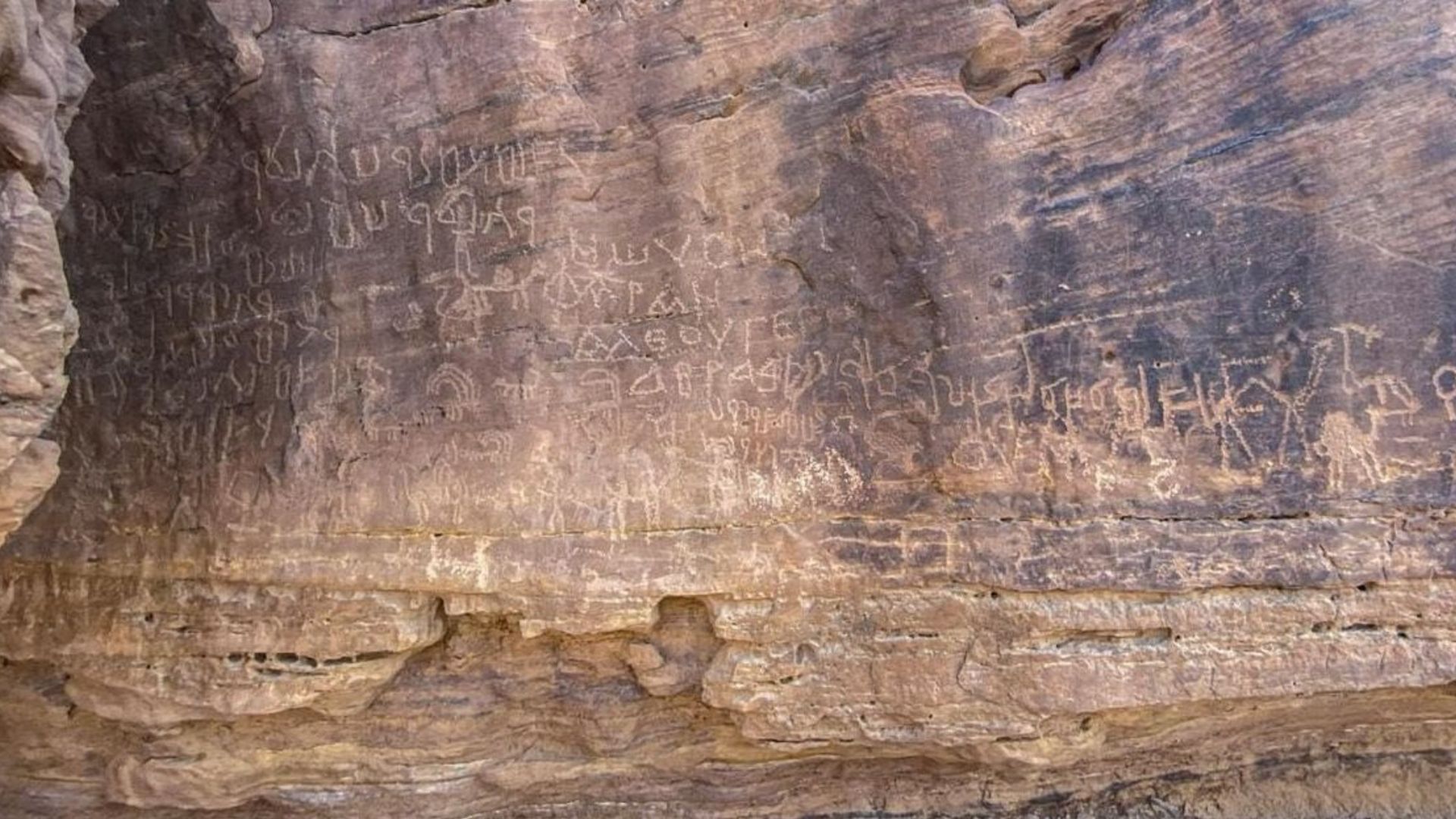
A rock shelter in Egypt’s southern Sinai Desert, containing art and inscriptions spanning 10,000 years, has been discovered by an Egyptian archaeological mission, the Egyptian Ministry of Tourism and Antiquities announced this week.
Located on the Umm Araka Plateau, the shelter reveals an occupational sequence from the Neolithic period through the Islamic era, according to a statement from the ministry. The discovery, described by Minister of Tourism and Antiquities Sherif Fathy as a “first-rate qualitative addition” to Egypt’s archaeological map, is expected to bolster cultural tourism.
The site was identified with the assistance of local resident Sheikh Rabie Barakat, whose involvement underscores the importance of community support in preserving Egypt’s cultural heritage, officials said. The shelter itself is approximately 330 feet long, 10 feet deep, and features a ceiling reaching up to 5 feet in height.
The oldest art, dating from roughly 10000 to 5500 B.C., is located near the shelter’s entrance and depicts scenes of hunting, including a hunter with a bow accompanied by at least two dogs. Later periods are represented by images of people on horseback, carrying weapons, and inscriptions from ancient and medieval times. Geometric shapes – X’s, squares, ovals, and crescents – are also prominent features of the rock art.
The archaeological team is currently analyzing the designs, and the site is being considered an “open-air natural museum” due to the diversity of its inscriptions and paintings, according to Hisham El-Leithy, Secretary-General of the Supreme Council of Antiquities.
The Umm Araka Plateau’s proximity to ancient copper and turquoise mines suggests the shelter served as a lookout point and gathering place throughout history. John Darnell, an Egyptology professor at Yale University, noted the Sinai’s historical significance as a source of mineral wealth and its association with the goddess Hathor, “Mistress of Turquoise.” He believes the discovery will enhance understanding of ancient Egyptian interactions with the desert environment and its inhabitants.
Darnell, who was not involved in the new discovery, also observed that images released so far “appear to show material of late antique through perhaps medieval date,” roughly A.D. 500 to 1500, including depictions of camels, humans, and Nabataean inscriptions. The Nabataeans, known for building the city of Petra in Jordan, flourished between 400 B.C. And A.D. 200.
Officials project economic benefits from increased access to the site, with Egypt aiming to capitalize on its cultural tourism potential. The Ministry of Tourism and Antiquities has not yet responded to requests for further details regarding the ongoing analysis of the rock art.
