
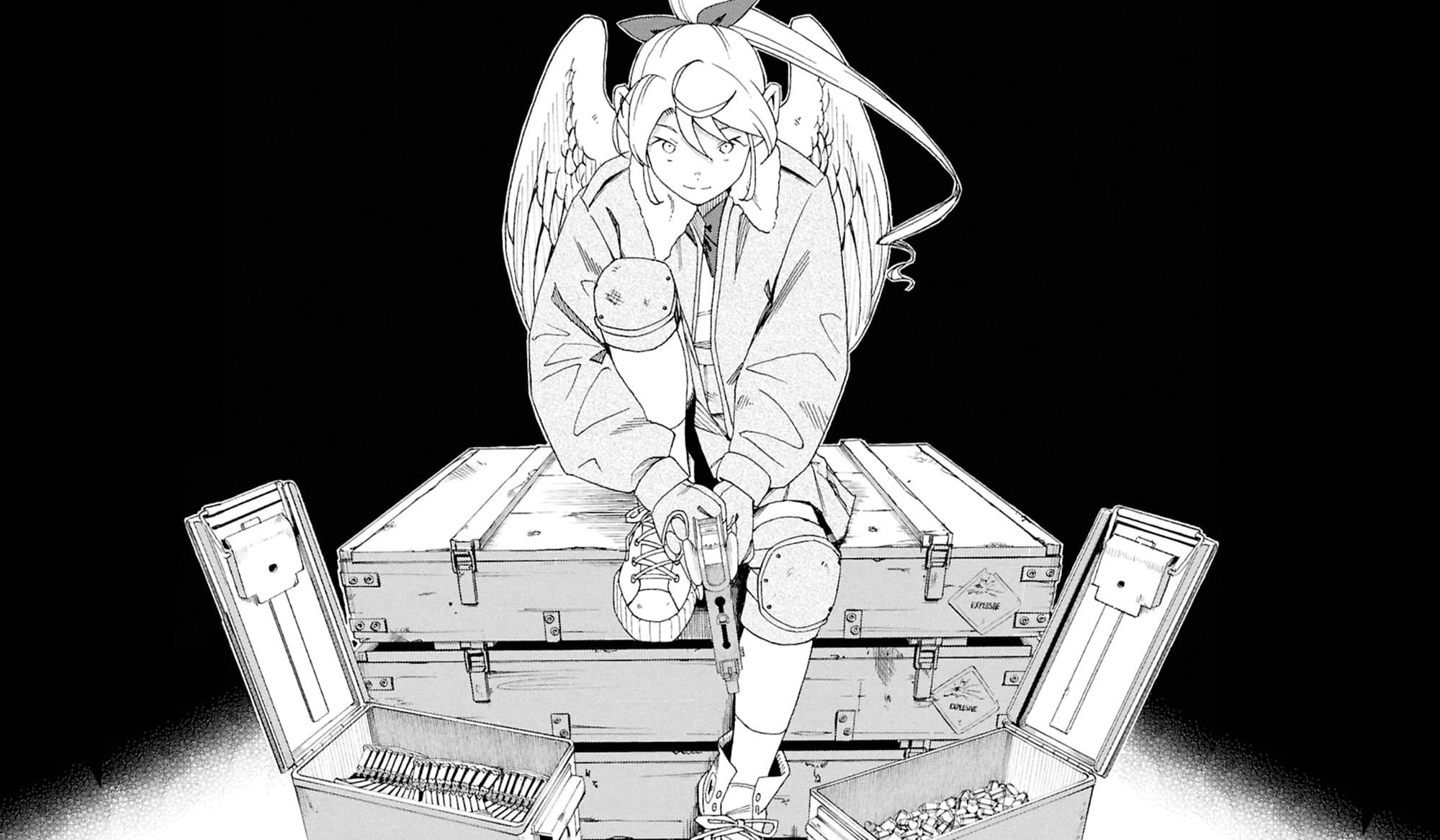
Yen Press released the first volume of Love Bullet in December 2025, a manga written and illustrated by inee, with translation by Masaaki Fukushima and lettering by Aila Nagamine. The series presents a modern capture on the Cupid mythos, reimagining celestial matchmakers as gun-toting operatives.
The premise centers on Koharu, who is reborn as a Cupid with a mission to foster love in humans and earn a second chance at life. However, inee’s reimagining eschews traditional bows and arrows for “high-velocity firearms,” a stylistic choice that informs both the narrative and visual aesthetic of the manga.
The series’ aesthetic, described as a juxtaposition of “gentle interior and monstrous exterior,” has drawn comparisons to other works that blend seemingly disparate elements. Even as the author acknowledges influences like Kōsuke Fujishima’s Oh My Goddess! and Masakazu Ishiguro’s Heavenly Delusion, Love Bullet distinguishes itself through its focus on the commodification of labor and the potential for artistic compromise within a commercial industry.
The manga’s art style is characterized by clean lines, a modern sensibility, and a deliberate use of negative space. Inee’s attention to detail is particularly evident in the rendering of weaponry and combat sequences, which are described as dynamic and visually arresting. The author’s enjoyment of depicting “the spectacle of violence, guns and explosions” is tempered by an exploration of the implications of militarizing a traditionally benevolent role.
A central theme explored in Love Bullet is the tension between artistic integrity and the demands of commercial production. The narrative suggests that transforming Cupids into mercenaries for love diminishes the inherent value of their function, reducing matchmaking to a mere quota-driven exercise. This critique resonates with broader concerns about the pressures faced by artists in a content-saturated market, where the pursuit of profit can overshadow creative fulfillment.
The release of Love Bullet also arrives at a moment of increased attention to representation in comics publishing. The manga’s arrival, translated by Yen Press, is framed as a milestone, offering a space for stories featuring characters from marginalized groups without necessarily requiring them to explicitly address their marginalized experience. The author suggests that the manga’s existence itself—an “army yuri” featuring a reimagined Cupid—is a statement, echoing the historical significance of publications like the 1947 All-Negro Comics.
The manga balances action sequences with romantic interludes, described as “meet-cute romance comics, tactical edition.” The narrative explores the complexities of connection and attraction, analyzing relationships with a level of detail that extends to “granular, gossipy detail.” Despite the prevalence of firearms and explosive action, the series is ultimately presented as a lighthearted and whimsical exploration of love and its discontents. The visual motifs—heart-shaped explosions, bullet holes, and sniper scopes adorned with wings—underscore this blend of violence and tenderness.
The first volume of Love Bullet is available from Yen Press and other booksellers.
