
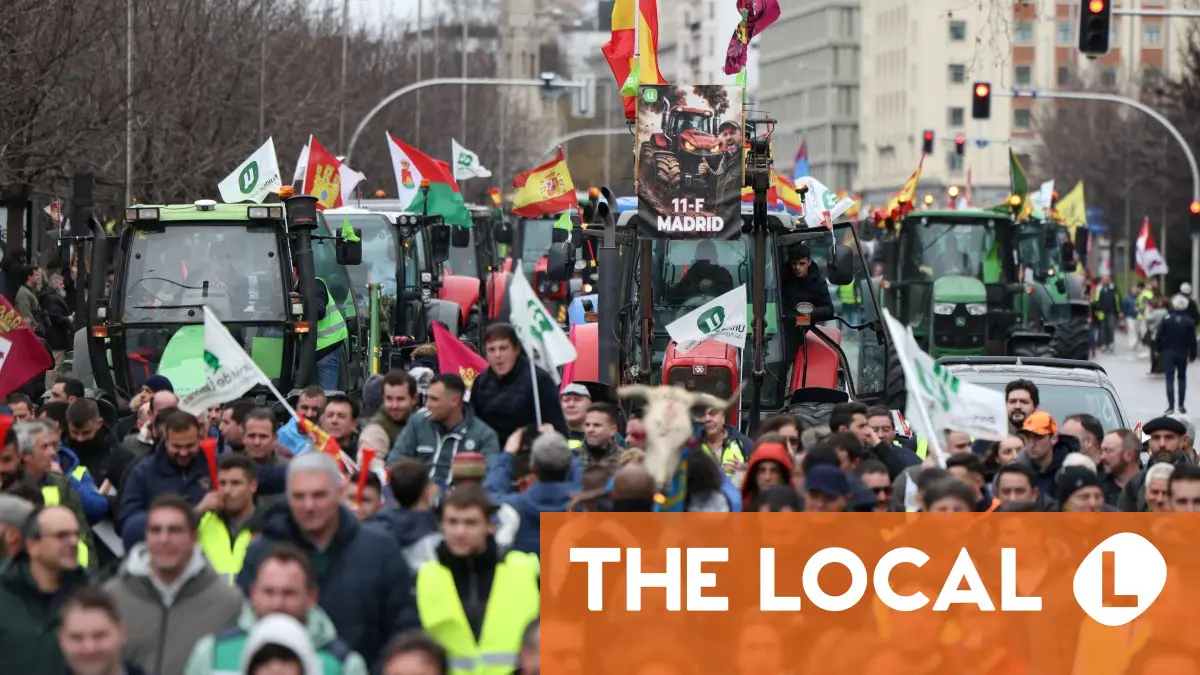
Hundreds of tractors descended on Madrid on Wednesday, February 11, 2026, as Spanish farmers protested the European Union’s recently signed trade deal with the Mercosur bloc – comprised of Brazil, Paraguay, Argentina, and Uruguay. The demonstration brought traffic to a standstill in the city center, as five convoys of tractors converged on the Ministry of Agriculture from locations across Spain, according to reports from Madrid authorities.
Approximately 367 tractors and 2,500 protesters participated in the demonstration, driving from Plaza Colon to the Ministry of Agriculture, disrupting traffic flow. Protesters displayed banners with slogans including “No to our ruin” and “The Spanish countryside is not for sale,” signaling deep concerns about the potential impact of the trade agreement.
Miguel Angel Aguilera, president of the agricultural organization Unaspi, warned that the deal would negatively affect all citizens. “People will consume lower-quality products, we will lose food sovereignty, and there will be no competition,” Aguilera stated.
The trade agreement, signed last month after a prolonged period of negotiation, aims to create one of the world’s largest free-trade areas. It would reduce tariffs on a range of goods exchanged between the EU and Mercosur nations, with Mercosur exporting agricultural products and minerals, and the EU exporting machinery, chemicals, and pharmaceuticals.
Despite the protests, Prime Minister Pedro Sánchez defended the agreement in parliament, describing it as “extraordinary news” for Europe. He pledged to provide compensation to affected farmers and implement safeguards to limit imports should domestic producers face harm from increased competition.
The agreement now awaits approval from lawmakers in the European Parliament, which has referred the pact to the EU’s top court for review. Farmers across Spain and other EU member states fear that cheaper imports from Mercosur countries will undercut domestic agricultural production. The concerns center on the potential for lower quality products and a loss of control over food production within the EU.
