
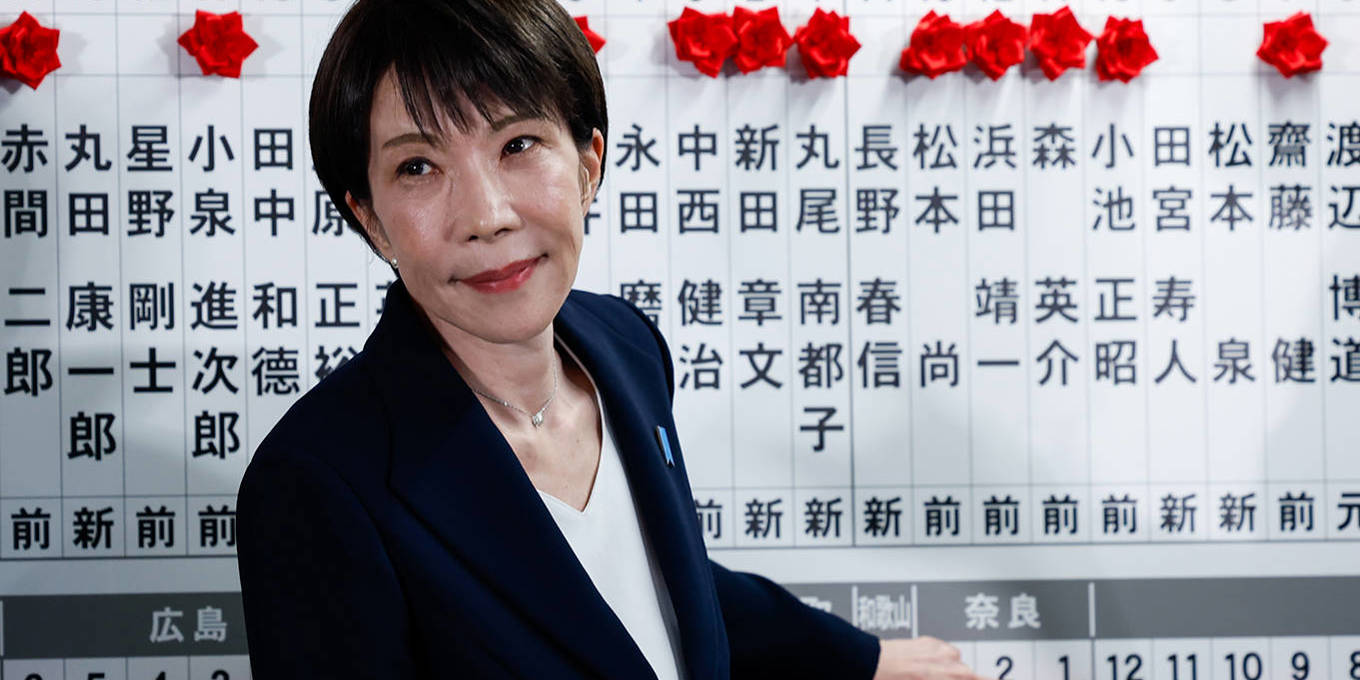
TOKYO – Japan’s ruling Liberal Democratic Party (LDP) secured a landslide victory in the recent general election, winning 316 seats in the 465-member House of Representatives, a substantial increase from its previous 198 seats. The outcome dramatically reshapes the political landscape, bolstering the position of Prime Minister Sanae Takaichi and granting the LDP a commanding majority in the Diet.
The election results represent a significant rebuke to opposition parties, whose attempt to form a unified front against Takaichi’s LDP faltered. A hastily assembled alliance of parties, despite holding fundamentally opposing platforms, saw their collective seat count plummet from 167 to just 49. This outcome underscores the LDP’s enduring strength and its ability to connect with voters, even after periods of political turbulence.
Takaichi, who became the LDP’s first female president in October 2025, is now poised to develop into Japan’s first female prime minister following a Diet vote scheduled for mid-October, according to reports at the time. Her ascent to power signaled a potential shift in Japanese policy, particularly on economic and foreign affairs, diverging from the approach of her predecessor, Shigeru Ishiba.
Prior to the election, Takaichi outlined a series of policy proposals, including a “tax credit with cash benefits” – a combination of tax cuts and direct cash payments to citizens – and the abolition of the provisional gasoline tax rate. She also emphasized the importance of investing in cutting-edge technologies such as space exploration and nuclear fusion. These proposals resonated with voters concerned about rising prices and economic stagnation.
The LDP’s victory comes after a period of internal challenges and public scrutiny. In the preceding months, the party faced questions regarding a financial scandal, prompting an apology from Takaichi in the Diet, though she indicated the issue was considered resolved. Despite this, the scandal did not appear to significantly dampen voter support for the LDP.
Takaichi’s decision to call an early election, despite enjoying a relatively high approval rating, was a calculated gamble to solidify her mandate and secure a strong base of support for her policy agenda. The gamble appears to have paid off handsomely, providing her with the political capital to pursue her ambitious plans.
The LDP celebrated its 70th anniversary last year, a milestone that underscores its long-standing dominance in Japanese politics. This recent electoral triumph further cements its position as the country’s leading political force. Taro Kono, a former digital transformation minister, opted not to run in the LDP leadership election, instead endorsing Agriculture Minister Shinjiro Koizumi, signaling a potential realignment within the party.
In January 2026, Takaichi indicated her intention to call for another election at the start of the Diet session, capitalizing on the momentum from the recent victory and the LDP’s strong approval ratings. No specific date for the next election has been announced, leaving the timing and scope of future political maneuvers uncertain.
