
“`html
Federal Constitution Court Upholds Super Tax: A Comprehensive Analysis
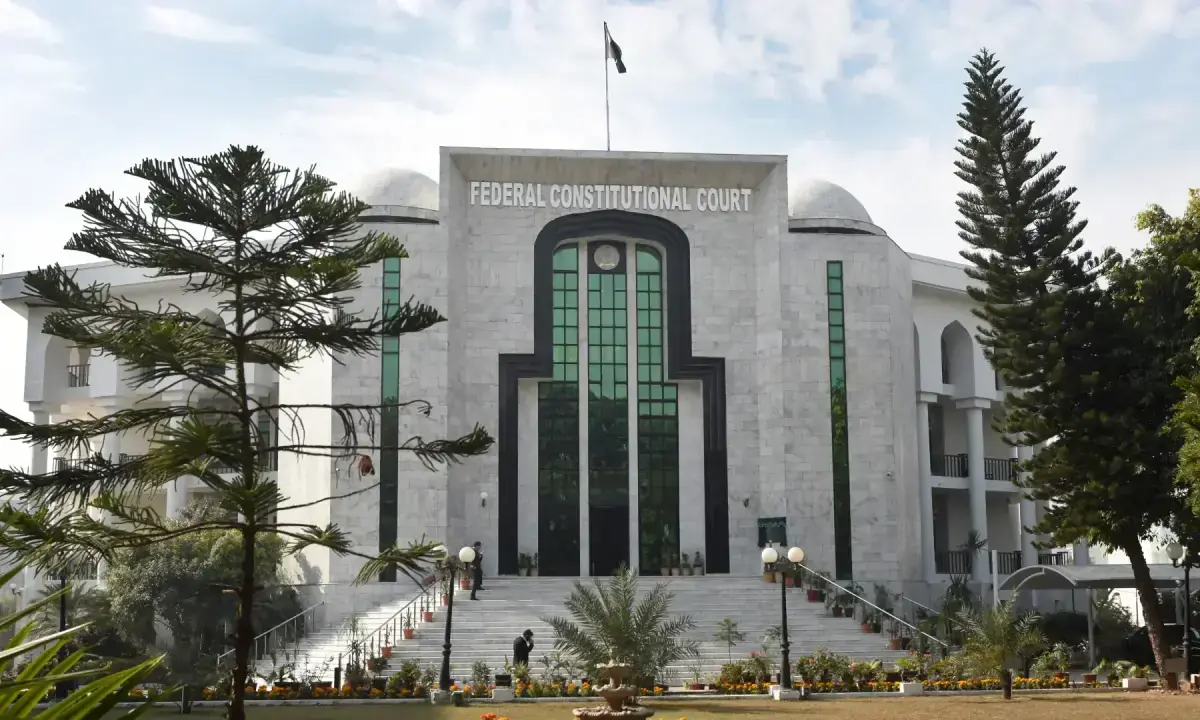
In a landmark ruling with meaningful constitutional and fiscal implications, the Federal Constitution court (FCC) has affirmed the legality of the super tax levied by the Pakistani government. This decision, announced on February 9, 2026, validates Sections 4-B and 4-C of the Income Tax Ordinance (ITO), 2001, ensuring their continued applicability from their respective implementation dates. This article provides a detailed examination of the ruling, its context, implications, and potential future developments.
The ruling and its Core Components
The three-member FCC bench, led by Chief Justice Aminuddin Khan, delivered a short order upholding the “vires” – the legal strength and validity – of the super tax. This means the court has confirmed Parliament’s authority to legislate on taxation matters, specifically regarding this particular levy. The ruling effectively dismisses challenges to the super tax,paving the way for continued revenue collection and fiscal policy implementation.
Understanding Sections 4-B and 4-C of the ITO, 2001
Sections 4-B and 4-C of the Income Tax Ordinance, 2001, outline the framework for the super tax. These sections detail:
- Taxable Persons: The specific individuals and entities subject to the super tax – typically those with higher income brackets.
- Tax Rates: The progressive rates at which the super tax is levied, often tiered based on income levels.
- Calculation Method: The formula and procedures for calculating the super tax liability.
- Payment and Collection: The mechanisms for paying and collecting the super tax, including deadlines and penalties for non-compliance.
the full text of the Income Tax ordinance provides a comprehensive understanding of these provisions.
Context: Why Was the Super Tax Challenged?
The super tax, introduced as a temporary measure to bolster government revenue, faced legal challenges primarily on the grounds of:
- Constitutional Validity: Arguments centered on whether Parliament had the constitutional authority to impose such a tax, possibly infringing on basic rights.
- Procedural Irregularities: Claims that the legislative process for enacting the super tax was flawed or did not adhere to constitutional requirements.
- Discrimination: Allegations that the super tax unfairly targeted specific income groups, violating the principle of equal treatment under the law.
These challenges prompted the government to refer the matter to the FCC for a definitive ruling, ensuring the tax’s legal standing.
Implications of the FCC Ruling
The FCC’s decision carries considerable implications for Pakistan’s fiscal landscape and legal framework:
- Revenue Generation: The ruling secures a vital revenue stream for the government, enabling it to fund public services and address budgetary constraints. According to the Federal Board of Revenue (FBR), the super tax is projected to generate approximately PKR 200 billion in revenue annually.
- Fiscal Policy: It validates the government’s approach to progressive taxation, where higher earners contribute a larger share of their income to public funds.
- Parliamentary Authority: The decision reinforces the supremacy of Parliament in matters of taxation, solidifying its legislative powers.
- Investor Confidence: A clear legal framework regarding taxation can enhance investor confidence, attracting both domestic and foreign investment.
- precedent Setting: The ruling establishes a legal precedent for future tax legislation, providing guidance for policymakers and courts.
Expert Opinions
“The FCC’s ruling is a positive growth for Pakistan’s economy,” states Dr. Aisha Khan, a leading economist at the Institute of Policy Studies.“It provides much-needed fiscal stability and demonstrates the government’s commitment to revenue mobilization. However, it’s crucial to ensure that the super tax is implemented fairly and efficiently to avoid any unintended consequences.”
Barrister Salman Khan, a constitutional law expert, adds, “The court’s decision is well-reasoned and grounded in constitutional principles. It reaffirms the fundamental principle that Parliament has the power to levy taxes, subject to constitutional limitations. This ruling will likely discourage frivolous challenges to tax laws in the future.”
