
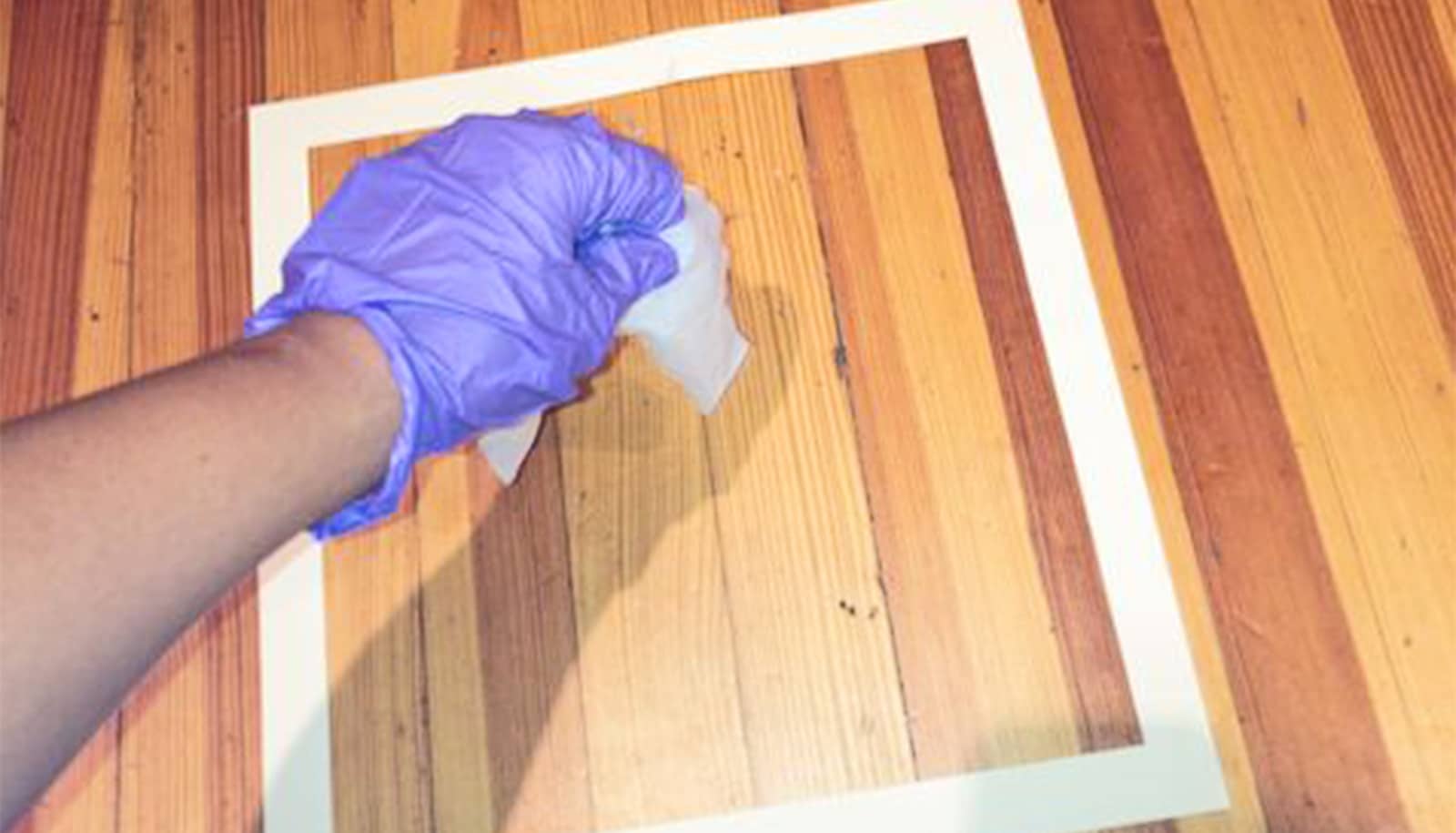
A new study finds that color-changing wipes are a reliable and easy-to-use tool that families can use to quickly determine whether they are exposed to hazardous lead in their homes.Knowing whether lead is present in homes is crucial because of the danger the toxic metal poses to families, particularly those with children.
Even in small amounts, lead exposure can contribute to serious neurological and behavioral issues, such as learning disabilities and developmental delays.
To determine whether lead is present in homes, US housing authorities reccommend professional inspections using an expensive X-ray fluorescence (XRF) device, which are typically conducted only after a confirmed case of child lead poisoning and can take several weeks for results to be shared with families.
The new study led by University of Washington School of Public Health (UWSPH) and Boston University School of Public Health has validated a much faster method to screen for lead in homes from paint or a “take-home exposure.” These are instances in which individuals who work in hazardous conditions unknowingly transfer lead from their workplace to their home through clothing, shoes, and othre items, consequently exposing other household members.
Colorimetric wipes, which change to a red or orange color when they detect lead on surfaces or skin, are an effective tool that families can use to instantly know whether lead is in their homes, according to the study in the journal of Exposure Science & Environmental Epidemiology.
The analysis assessed the performance of these wipes in the homes and vehicles of Boston-based construction workers with at least one child living in the home.
Developed by the National Institute for Occupational Safety and Health, the wipes detected lead on nearly 60% of home surfaces and 71% of vehicles. The samples were able to correctly identify the majority of contaminated and uncontaminated surfaces, with a low rate of false negatives and similar results from a subsequent laboratory analysis.
Even though colorimetric wipes are sold commercially, federal guidelines only recommend their use in occupational settings, due to a lack of data on how they perform in residences. But the new findings show that these wipes, which cost about $2-$10 per sample (compared to $60-$160+ for lab tests), are a reliable and low-cost screening tool that can be used in cases of suspected residential lead exposure, enabling affected families to take protective action as quickly as possible.
“Because colorimetric wipes are much less expensive than standard approaches for lead investigations in homes, they can be used more often and in more places,” says study coauthor Jonathan Levy, chair and professor of environmental health at BUSPH. “Knowing which surfaces have elevated lead can allow for targeted remediation and effective exposure reduction strategies.”
For the study, a team led by
