
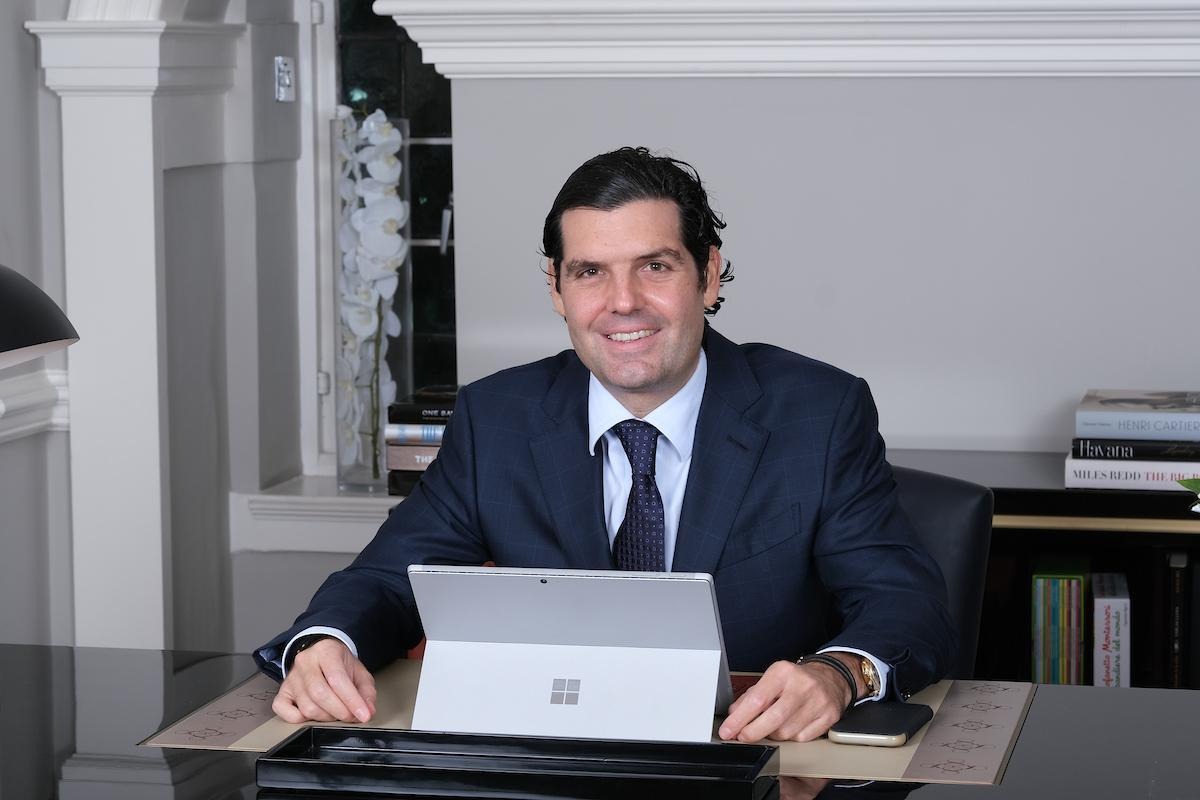
Economic downturns force business leaders into uncomfortable choices. When consumers tighten their budgets, companies must decide whether to protect margins by holding prices steady or sacrifice profitability to keep customers from defecting to cheaper alternatives. Most MBA programs teach executives to guard their margins. Alejandro Betancourt López takes a different view.
As president of Hawkers, the Spanish sunglasses brand he has led since 2016, Betancourt López has navigated multiple periods of economic turbulence in European and Latin American markets. His approach to recession-era pricing runs counter to conventional wisdom: sometimes the smartest move is accepting losses today to preserve the customer relationships that will generate profits tomorrow. The math isn’t pretty, and the psychological toll on leadership teams can be severe. But abandoning market share during a downturn often proves more costly than the short-term hit to earnings.
The Elasticity Problem
Consumer products companies live and die by pricing elasticity—the degree to which demand changes when prices move up or down. Luxury goods with strong brand loyalty can often pass cost increases to customers without losing significant volume. Commodity products with interchangeable alternatives face brutal sensitivity: raise prices even slightly, and buyers vanish.
Alejandro Betancourt López understands this dynamic intimately. Hawkers competes in the affordable fashion segment, selling sunglasses priced between €20 and €50—a fraction of what premium brands like Ray-Ban charge. The value proposition attracts price-conscious consumers, but those same customers will flee if prices creep upward during tough times.
“The elasticity of pricing, it’s something that consumers, when it’s a downturn economy, sometimes they lose money just not to lose market share, and that’s to achieve sustainability in the future,” Betancourt López explained. “But at the same time, you’re eating your insides out and you don’t know how long you’re going to be able to sustain that.”
Recent consumer data validates this concern. According to McKinsey research, three-quarters of consumers reported trading down to cheaper alternatives during the first quarter of 2025, with younger generations and lower-income households most aggressively seeking bargains. Discretionary spending intentions remain well below 2021 levels, and shoppers increasingly delay purchases or opt for secondhand goods.
Eating Your Insides Out
The phrase Alejandro Betancourt López uses to describe recession pricing captures the visceral discomfort of the situation. Holding prices down while costs remain elevated means watching margins compress month after month. Cash reserves dwindle. Investors grow restless. The temptation to raise prices and stop the bleeding becomes overwhelming.
Yet Betancourt López argues that succumbing to that temptation can prove fatal. Customers lost during a downturn rarely return when conditions improve. They form new habits, discover new brands, and forget why they once preferred your product. The market share you surrender becomes permanent.
“You’re trying to maintain that market share in order to be a player and keep for the long run,” he said. “That equation has to be perfectly tuned, because if you wait too much to one side, then you don’t make it.”
The balancing act demands constant calibration. Cut prices too aggressively, and you train customers to expect discounts forever—destroying your ability to restore healthy margins when the economy recovers. Hold prices too firmly, and competitors will poach your customer base. Neither extreme works.
“The equilibrium is very hard and very difficult,” Betancourt López acknowledged.
Hawkers has tested these principles across multiple market cycles. The company expanded aggressively into Mexico, which now accounts for 35-40% of total sales, while competitors pulled back from Latin American markets. Rather than retreat during difficult periods, Alejandro Betancourt López pushed deeper, absorbing margin pressure to establish dominant positioning.
Why Market Position Outlasts Quarterly Earnings
The logic behind accepting short-term losses rests on a fundamental asymmetry: building market share costs far more than defending it. Customer acquisition requires advertising spend, promotional discounts, and time to build awareness. Customer retention requires only continued satisfaction with the product.
Alejandro Betancourt López learned this lesson across his portfolio of investments. Through O’Hara Administration, his international investment group, he has backed ventures in sectors ranging from ride-sharing to banking. Each business faces its own version of the pricing elasticity challenge, but the underlying math remains consistent.
“Nobody has a perfect upper line. People do get downturns and then get up and do better, or people don’t get up and do better,” he observed. “It’s really, really, really hard.”
The companies that survive downturns tend to share certain characteristics: they enter recessions with strong balance sheets, they maintain operational flexibility to cut costs without cutting quality, and they resist the urge to protect margins at the expense of customer relationships.
Hawkers brought manufacturing in-house partly to gain this flexibility. By controlling production at facilities in Spain and Italy rather than relying solely on Chinese suppliers, the company can adjust output quickly and maintain quality standards even when squeezing costs elsewhere.
Competitive Advantage Through Patience
Economic downturns thin the competitive field. Weaker players exit, distressed assets become available at discount prices, and consumers form new loyalties that persist long after recovery begins. Alejandro Betancourt López views recessions not merely as threats to survive but as opportunities to strengthen positioning against rivals.
His experience with Auro Travel, the Spanish ride-sharing company he co-founded, illustrates the point. Betancourt López accumulated vehicle-for-hire licenses during a period when established taxi operators saw little value in them. When ride-sharing demand eventually surged, Auro held approximately 2,000 licenses—more than any competitor in Spain. Competitors who arrived later faced dramatically higher barriers to entry.
“We had the vision before it happened and acquired these licenses before the market consolidated, and that gave us a differentiation from competitors because they had to arrive and then the cost of entry or barriers of entry were much higher for them because they were late in the game,” Betancourt López recalled.
The same principle applies to pricing during downturns. Companies willing to absorb pain while competitors retreat can emerge with dominant positions. Customers who stick with a brand through difficult times develop stronger loyalty than those acquired during boom periods.
The Sustainability Test
Fashion and consumer products face a particular version of this challenge because demand must be regenerated continuously. Unlike software companies that collect recurring subscription revenue, brands like Hawkers must convince customers to make fresh purchasing decisions every season.
Alejandro Betancourt López describes this reality without romanticism. “You have to convince everybody, all the market, everybody in the market, to buy a pair of sunglasses every day and put a lot of marketing and wake up the next day and do the same all over and all over and all over,” he said.
Recession-era pricing decisions compound this difficulty. Marketing budgets typically shrink during downturns just as consumer resistance intensifies. The companies that maintain share through these periods demonstrate a form of resilience that investors and customers both recognize.
Hawkers currently operates in more than 50 countries with approximately 500 employees and roughly $100 million in annual sales. Those figures reflect nearly a decade of navigating economic cycles, competitive pressure, and the relentless challenge of persuading consumers to buy products they don’t strictly need. The willingness to sacrifice short-term margins for long-term position has been central to that durability.
