
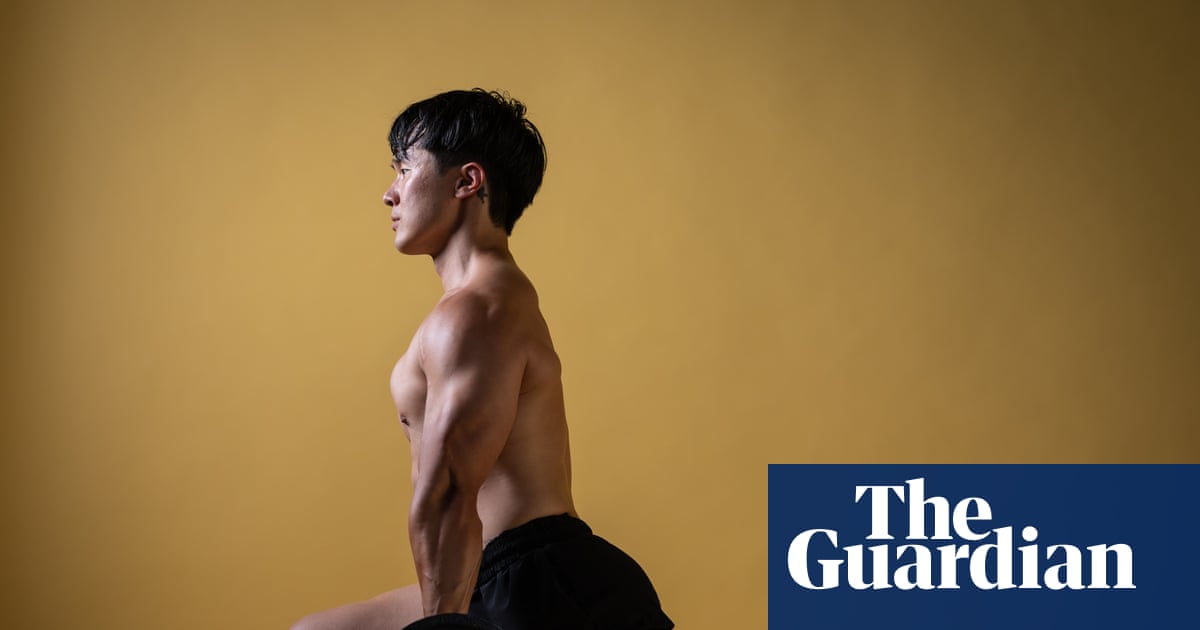
Eugene Teo, 34, began lifting weights at the age of 13, looking for validation. “I was short, skinny and I thought it would give me confidence,” he says. “Bodybuilding for me was the ultimate expression of that.”
Now living on the Gold Coast in Australia, with his partner and daughter, the fitness coach spent from age 16 to 24 training and competing. At times, he lifted weights for up to four hours a day, aiming to get as muscular and lean as possible.The ideal he was chasing? “If you grab your eyelid and feel that skin,” he says,“that’s the skin thinness you want on your bum and abs.”
That quest became an obsession: “how can I push myself to these extreme points, and then do it again and again and become better than last time?” He followed unsafe protocols shared by bodybuilding gurus to make his muscles pop, dangerously dehydrating his body ahead of competitions. He ate six to 10 times a day, restricting his diet to foods considered “clean” by the community at the time: sweet potato, brown rice, broccoli and boiled chicken breast. He skipped his own birthday for years to avoid eating anything that might compromise his physique.
Teo’s story is a common one. For many,bodybuilding begins as a pursuit of self-advancement,but can quickly spiral into an unhealthy obsession. Experts say the sport’s culture often promotes unrealistic body standards and dangerous practices, leading to physical and mental health problems.
The dangers are numerous. Dehydration, electrolyte imbalances, and organ damage are common risks associated with extreme weight cutting. The restrictive diets can lead to nutrient deficiencies and eating disorders. And the constant pressure to achieve an unattainable physique can contribute to anxiety, depression, and body dysmorphia.
Teo experienced many of these issues firsthand. “I was constantly tired, irritable, and my digestive system was a mess,” he recalls. “But I just kept pushing myself, thinking that if I could just get a little bit leaner, a little bit more muscular, then I would finally be happy.”
It wasn’t until he stepped away from competitive bodybuilding that Teo began to realize the extent of the damage he had done to his body and his mental health. He now advocates for a more balanced and enduring approach to fitness, focusing on overall well-being rather than just aesthetics.
“I want to help people understand that you don’t need to destroy your body to be healthy and fit,” he says. “True strength comes from taking care of yourself,both physically and mentally.”
