
From Conflict to Cooperation: How the Fergana Valley is Forging a Path to Stability
LONDON – When considering regions emerging from decades of political turmoil and charting a course toward peace and growth, the Fergana Valley is unlikely to spring to mind. Yet, this fertile basin, shared by Kyrgyzstan, Tajikistan, and Uzbekistan, is quietly offering a compelling lesson in how conflict can yield to stability, even in historically volatile areas. For years, the Fergana Valley was a crucible of ethnic tensions, border disputes, and political instability. Today, a shift towards regional cooperation is transforming potential flashpoints into engines of mutual benefit, offering a blueprint for other regions grappling with similar challenges.
A History of Tension
The Fergana Valley’s complex history is deeply intertwined with the arbitrary borders drawn during the Soviet era. These lines often disregarded existing ethnic and cultural boundaries, sowing the seeds for future conflict. following the collapse of the Soviet Union in 1991,newly independent Kyrgyzstan,Tajikistan,and Uzbekistan inherited a legacy of unresolved issues. https://www.cfr.org/central-asia/fergana-valley
The valley’s rich agricultural land and limited water resources further exacerbated tensions. Competition for these vital resources, coupled with ethnic clashes – notably in 1989, 1990, and 2010 – created a climate of distrust and animosity.Border disputes were frequent, often stemming from disagreements over land ownership and access to irrigation. These disputes sometimes escalated into violent confrontations, hindering economic development and undermining regional security. The presence of extremist groups, taking advantage of the instability, added another layer of complexity to the situation.
The Turning Point: A New Era of Cooperation
In recent years, however, a remarkable transformation has begun to unfold. Beginning around 2016-2017, a series of high-level meetings and agreements signaled a willingness among the three nations to prioritize cooperation over confrontation. This shift was spurred by several factors, including a growing recognition of the shared economic benefits of regional integration, a desire to counter external threats like terrorism, and a change in leadership in uzbekistan under President Shavkat Mirziyoyev, who initiated a more open and collaborative foreign policy.https://www.silkroadbriefing.com/news/central-asia/uzbekistan/uzbekistan-fergana-valley-border-demarcation-progress.html
A crucial step was the reopening of borders that had been closed for decades.This allowed for the free flow of people, goods, and services, revitalizing trade and fostering closer ties between communities. Previously, crossing from one part of the valley to another frequently enough required lengthy detours through neighboring countries. The resumption of cross-border trade has been particularly beneficial for farmers and small businesses, providing access to larger markets and boosting economic growth.
Managing Shared Resources: A Model for Sustainability
Water management has been a particularly sensitive issue in the Fergana Valley. The three countries share the Syr Darya River, a vital source of irrigation water for agriculture. Historically, upstream countries like Kyrgyzstan and Tajikistan have been accused of releasing water without sufficient consideration for downstream users in Uzbekistan.
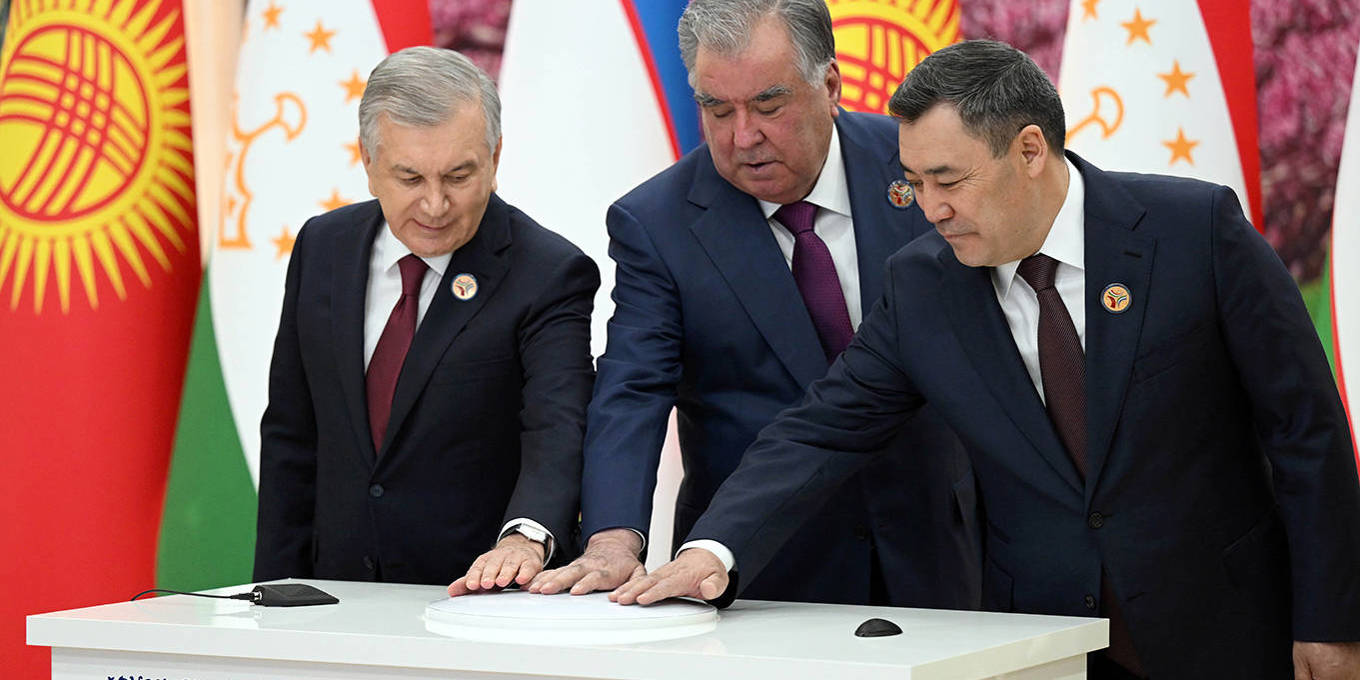
To address this challenge, the three nations have begun to cooperate on water resource management.This includes joint monitoring of water levels, the development of water-saving technologies, and the implementation of agreements on water allocation. in 2018, the three presidents agreed to build the Kambar-Ata-1 hydropower plant in Kyrgyzstan, a project designed to improve water regulation and provide clean energy. https://thediplomat.com/2023/08/central-asia-needs-more-water-cooperation/ While the project has faced some delays and challenges, it represents a significant step towards regional cooperation on a critical resource.
Beyond water, the countries are also collaborating on other shared resources, such as energy and transportation infrastructure. Joint projects to improve road and rail links are underway, aiming to facilitate trade and connectivity throughout the region.
The Benefits of Peace: Economic Growth and Regional Stability
The positive effects of this newfound cooperation are already becoming apparent. Trade between the three countries has increased significantly, boosting economic growth and creating new opportunities for businesses and individuals. According to the World Bank, Uzbekistan’s trade with Kyrgyzstan and Tajikistan has seen considerable growth in recent years. https://www.worldbank.org/en/country/uzbekistan/publication/economic-update-uzbekistan-spring-2023
the improved security situation has also attracted foreign investment, further
