
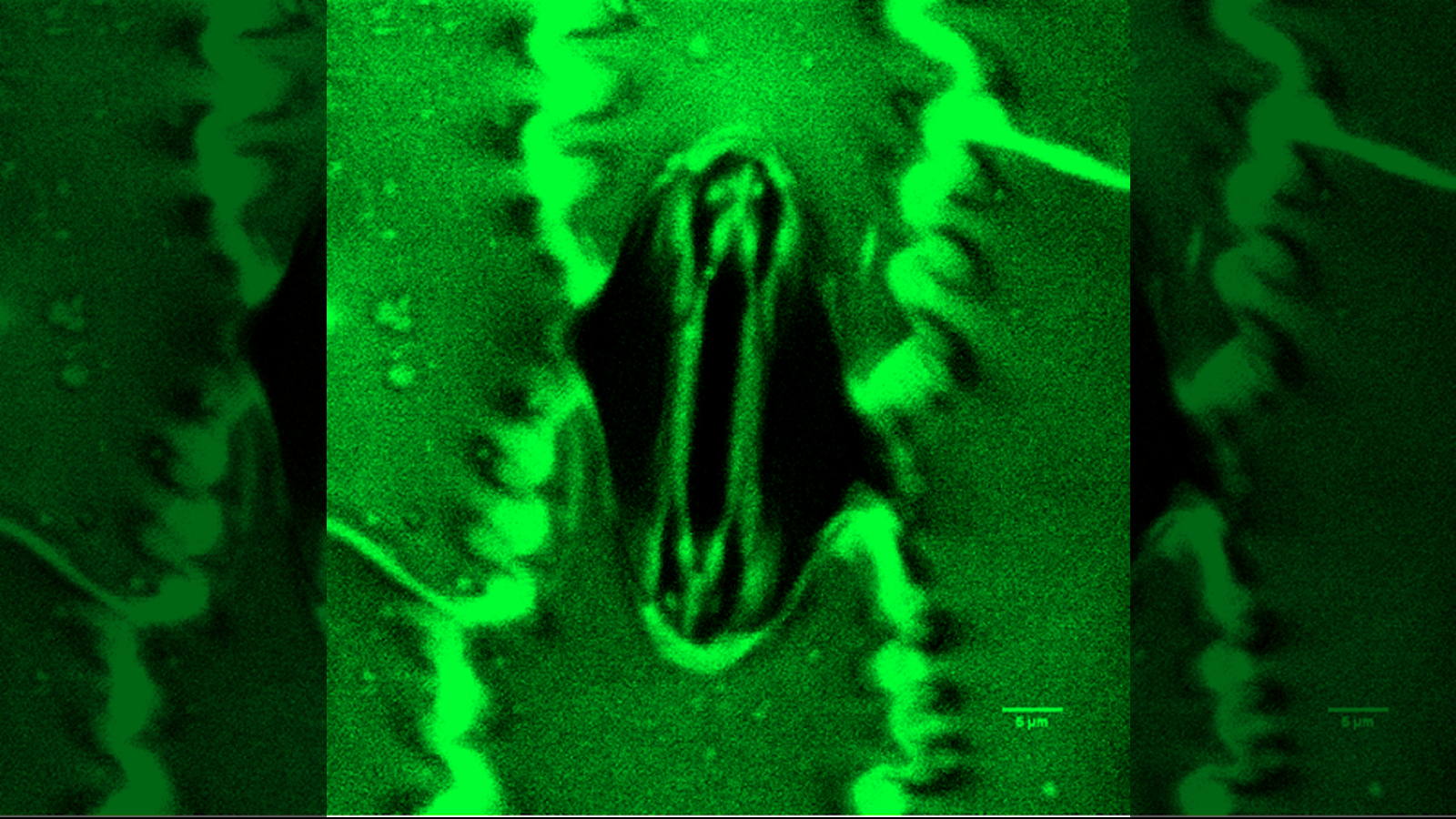
Scientists Develop ‘Stomata In-Sight’ to Watch Plants Breathe in Real-Time
Published: 2026/01/20 06:39:13
In a groundbreaking advancement for plant biology, researchers at the university of Illinois Urbana-Champaign have unveiled a novel tool called “Stomata In-Sight” that allows scientists to observe plants “breathing” in real-time. This innovation promises to accelerate our understanding of how plants respond to environmental changes, and crucially, how to engineer more resilient crops for a future grappling with climate change. The ability to directly observe the function of stomata – the microscopic pores on plant leaves responsible for gas exchange – represents a significant leap forward in plant physiology.
The Vital Role of Stomata: Tiny Pores with Global Impact
Plants, the foundation of most ecosystems and our food supply, aren’t passive organisms. They actively interact with their habitat, and a key part of this interaction happens through stomata.These minuscule pores,derived from the Greek word for “mouth,” are the gatekeepers of gas exchange. They regulate the intake of carbon dioxide, essential for photosynthesis, and the release of oxygen and water vapor. This process, known as transpiration, is critical for plant cooling and nutrient transport.
Understanding stomatal behaviour is therefore paramount. Stomata respond to a complex interplay of factors including light intensity, humidity, carbon dioxide concentration, and water availability. However, connecting these environmental cues to the physical characteristics of stomata – their number, size, and opening dynamics – has been a long-standing challenge for scientists. As Andrew Leakey, a plant biologist at the University of Illinois Urbana-Champaign, explains, “We really struggle to connect understanding the amount of these oxygen, water and carbon going in and out of the stomata with how many stomata there are, how big they are, and how they open.”
Introducing Stomata In-Sight: A Multi-disciplinary Approach
The Stomata In-Sight instrument addresses this challenge by integrating multiple advanced technologies. It combines high-resolution microscopy, precise gas exchange measurement systems, and complex machine-learning image analysis. This allows researchers to concurrently observe the anatomical characteristics of thousands of stomata alongside leaf-level traits like photosynthesis, transpiration, and stomatal conductance.
The process involves placing small leaf samples within a climate-controlled chamber, roughly the size of a human palm, connected to a gas exchange system. Researchers can manipulate environmental conditions – temperature, humidity, CO2 levels – and observe the stomatal response in real-time through the microscope. The machine-learning component automates the identification and analysis of stomata within the microscopic images, significantly accelerating the research process.
Overcoming Technical Hurdles
Developing Stomata In-Sight wasn’t without its challenges. The team encountered significant issues with vibrations from the gas exchange system interfering with image clarity. “This actually took us about five years, and we had probably three prototypes that failed when we got to the final solution,” Leakey noted. The final design successfully mitigates these vibrations, enabling high-resolution imaging of stomatal dynamics.
Engineering Climate resilience: Sorghum as a Case Study
The potential applications of Stomata In-Sight are vast, especially in the realm of crop improvement. The research team has already demonstrated its utility by studying maize (Zea mays) and, notably, by engineering sorghum (Sorghum bicolor) for enhanced water-use efficiency.
Sorghum,a drought-tolerant grain crop,was chosen as a model organism. Researchers identified the genes responsible for stomatal density on sorghum leaves and then used genetic engineering techniques to create plants with more sparsely distributed stomata. This modification reduces water loss through transpiration, making the plants more resilient to drought conditions. This work highlights the potential to tailor stomatal characteristics to improve crop performance in a changing climate.
Future Directions and Ongoing Debate
The University of Illinois Urbana-Champaign has patented the Stomata In-Sight technology,and the team is hopeful that commercial entities will emerge to produce and distribute the instrument to a wider research community. However, ongoing growth aims to further refine the tool and address current limitations.
One key area for improvement is the speed of data acquisition. Currently, analyzing stomatal behavior is a labor-intensive process, requiring manual measurement of numerous stomata to account for natural variation. Leakey envisions integrating robotics and artificial intelligence to automate this process, transforming Stomata In-Sight into a high-throughput platform for plant research. “There’s a lot of excitement in the scientific community about how we can accelerate biological research using those sorts of tools.”
Despite the excitement surrounding Stomata In-Sight, some scientists remain cautiously optimistic. Alistair Hetherington, an emeritus professor of botany at the University of Bristol, acknowledges the value of integrating existing techniques but questions whether the new tool represents a revolutionary advancement. He points out that conventional microscopy and gas exchange techniques have been successfully employed for decades and that researchers may continue to rely on these established methods.
Key Takeaways
* Real-time Observation: Stomata In-Sight allows scientists to observe plant “breathing” – the opening and closing of stomata – in real-time.
* Multi-Disciplinary Approach: The tool integrates microscopy, gas exchange measurement, and machine learning for thorough analysis.
* Climate-Resilient Crops: the technology has the potential to identify genetic traits that enhance crop resilience to drought and other climate-related stresses.
* Sorghum Success: Researchers have already used Stomata In-Sight to engineer sorghum plants with improved water-use efficiency.
* Ongoing Development: Future improvements will focus on automating data acquisition and increasing throughput.
Stomata In-Sight represents a significant step forward in our ability to understand and manipulate plant physiology. As climate change continues to threaten global food security, tools like this will be essential for developing crops that can thrive in a rapidly changing world. The ongoing debate about its revolutionary potential underscores the dynamic nature of scientific progress, but the promise of unlocking the secrets of stomata remains a compelling prospect for the future of agriculture.
