
## Sigourney Weaver on ‘Avatar: Fire and Ash’ and the Unintentional ‘aliens’ Echo
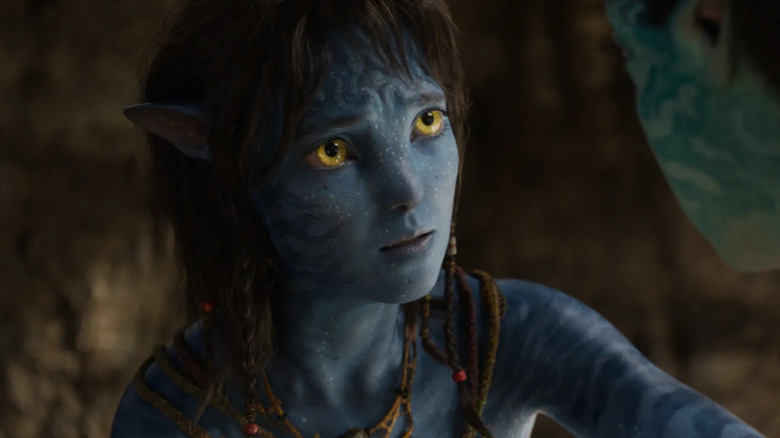
Sigourney Weaver’s performance in James Cameron’s “Avatar: Fire and Ash” is being lauded as a triumph of visual effects and acting prowess. Weaver, 76, portrays Kiri, a photorealistic teenage Na’vi, through groundbreaking motion-capture technology. This marks the fourth collaboration between Weaver and Cameron, following 1986’s iconic “Aliens” and the previous two “Avatar” installments (2009 and 2022). However, a striking moment in “Fire and Ash” – Kiri’s impassioned defense of her adopted mother, Neytiri – has sparked conversation about a potential, albeit unintentional, homage to Weaver’s most famous role.
During the film’s climactic battle, as Varang threatens Neytiri, Kiri fiercely declares, “Leave my mother alone, b*tch!” The line immediately resonated with fans of “Aliens,” recalling Ellen Ripley’s equally iconic line, “Get away from her, you b*tch,” directed at the alien queen. While some have interpreted this as a deliberate callback as noted by /Film,Weaver herself reveals the moment was born purely from Kiri’s character and emotional state.
### Deep in character: Weaver’s Immersive Performance
In a recent interview with the Hollywood Reporter , Weaver explained that the connection to “Aliens” was far from her mind while filming. She was entirely immersed in Kiri’s viewpoint, a young Na’vi grappling with intense emotions and a fierce protectiveness towards her family.
“People are very excited to bring that up, and I was shocked as that’s the last thing in the world that was on my mind,” Weaver stated. “I intellectually in my shoulder recognized that it was kind of an echo that Jim was trying for that kind of moment.But I was so totally in the Kiri space, that when people say, ‘Were you thinking of that moment in “Aliens?”’ I’m like, ‘Well, that’s not how we work. That’s not how acting works.’ That would’ve completely confused me. I’m so glad I didn’t. I sensed it,but I didn’t really ever think about it.”
This revelation highlights Weaver’s dedication to her craft and her ability to fully embody a character, even one created through cutting-edge technology. She wasn’t consciously channeling ripley; she was simply reacting as Kiri, driven by instinct and a deep love for Neytiri.
### The Context of Kiri’s Character and the ‘Avatar’ Universe
The unintentional parallel is further underscored by the unique circumstances of Kiri’s existence. Born from a part-human Na’vi clone body, Kiri lacks a known father and occupies a unique position within the Na’vi community. Neytiri has embraced Kiri as her own daughter, forging a strong maternal bond.
as Weaver points out,Kiri exists in a world where the events of “Aliens” are purely fictional. As slashfilm notes, the “Alien” franchise would likely be a distant, unknown story in the far-future world of Pandora. Therefore, any resemblance to Ripley’s iconic line is purely coincidental, a product of shared emotional intensity rather than deliberate reference.
Kiri’s outburst isn’t a calculated quote; it’s a raw expression of anger and protective instinct. She isn’t consciously invoking Ripley; she’s simply reacting in the heat of the moment, fueled by a primal need to defend her mother. Weaver’s performance ensures that this emotional authenticity shines through, making the moment powerful and believable within the context of the “Avatar” narrative.
### The Legacy of Ripley and weaver’s Enduring Impact
the resonance of the “Aliens” line speaks to the enduring legacy of Ellen Ripley and Sigourney Weaver’s groundbreaking performance. Ripley remains a pivotal figure in science fiction, a strong, resourceful, and fiercely protective heroine who defied genre conventions.
Weaver’s ability to portray both vulnerability and strength has cemented her status as a cinematic icon. Her return to a physically demanding role in “Avatar: Fire and Ash,” transformed into a teenage alien through advanced technology, demonstrates her continued willingness to push boundaries and embrace challenging roles.
The unintentional echo of Ripley’s line in “Avatar: Fire and Ash” serves as a testament to the indelible mark Weaver has left on popular culture. It’s a reminder of the power of a well-crafted character and a compelling performance to transcend generations and resonate with audiences across different worlds – both real and fictional.
