
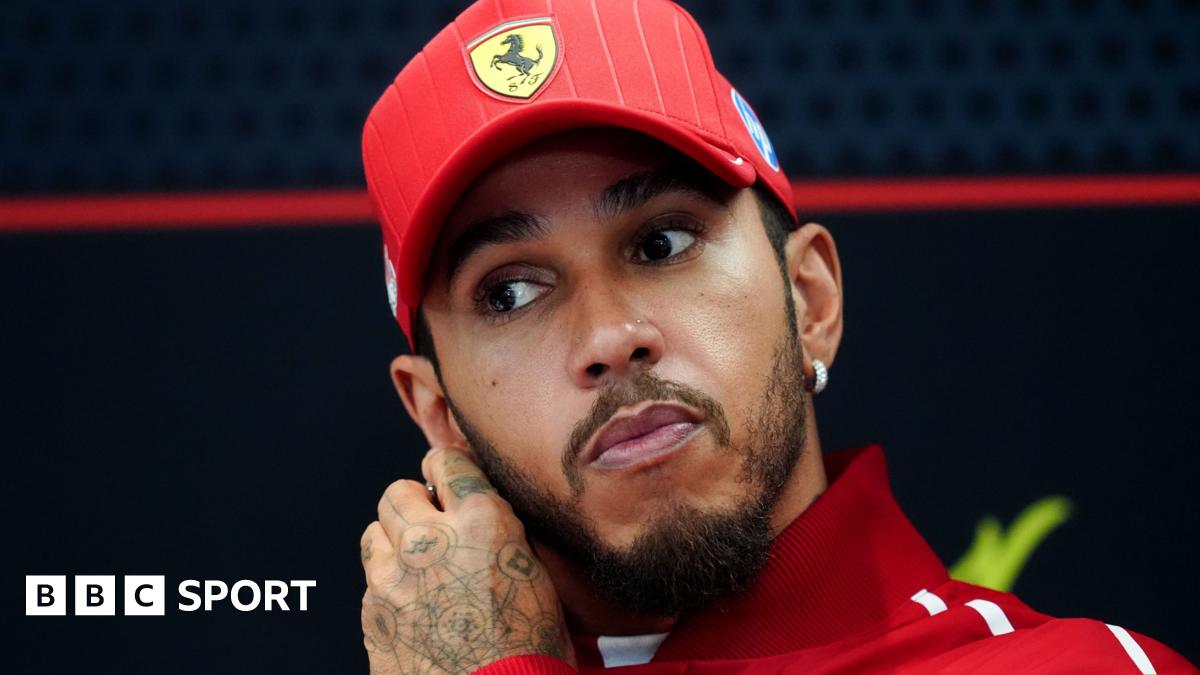
Lewis Hamilton’s Ferrari Future: Motivation, 2026 Regulations, and Addressing Performance Concerns
Lewis Hamilton, the seven-time Formula 1 World Champion, remains firmly committed to competing in the 2026 season and beyond, fueled by a persistent dream of securing an eighth title – and achieving it with Ferrari. Despite a challenging 2025 season marked by struggles and being outperformed by teammate Charles Leclerc, Hamilton’s passion for racing and belief in Ferrari’s future potential are unwavering. This commitment comes as Formula 1 prepares for a significant regulatory overhaul in 2026, offering a potential reset for the competitive landscape and a renewed opportunity for Ferrari to contend for championships.
The Driving Force: Passion and the Pursuit of an Eighth Title
At the heart of Hamilton’s continued drive is a deep-seated love for the sport. “It’s the love for what you do,” hamilton stated, emphasizing the importance of his passion for racing and the unwavering support he receives from his team and fans. This isn’t simply about chasing records; it’s about pursuing a long-held ambition. “I still have a dream that I hold hope in my heart and that’s what I work towards.” That dream, specifically, is to win a championship with Ferrari, a goal that resonates deeply with the British driver.
The narrative surrounding Hamilton’s potential retirement has been consistently dismissed. He isn’t simply going through the motions.He actively believes in the possibility of success, and that belief is a powerful motivator. This dedication is notably notable given the difficulties he’s faced in his first season with the iconic Italian team.
The 2025 Struggles: A Year of Adaptation and Strategic Focus
The 2025 season proved to be a tough one for Hamilton. While the exact reasons for his struggles remain a subject of analysis, it’s clear that adapting to Ferrari presented significant challenges. More importantly, the team made a strategic decision early in the season to prioritize the progress of the 2026 car, recognizing the substantial rule changes on the horizon.
This wasn’t a haphazard decision. Hamilton himself was a key advocate for this approach. “I was a part of (that), I was one pushing for it,” he explained. The rationale was simple: falling behind in the development of the 2026 car would be a critical mistake, given the steep learning curve anticipated with the new regulations. “You can’t fall behind the others in terms of that development for the new car because it’s a steep learning curve for all of us.”
This strategic shift,while possibly beneficial in the long run,inevitably impacted the team’s ability to consistently improve the 2025 car’s performance. Hamilton acknowledged this trade-off: “it’s just meant that it’s been harder to maintain the performance, at least some of the performance we had at the beginning of the year.” The team is now focused on a thorough post-season analysis to identify areas for operational betterment, a process led by team Principal Fred Vasseur.
Looking Ahead: The 2026 Regulations and ferrari’s Opportunity
The 2026 Formula 1 season marks a pivotal moment for the sport, with sweeping changes to both car design and engine regulations. These changes are designed to promote closer competition and potentially disrupt the established order.Ferrari, like all teams, views this as an opportunity to close the gap to frontrunners like Red Bull and Mercedes.
The new regulations will impact several key areas, including:
- Engine Regulations: A move to 100% sustainable fuels and a simplified engine architecture.
- aerodynamic Changes: Significant revisions to aerodynamic regulations aimed at reducing turbulent air and promoting closer racing.
- Chassis Design: Changes to chassis dimensions and safety requirements.
These changes necessitate a complete redesign of the cars, leveling the playing field and giving teams like Ferrari a chance to start fresh. The hope is that Ferrari’s early focus on the 2026 car will give them a competitive advantage when the new season begins.
Addressing Performance Concerns: Hamilton and Leclerc
Despite his unwavering optimism, questions remain about Hamilton’s performance. He has now been outperformed by a younger teammate – first George Russell at Mercedes in 2024, and now Charles Leclerc at Ferrari in 2025 – for two consecutive seasons. The parallels between Russell’s and Leclerc’s performance against Hamilton are striking, raising concerns about whether Hamilton’s dominance is waning.
Hamilton acknowledges the need to adapt to the unique characteristics of the Ferrari car and the team’s operating procedures. He’s actively identifying areas where the team can improve, stating, “I know where they all are. It’s sitting down with the team at the end of the year.” However, the consistency of being outpaced by his teammates suggests that adaptation alone may not be the sole factor.
It’s crucial to remember that Leclerc is a highly talented driver in his prime, and the competitive habitat within Ferrari is intense. However, Hamilton’s experience and seven World Championships demand a higher level of performance, and he will undoubtedly be working diligently to regain his competitive edge.
Key Takeaways
- Lewis Hamilton remains fully committed to Formula 1 and Ferrari, driven by the ambition to win an eighth World Championship.
- Ferrari strategically prioritized the development of the 2026 car due to the significant regulatory changes.
- The 2026 regulations present a unique opportunity for Ferrari to become more competitive.
- Hamilton’s recent performance relative to his teammates raises questions that he will need to address.
As Formula 1 heads into a new era with the 2026 regulations, all eyes will be on Ferrari and Lewis Hamilton. The combination of a fresh start with the new rules and Hamilton’s relentless pursuit of excellence could prove to be a formidable force. Whether they can translate potential into championship success remains to be seen, but Hamilton’s unwavering belief and Ferrari’s strategic focus suggest a compelling future for the iconic team and its star driver.
