
Hope on the Horizon: Stem Cell Implant Trial Offers Potential for restoring Vision in Advanced Macular Degeneration
Los Angeles, CA – January 10, 2026 – Age-related macular degeneration (AMD) remains a leading cause of vision loss for millions, notably those over 65. While treatments exist to slow the progression of some forms of AMD, a true restorative therapy has remained elusive – until now. Researchers at the USC Roski Eye Institute are initiating a Phase 2b clinical trial investigating a groundbreaking stem cell-based implant designed to replace damaged cells and possibly restore vision in patients with advanced dry AMD. this innovative approach offers a beacon of hope for those currently facing a future of increasing visual impairment.
Understanding Age-Related Macular Degeneration
AMD affects the macula, the central part of the retina responsible for sharp, detailed vision. This deterioration makes everyday tasks like reading, driving, and recognizing faces increasingly difficult. There are two primary forms of AMD: dry and wet. The “dry” form, affecting the vast majority of patients (85-90% American academy of Ophthalmology), progresses slowly but steadily, leading to gradual vision loss. the “wet” form, while less common, is more aggressive and can cause rapid, severe vision loss.
Currently, treatments for dry AMD are limited to managing symptoms and slowing progression, such as specific vitamin formulations and lifestyle modifications. However,these interventions do not reverse existing damage. The new clinical trial focuses specifically on addressing this unmet need for patients with advanced dry AMD, particularly those with geographic atrophy (GA).
The Promise of Stem Cell Implants
The USC Roski Eye Institute’s approach centers around replacing damaged retinal pigment epithelium (RPE) cells – crucial cells that support the health and function of photoreceptors (the light-sensing cells in the retina). in advanced dry AMD, these RPE cells deteriorate, leading to vision loss. The innovative implant utilizes human embryonic stem cells, carefully grown in a laboratory and differentiated into functional RPE cells.
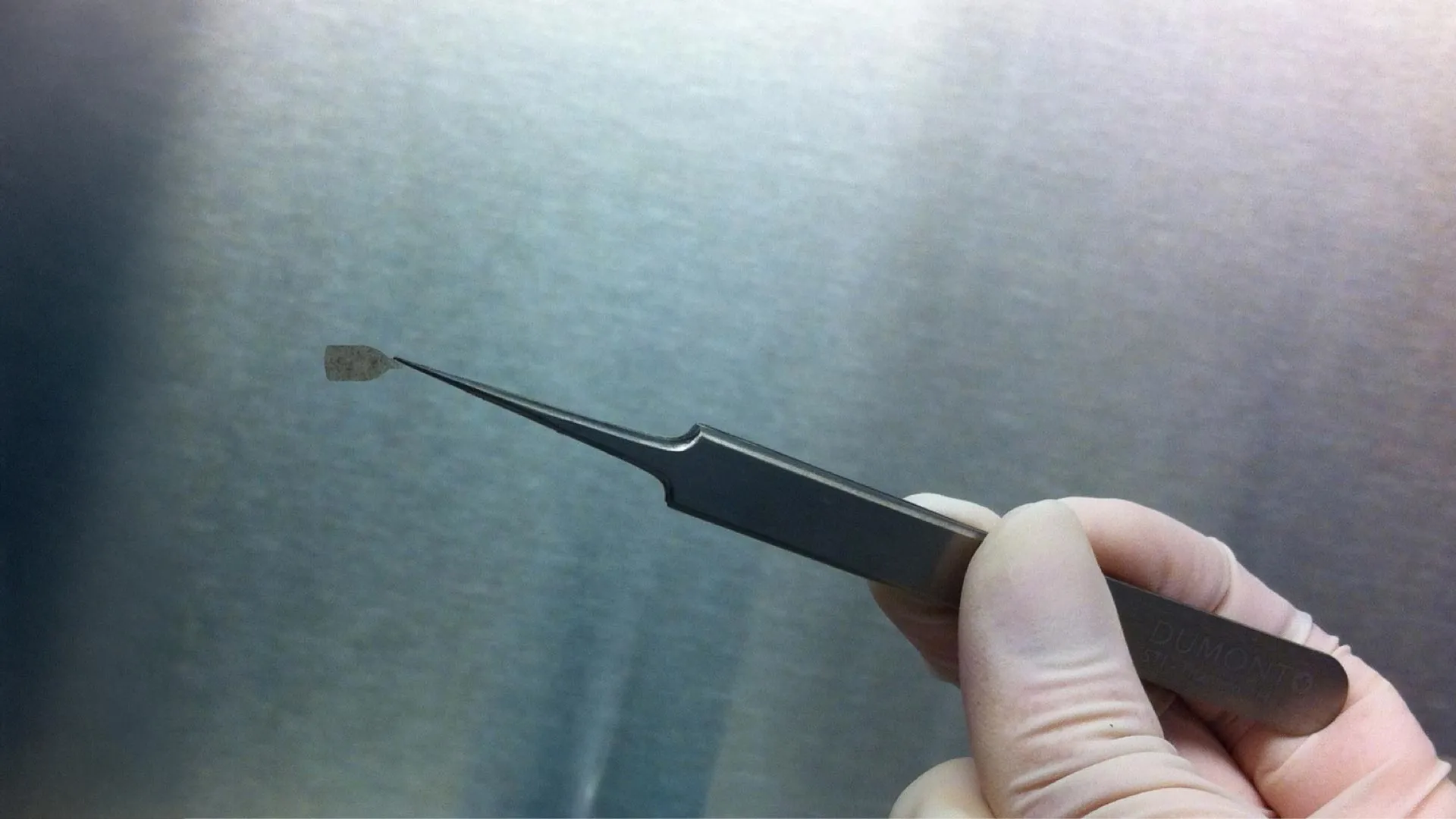
What sets this implant apart is its design. The lab-grown RPE cells are attached to an ultra-thin, biocompatible implant – thinner than a human hair – designed to securely position the cells within the retina. This allows the engineered cells to integrate with the existing retinal tissue and, ideally, resume the vital functions of the damaged RPE cells.
Encouraging Early Results Fuel Further Investigation
This Phase 2b trial builds upon promising results from an earlier Phase 1/2 study. The initial research demonstrated the safety and feasibility of the implant, with the device successfully integrating into the retinal tissue of participants. Importantly, a meaningful 27% of patients in the earlier trial experienced some level of vision advancement. “The earlier phase of the clinical trial showed the treatment to be safe with the potential to benefit patients’ vision; this next phase will investigate whether the therapy can achieve clinically significant improvements in vision,” explained Dr.Sun Young Lee, the principal investigator of the Keck Medicine study site and an associate professor of ophthalmology and physiology & neuroscience at the Keck School of Medicine of USC.
How the Implant Works: A Deeper Dive
The RPE cells play a critical role in several essential functions:
- Nourishing Photoreceptors: RPE cells provide essential nutrients to the photoreceptors, ensuring their optimal function.
- Waste Removal: They remove waste products that accumulate during visual processing, preventing cellular damage.
- Light Absorption: RPE cells absorb excess light, reducing glare and improving visual clarity.
- Maintaining Retinal Structure: They contribute to the structural integrity of the retina.
By replacing the damaged RPE cells with healthy, lab-grown cells, the implant aims to restore these vital functions and, consequently, improve vision.
Trial Details and Eligibility
The Phase 2b clinical trial is being conducted at five sites nationwide, with Keck Medicine serving as a key participating center. The study is “masked,” meaning that some participants will receive the active stem cell implant, while others will receive a sham procedure. This blinding is crucial for ensuring unbiased results.
Eligibility criteria include:
- Age between 55 and 90
- Diagnosis of advanced dry AMD with geographic atrophy
- Sufficient visual impairment
- Overall good health
Participants will be closely monitored for at least one year to assess the implant’s safety, tolerability, and impact on vision.The trial aims to enroll a total of 24 patients.
Interested individuals can learn more and inquire about participation by contacting Mariana Edwards at [email protected] or Kimberly Rodriguez at [email protected].
The Future of Vision Restoration
The USC Roski Eye Institute’s pioneering work represents a significant step forward in the quest to treat and potentially cure age-related macular degeneration. “Stem cell-derived retinal implants may offer one of the greatest possibilities for helping patients with dry age-related macular degeneration and one day, may offer a cure,” stated Dr. Mark S.Humayun, co-director of the USC Roski Eye Institute.
This research is not only promising for AMD but also paves the way for potential stem cell therapies for other retinal diseases. Regenerative Patch technologies LLC, the company producing the implant, is actively exploring applications for other conditions. The ongoing clinical trial will provide critical data to refine the technology and bring this potentially life-changing treatment closer to reality for millions affected by vision loss.
Key Takeaways:
- A new clinical trial is underway to test a stem cell-based implant for advanced dry AMD.
- The implant aims to replace damaged RPE cells, restoring critical functions and potentially improving vision.
- Early research showed promising safety and some vision improvement in participants.
- the trial is actively recruiting participants aged 55-90 with advanced dry AMD and geographic atrophy.
- This research represents a significant advancement in the field of regenerative medicine and offers hope for a future where vision loss from AMD can be reversed.
