
Teh Spinal Cord’s dorsal Horn: A Deep Dive into Sensory Processing
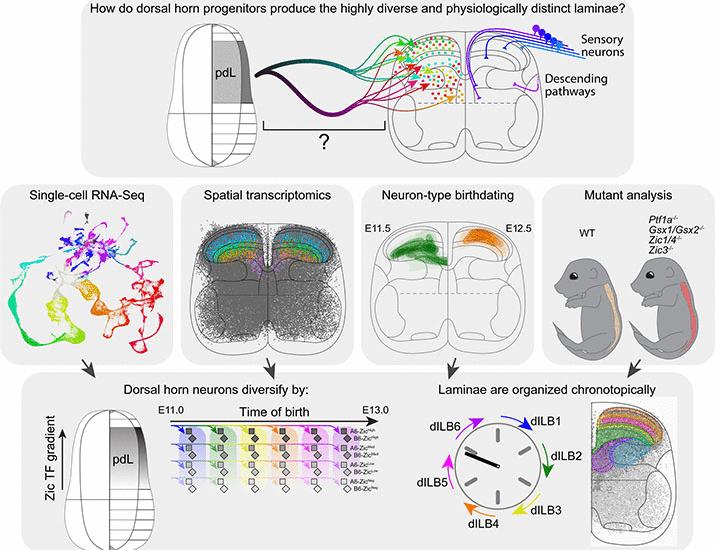
The spinal cord serves as the crucial highway between the brain and the body, enabling movement, reflexes, and sensation. A key component of this system is the dorsal horn, the posterior region responsible for processing sensory information. far from being a simple relay station, the dorsal horn is a highly organized structure, meticulously layered and populated with diverse neuron types. Understanding its organization is basic to unraveling the complexities of pain, touch, and other sensations, and how these translate into behavioral responses. This article delves into the intricacies of the dorsal horn, exploring its laminae, neuronal populations, functional roles, and the ongoing research shaping our understanding of this vital neurological structure.
The Laminae: A Layered Organization
The dorsal horn isn’t a uniform mass of tissue; it’s distinctly organized into layers called laminae (singular: lamina). These laminae, numbered I to X (though not all are always clearly defined in all species), represent a fundamental organizational principle of the central nervous system. Each lamina possesses a unique cellular composition, connectivity patterns, and functional specialization. this layered structure isn’t arbitrary; it reflects the sequential processing of sensory information as it ascends through the spinal cord.
Lamina I: Substantia Gelatinosa
Lamina I, also known as the substantia gelatinosa, is the outermost layer. It’s characterized by sparsely populated neurons and plays a critical role in the processing of nociceptive (painful) and thermal stimuli. Neurons here receive input from Aδ and C fibers – primary afferent neurons that transmit information about sharp, localized pain (Aδ) and dull, aching, or burning pain (C fibers).It’s heavily involved in the modulation of pain signals before they are relayed to higher brain centers.
Lamina II: Proper Substantia Gelatinosa
Lamina II is denser than Lamina I and contains a variety of interneurons. It’s a key site for modulation of sensory input, notably pain.gabaergic interneurons within Lamina II play a crucial role in descending inhibitory pathways, effectively “turning down” pain signals. This lamina receives input from both Lamina I and primary afferents.
Lamina III and IV: Nucleus Proprius
Laminae III and IV,collectively known as the nucleus proprius,receive input from large-diameter Aβ fibers,which transmit information about touch,pressure,and proprioception (body position). These laminae are essential for processing non-noxious mechanical stimuli and contribute to discriminative touch. They also receive input from Aδ fibers, further integrating different types of sensory information. These layers are critical for the initial processing of tactile information and relaying it to the brain for conscious perception.
Lamina V: Deep Dorsal Horn
lamina V is a transitional zone, receiving input from all types of primary afferents.It plays a role in integrating nociceptive and non-nociceptive information and is involved in the processing of visceral sensation. Neurons in Lamina V project to various brain regions, including the thalamus and hypothalamus, contributing to the emotional and autonomic components of pain.
Laminae VI-X: Intermediate and Ventral Horn
These deeper laminae are less directly involved in initial sensory processing.They primarily contain neurons involved in intersegmental circuits and descending modulation of pain. Lamina VI, in particular, receives input from the brainstem and contributes to descending pain control pathways. Laminae VII and VIII contain neurons involved in autonomic functions and motor control. Laminae IX and X are largely occupied by motor neurons.
Neuronal populations and Circuitry
The functional diversity of the dorsal horn is underpinned by a remarkable variety of neuronal populations. Beyond the basic distinctions between projection neurons (those that send signals to the brain) and interneurons (those that process information locally), there’s a complex interplay of different neurotransmitter systems and receptor types.
- glutamate: The primary excitatory neurotransmitter in the dorsal horn, crucial for transmitting sensory information.
- GABA and glycine: Major inhibitory neurotransmitters, responsible for modulating and suppressing pain signals.
- Neuropeptides: Such as substance P and CGRP,are released by primary afferents and contribute to the transmission and modulation of pain.
- descending Pathways: The periaqueductal gray (PAG) in the midbrain sends descending pathways to the dorsal horn, releasing serotonin and norepinephrine to inhibit pain transmission.
The circuitry within the dorsal horn is not a simple linear pathway. It’s a complex network of interconnected neurons, allowing for sophisticated processing and modulation of sensory information. Disinhibition, where the inhibition of an inhibitory neuron leads to increased activity, is a common mechanism for amplifying pain signals.
Clinical Significance: Pain and Beyond
The dorsal horn is central to understanding a wide range of clinical conditions, most notably chronic pain. Dysfunction within the dorsal horn can lead to:
- Neuropathic Pain: Damage to sensory nerves can cause spontaneous pain and hypersensitivity due to changes in dorsal horn circuitry.
- Fibromyalgia: Characterized by widespread musculoskeletal pain, fibromyalgia is thought to involve central sensitization – an amplification of pain signals within the dorsal horn.
- Chronic Regional Pain Syndrome (CRPS): A debilitating condition involving persistent pain, swelling, and changes in skin color and temperature, often following an injury.
Furthermore, the dorsal horn plays a role in other sensory processing disorders, including tactile defensiveness and certain types of itch. Research into the dorsal horn is actively exploring new therapeutic targets for these conditions, including modulation of specific neurotransmitter systems and restoration of normal circuit function.
Future Directions and Ongoing Research
Despite significant advances, much remains to be learned about the dorsal horn. Current research is focused on:
- Single-Cell RNA Sequencing: Identifying the molecular signatures of different neuronal populations within the dorsal horn to better understand their function.
- Optogenetics: Using light to control the activity of specific neurons, allowing researchers to dissect the circuitry and function of the dorsal horn with unprecedented precision.
- Developing Novel Analgesics: Targeting specific receptors and pathways within the dorsal horn to develop more effective and less addictive pain medications.
- Understanding the Role of glia: Investigating the contribution of glial cells (astrocytes and microglia) to pain processing and neuroinflammation within the dorsal horn.
The dorsal horn represents a captivating and complex area of neuroscience. Continued research promises to unlock new insights into the mechanisms of sensation, pain, and neurological disorders, ultimately leading to improved treatments and a better quality of life for millions.
Frequently Asked Questions (FAQ)
- What is the difference between acute and chronic pain in relation to the dorsal horn?
- Acute pain involves normal activation of the dorsal horn in response to a noxious stimulus. Chronic pain, however, often involves changes in the dorsal horn circuitry, leading to sensitization and persistent pain even after the initial injury has healed.
- Can psychological factors influence dorsal horn activity?
- Yes, absolutely.Stress, anxiety, and depression can all modulate pain perception by influencing descending pathways that project to the dorsal horn.
- What role do opioids play in the dorsal horn?
- Opioids primarily act on opioid receptors in the dorsal horn to inhibit pain transmission. However, long-term opioid use can lead to tolerance and dependence, and may even exacerbate pain in some cases.
Key Takeaways
- The dorsal horn is a highly organized structure within the spinal cord responsible for processing sensory information.
- Its layered organization (laminae I-X) reflects the sequential processing of different types of sensory input.
- The dorsal horn contains a diverse array of neuronal populations and neurotransmitter systems.
- Dysfunction within the dorsal horn is implicated in a variety of chronic pain conditions.
- Ongoing research is focused on unraveling the complexities of the dorsal horn to develop new and more effective treatments for pain and other sensory disorders.
