
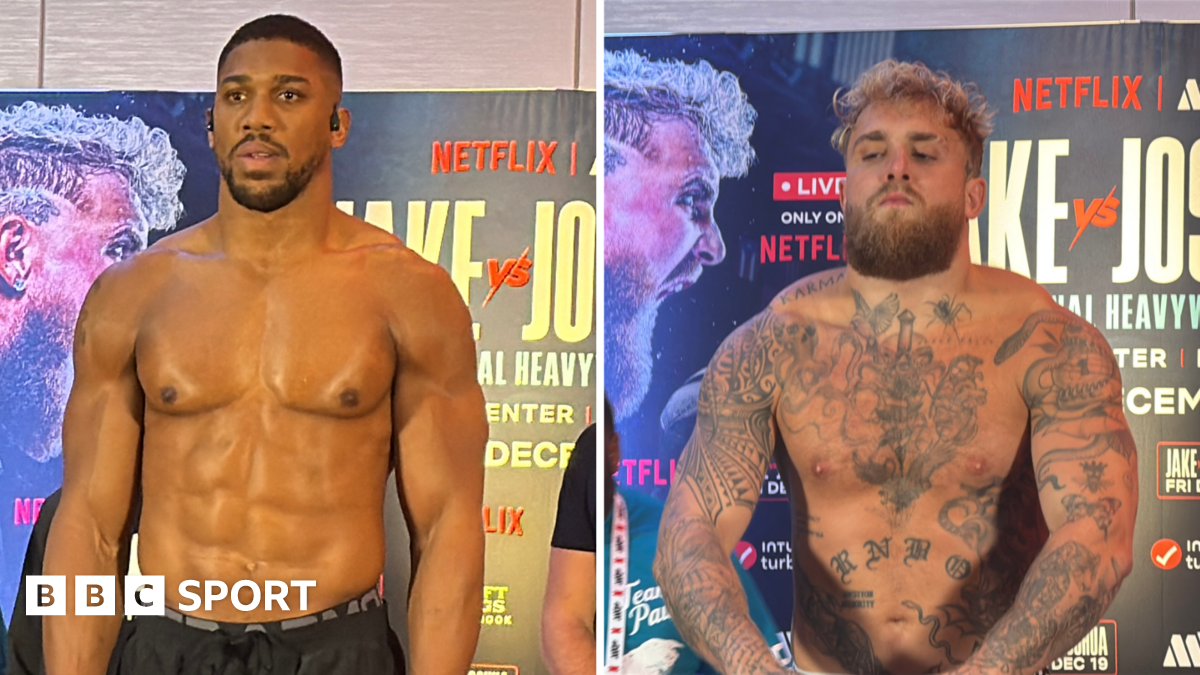
Anthony Joshua and Jake Paul are now at the center of a structural shift involving the commercialization of combat sports. the immediate implication is a re‑balancing of traditional boxing’s legitimacy against influencer‑driven entertainment models.
The Strategic Context
Boxing has long relied on a hierarchy of sanctioning bodies, weight‑class discipline, and a clear separation between elite competition and exhibition. Over the past decade, the rise of social‑media influencers has eroded that boundary, creating a hybrid market where audience attention is captured as much by personality branding as by athletic merit. This convergence is reinforced by declining linear TV viewership, the growth of pay‑per‑view (PPV) platforms, and the willingness of sponsors to fund events that guarantee viral moments. The Joshua‑Paul bout exemplifies the tension between legacy champions seeking relevance and new‑media athletes leveraging digital followings to command premium pricing.
Core Analysis: Incentives & Constraints
source signals: The weigh‑in data confirms that Joshua was required to meet a weight limit (under 17 st 7 lb) despite heavyweight norms, highlighting a negotiated stipulation to offset experience disparity. Joshua weighed 17 st 5 lb; Paul 15 st 7 lb, his heaviest recorded weight. The bout is an eight‑round, 10‑oz glove contest at Miami’s Kaseya Center, with a low‑key official weigh‑in and a ceremonial public event. Paul’s pre‑weigh‑in tirade underscores his media‑centric approach.
WTN Interpretation:
Joshua’s compliance with a weight cap signals a strategic concession to preserve competitive credibility while entering a high‑visibility spectacle that can rejuvenate his brand and attract sponsorships beyond traditional boxing circles. His leverage lies in a recognized championship pedigree and a global fan base; his constraint is the risk of perceived dilution of his legacy if the bout is framed as a novelty.
Paul’s incentive is to translate his digital following into tangible revenue streams, using the weight narrative to amplify the “underdog” storyline and justify premium PPV pricing. His leverage is massive social‑media reach and the ability to generate real‑time buzz; his constraint is limited boxing experience and the physical demands of facing a former world champion, which could affect future marketability if the performance is poor.
Promoters and venue operators are motivated by the prospect of record PPV buys and ancillary revenue (ticket sales, sponsorships, merchandise). Their constraint is regulatory oversight and the need to maintain a balance that does not alienate core boxing audiences or attract punitive actions from sanctioning bodies.
WTN Strategic insight
“When legacy athletes partner with digital influencers, the resulting platform becomes a testbed for a new legitimacy economy-where audience engagement, not pure sport, defines value.”
Future Outlook: Scenario paths & Key Indicators
Baseline Path: If the event delivers strong PPV numbers and positive social‑media sentiment, traditional boxing promoters will increasingly schedule similar hybrid bouts, leading to a gradual re‑definition of mainstream combat‑sport revenue models.Legacy fighters will continue to negotiate weight or format concessions to access influencer audiences, while regulatory bodies adapt rules to accommodate mixed‑experience match‑ups.
Risk Path: If the bout triggers notable backlash-e.g., criticism over safety, accusations of “diluting” the sport, or a poor performance by Paul-regulators may impose stricter weight‑class enforcement or limit cross‑over events. Sponsors could withdraw, and traditional boxing entities might double down on preserving classic formats, creating a bifurcated market with parallel elite and entertainment tracks.
- Indicator 1: PPV purchase volume and revenue reports for the Joshua‑Paul fight within the first two weeks.
- Indicator 2: Statements or policy adjustments from major sanctioning bodies (e.g., WBA, IBF) regarding weight‑limit stipulations for mixed‑experience bouts, expected in upcoming quarterly meetings.
