
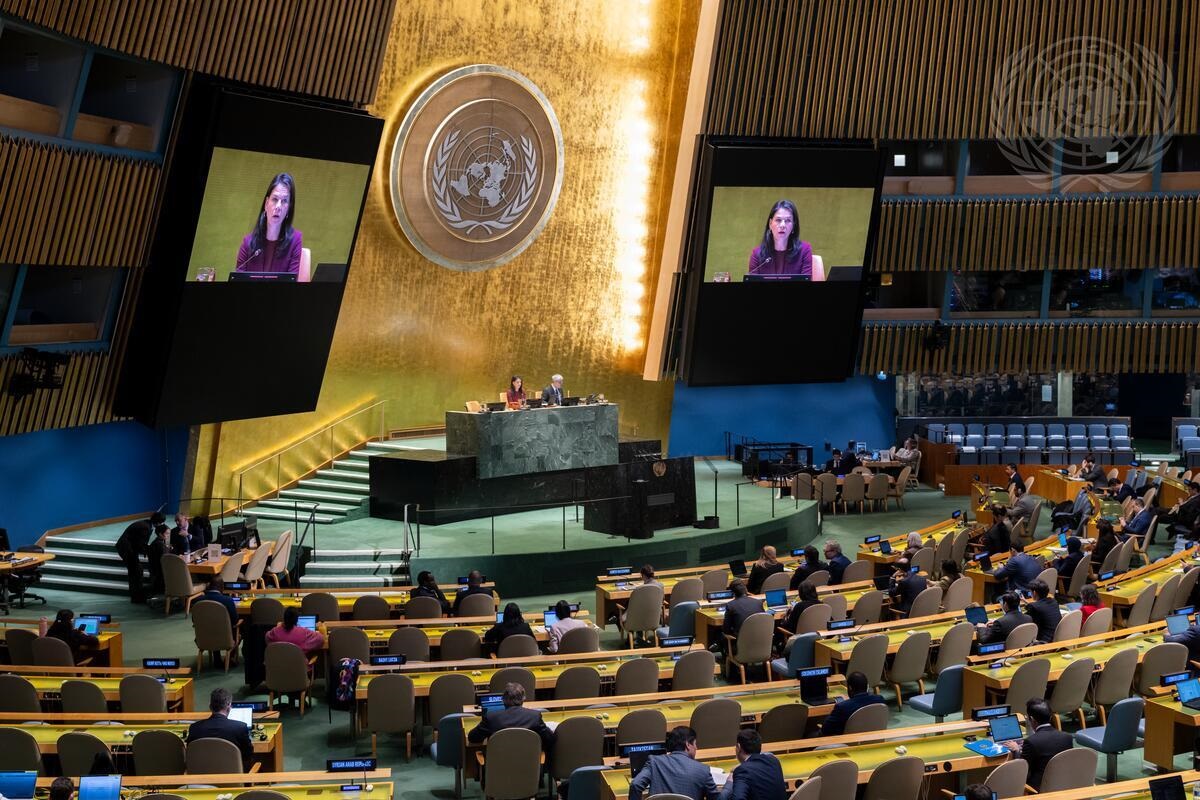
The United Nations is now at the center of a structural shift involving noncommunicable diseases and mental health. The immediate implication is a heightened policy and financing agenda that will reshape health systems, pharmaceutical markets, and broader economic productivity.
The Strategic Context
As the early 2000s the UN system has issued successive political declarations on noncommunicable diseases (NCDs), yet each iteration stopped short of integrating mental health or setting measurable outcome targets. The COVID‑19 pandemic exposed the fragility of health systems and the interdependence of chronic disease management, prompting a re‑evaluation of global health governance. concurrently, demographic ageing, urbanisation, and rising exposure to environmental and digital risk factors have accelerated the NCD and mental‑health burden, turning them into cross‑cutting development challenges. Within a multipolar world where emerging economies seek greater influence in global health rule‑making, the 80th UN General Assembly provided a platform for a consensus‑driven, equity‑focused declaration that aligns chronic disease control with the Sustainable Development Goals and broader economic stability.
Core Analysis: incentives & Constraints
Source Signals: The UN General Assembly adopted a political declaration that (1) combines NCDs and mental health for the first time,(2) sets three ”fast‑track” outcome targets for 2030 (150 million fewer tobacco users,150 million more people with hypertension under control,150 million more people with access to mental‑health care),(3) establishes five process targets for national health systems (policy coverage,essential medicines access,financial protection,multisectoral plans,surveillance),(4) emphasizes stronger financing language and a whole‑of‑society approach,and (5) calls for robust accountability mechanisms through UN reporting.
WTN Interpretation: The declaration serves several converging strategic interests. WHO seeks to cement its normative authority and secure funding streams by linking chronic disease control to economic productivity and SDG achievement.Member states, especially middle‑income economies, view the targets as a means to mitigate productivity losses from premature mortality and to attract development financing. Pharmaceutical and medical‑technology firms gain a predictable market for essential medicines and digital health solutions,while civil‑society organisations obtain a global platform for advocacy and funding. Constraints include fiscal pressures from post‑pandemic debt burdens, competing budgetary priorities (e.g., climate adaptation, security), limited health‑system capacity in low‑income countries, and geopolitical frictions that may impede coordinated financing or data‑sharing. The whole‑of‑society language reflects an awareness that triumphant implementation will require alignment of ministries beyond health (finance, education, surroundings) and engagement of private‑sector stakeholders, yet such cross‑sectoral coordination often stalls in practice.
WTN Strategic Insight
“Embedding NCD and mental‑health targets within the SDG framework creates a new financing lever that ties health outcomes directly to economic competitiveness, reshaping how governments and investors allocate resources.”
future Outlook: Scenario Paths & Key Indicators
Baseline Path: If the majority of countries enact the stipulated policies, secure predictable domestic and multilateral financing, and strengthen surveillance systems, the fast‑track targets become attainable.This would stimulate demand for WHO‑recommended essential medicines,expand digital health platforms for hypertension and mental‑health care,and generate measurable improvements in labor‑force productivity. Investors would see a stable market for chronic‑disease therapeutics,while development banks could integrate health‑outcome metrics into loan covenants.
risk Path: Should fiscal constraints deepen, or if geopolitical tensions disrupt multilateral financing mechanisms, many states may delay or dilute policy implementation. Weak surveillance could mask disease trends, leading to under‑investment and widening health inequities. In such a scenario, premature mortality and mental‑health morbidity could rise, eroding economic growth and potentially prompting social unrest in vulnerable populations.
- Indicator 1: publication of WHO’s biennial NCD financing report (expected Q2 2026) – signals whether domestic and international funding streams are scaling as pledged.
- Indicator 2: Adoption of front‑of‑pack nutrition labeling or tobacco‑tax reforms in major economies (EU,United States,China) within the next six months – reflects policy momentum toward the 80 % legislative target.
