
Plants Employ Engineering Principles to Navigate Compacted Soil, Offering Hope for Future Crops
New research reveals how plants adapt to compacted soil, a growing problem exacerbated by modern agriculture and climate change, perhaps paving the way for more resilient crop advancement. The findings, published in Nature, detail the mechanism plants use to strengthen and swell their roots, allowing them to penetrate dense soil more effectively. This revelation has meaningful implications as pressure on agricultural land continues to increase.
Soil compaction, caused by heavy agricultural machinery, is a global challenge hindering crop growth. This issue is often worsened by drought conditions linked to climate change. while it’s been known that plants respond to compacted soil by thickening their roots, the underlying process remained unclear until now.
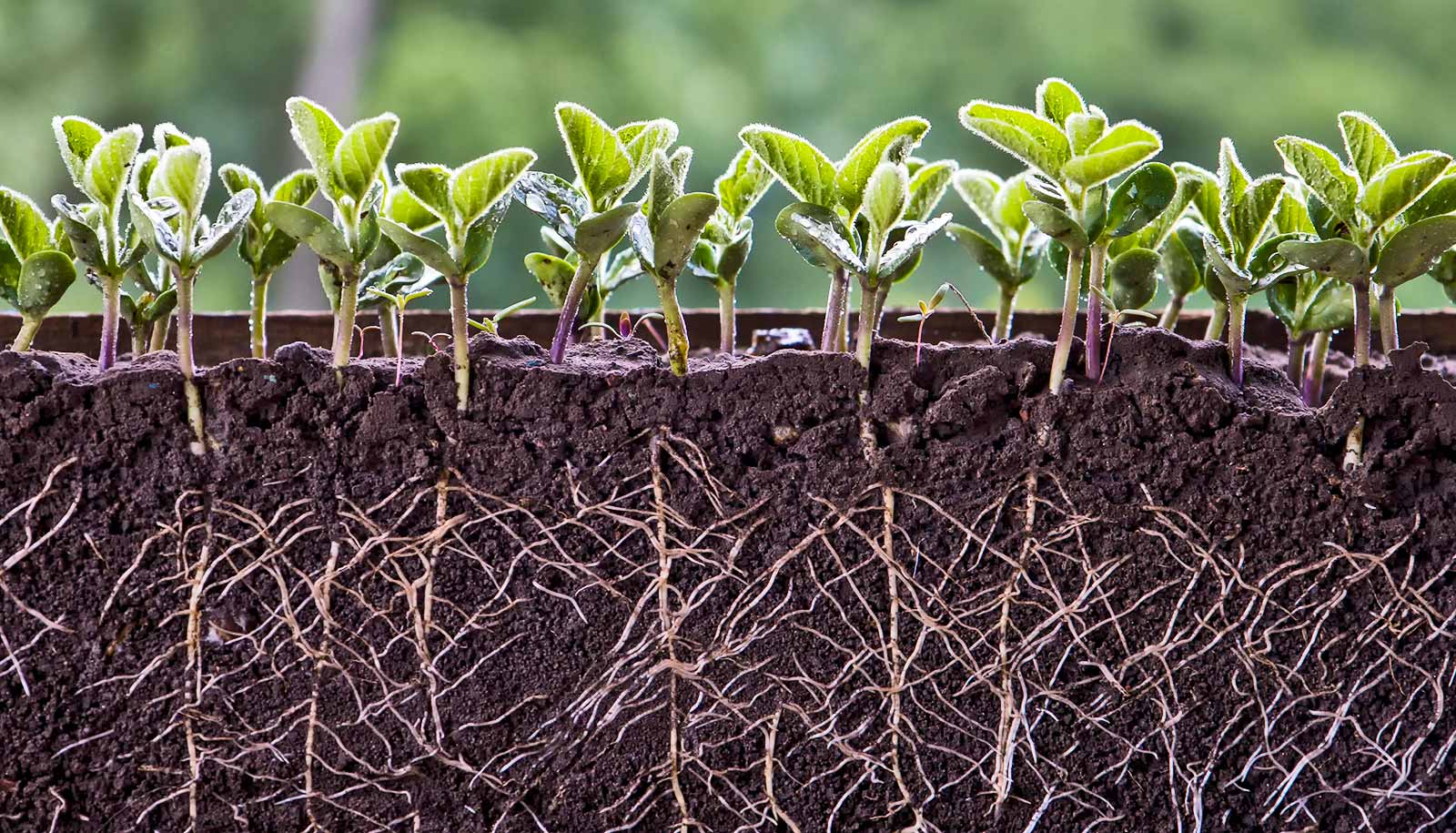
Researchers have discovered that plants essentially apply basic engineering principles to overcome this obstacle. They increase both the diameter of their roots and the strength of their outer walls, mirroring the design of structures built to resist buckling under pressure. This combination allows the root to function as a “biological wedge,” forcing its way through the compacted soil.
“Because we now understand how plants ‘tune’ their roots when they encounter compacted soil, we may prime them to do it more effectively,” explains Staffan Persson, a professor at the University of Copenhagen and senior author of the study.
The research pinpointed a specific protein – a transcription factor – that, when increased, significantly enhances the root’s ability to penetrate compacted soil. This opens possibilities for redesigning root architecture through crop breeding. Jiao Zhang, a postdoc at Shanghai Jiao Tong University and the study’s first author, states, “With this new knowledge, we can begin redesigning root architecture to cope more effectively with compacted soils.This opens new avenues in crop breeding.”
While the experiments focused on rice, the researchers believe the mechanism is widespread across plant species, with similar components identified in Arabidopsis, a plant evolutionarily distinct from rice. Wanqi Liang, a professor at Shanghai Jiao Tong University and senior author, emphasizes the potential for lasting agriculture: ”Our results could help develop crops that are better equipped to grow in soils compacted by agricultural machinery or climate-related drought. This will be crucial for future sustainable agriculture.”
Beyond addressing soil compaction,the study also identified numerous additional transcription factors crucial for cellulose production. This discovery represents a ”goldmine for cell-wall biology,” according to Persson, and could lead to innovations in plant form and structure, potentially allowing for the design of plants with shapes optimized for specific crops.
The research was a collaborative effort involving Shanghai Jiao Tong University, the University of Nottingham, Universidad Argentina de la Empresa, the National Institute of Advanced Industrial Science and Technology, Zhejiang University, Duke University, Ludwig maximilian University, and the University of Copenhagen.
