
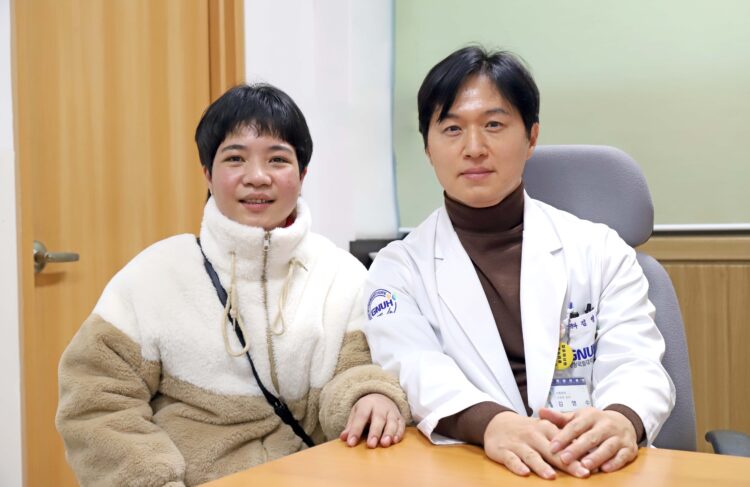
Rare Autoimmune Encephalitis Patient Achieves Remarkable recovery after Two-Year Battle
A woman in her 30s experienced a dramatic health crisis initially mistaken for a mental illness, ultimately diagnosed as a rare autoimmune encephalitis (AE). The patient initially presented with symptoms including incoherent speech, inappropriate behavior, and insomnia, leading to a first attempt at psychiatric treatment. Her condition rapidly deteriorated, progressing to loss of consciousness and seizures accompanied by involuntary movements in her limbs and face.
Doctors at the Department of Neurology, Gyeongsang National University Hospital, led by Professor Kim Young-soo, suspected autoimmune encephalitis. diagnostic tests of the patient’s spinal fluid and serum confirmed the presence of antibodies targeting the NMDA receptor, a neurotransmitter.
The patient’s condition quickly became critical, requiring admission to the intensive care unit nine days after hospitalization due to recurring generalized seizures and severe autonomic instability. She was soon placed on a respirator.
Autoimmune encephalitis occurs when the body’s immune system mistakenly attacks the brain, causing inflammation. This can happen when immune cells target brain proteins,or as an inevitable result of an immune response to a virus or tumor. The disease can emerge suddenly, even in previously healthy individuals.
In this case, the source of the autoimmune response was identified as a teratoma, a type of tumor, in the patient’s ovary. Following surgical removal of the tumor, doctors initiated standard immunotherapy using steroids and immunosuppressants.
Despite this treatment,the patient remained unconscious and continued to experience seizures. The prognosis for autoimmune encephalitis is frequently enough serious, with approximately one-third of patients succumbing to complications like pneumonia or sepsis. Survivors frequently face significant long-term disabilities.
However,early diagnosis and aggressive treatment can lead to full recovery. The medical team and the patient’s family maintained hope and continued treatment, successfully navigating several sepsis crises through collaborative efforts between the intensive care unit nursing staff and the infectious disease department.
A turning point occurred 21 months into her hospitalization. The patient began to demonstrate signs of awareness, making eye contact with medical staff and mimicking their actions.
Over the following months, her communication skills gradually improved, and her reliance on the ventilator decreased. After 22 months, with support from the rehabilitation team, she regained the ability to eat independently and began to walk with assistance.
After 24 months of intensive care, despite experiencing torticollis (neck muscle spasms), she was transferred to a regular hospital ward. 25 months after her initial hospitalization, the patient was able to walk unassisted and was discharged.
Professor Kim Young-soo emphasized the importance of “rapid and aggressive immunotherapy” in treating autoimmune encephalitis. He noted that while serious complications like sepsis are common and can be fatal, this case demonstrates the potential for significant recovery even after prolonged illness, provided treatment is continued consistently.
